Provide sturdy support
Install a rigid trellis or wire mesh at planting time so the vine can climb safely and the heavy, pressurized fruits stay off the ground where they are less likely to rot or be damaged.

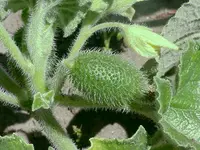
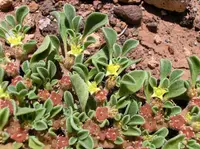
Squirting cucumber, Ecballium elaterium, is a small, trailing or bushy perennial from the Mediterranean region, often grown as an unusual ornamental curiosity. It has soft, hairy leaves, yellow star-shaped flowers, and oval fruits that eject their seeds under pressure when ripe. This explosive seed dispersal is its most distinctive feature and a key reason some gardeners choose it. The plant prefers full sun, well-drained soil, and relatively dry conditions, which can make it quite easy to manage in warm, low-rainfall climates. Gardeners who want to learn how to care for squirting cucumber should also consider its toxicity and tendency to self-seed.

Care Difficulty
Moderate Care

Light Preference
Full Sun

Water Requirements
Moderate Water

Temperature Preference
Warm Climate

Hardiness Zone
8–11

Soil Texture
Sandy, Loamy, Rocky

Soil pH
Slightly acidic (6.5–7.0), Slightly alkaline (7.0–7.5)

Soil Drainage
Well-drained

Fertilization
Minimal (feed rarely)
Scan your plant to receive care tips personalized for your specific plant
Available on iOS and Android
This Mediterranean perennial needs strong light to flower and fruit well outdoors.
This drought-tolerant species prefers infrequent, deep watering and sharply drained soil.
This plant thrives in warm, dry conditions similar to its native Mediterranean climate.
Humidity is rarely critical for Ecballium elaterium in cultivation.
Ecballium elaterium prefers light, fast-draining soil that mimics dry, rocky ground.
This species can be grown in containers if the pot supports its sprawling habit and fast drainage.
Ecballium elaterium is adapted to lean, well-drained soils and usually needs little supplemental feeding.
Ecballium elaterium benefits from light, targeted pruning to manage spread and remove damaged growth.
This species is usually grown in the ground, so focus on careful transplanting rather than frequent repotting.
Ecballium elaterium is most commonly propagated from seed, which germinates reliably under suitable conditions.
In mild climates this plant is fairly cold tolerant and usually needs minimal winter care in the ground.

Plant Health Check
Not sure what's wrong with your plant? Check your plant's health inside the app.
The fruits build up internal pressure as the seeds mature, then detach from the stalk and suddenly eject a mucilaginous seed mass several meters away, a classic example of ballistic seed dispersal in flowering plants.
Although related to garden cucumber and melon, this species produces small, hard, inedible fruits containing toxic cucurbitacin compounds, and has long been noted in botanical literature as a specialized, non-food member of the Cucurbitaceae.
The plant is naturally adapted to hot, dry, Mediterranean climates and often grows on rocky coastal slopes, disturbed ground, and roadsides where many less stress-tolerant cucurbits cannot persist.
In some classical and early modern European texts, this species was referred to by names derived from Latin elater, meaning driver or expeller, directly referencing its unusual ability to forcefully expel seeds, and it became a standard example of plant movement in early botanical teaching.
All parts of this species are toxic if eaten, especially the fruits and seeds. Ingestion can cause severe gastrointestinal irritation. Keep it away from children, pets, and livestock, and wear gloves when handling sap or damaged tissue.
Keep your plants happy and healthy with plant identification, disease detection, and easy care guidance.