Early-season pinching
Pinch out the soft tips of young stems once or twice in late spring to encourage a denser, more self-supporting clump with more flowering stems later in the season.

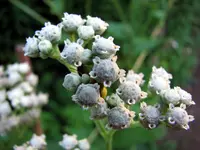
Wild quinine (Parthenium integrifolium) is a long-lived herbaceous perennial native to prairies, open woods, and dry fields in central and eastern North America. It forms upright clumps with sturdy stems and coarse, gray-green leaves.
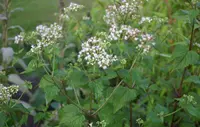
The plant produces dense, flat-topped clusters of small white flower heads through much of summer, giving a clean, textured look in mixed borders or naturalistic plantings. Its deep root system provides good drought tolerance once established.
Wild quinine prefers full sun, moderately dry to medium moisture, and well-drained, often slightly poor soils. These traits make it relatively low-maintenance for gardeners who want to care for wild quinine without frequent watering or fertilizing.

Care Difficulty
Easy Care

Light Preference
Full Sun

Water Requirements
Low Water

Temperature Preference
Cold Hardy

Hardiness Zone
4–9

Soil Texture
Sandy, Loamy, Rocky

Soil pH
Slightly acidic (6.5–7.0), Neutral (7.0)

Soil Drainage
Well-drained

Fertilization
Minimal (feed rarely)
Scan your plant to receive care tips personalized for your specific plant
Available on iOS and Android
This sun-loving prairie perennial thrives in open, bright conditions for sturdy growth and abundant flowering.
This deep-rooted native is drought-tolerant once established and prefers infrequent, thorough watering.
This hardy prairie perennial tolerates a wide temperature range but grows best in moderate warmth.
Humidity is rarely a limiting factor for wild quinine, which thrives in typical outdoor conditions.
Parthenium integrifolium prefers lean, well-drained soil that does not stay wet after rain.
This species can grow in containers outdoors, but only if the pot and substrate drain quickly.
This prairie perennial is modest in its needs, and caring for wild quinine usually means only light fertilization in poor soils.
Thoughtful pruning keeps Parthenium integrifolium tidy and supports strong flowering the following season.
This native perennial is usually grown in the ground and prefers minimal disturbance once established.
Parthenium integrifolium is commonly propagated by seed and by careful division of established clumps.
This species is cold hardy through typical USDA temperate zones and needs little special winter care once established.

Plant Health Check
Not sure what's wrong with your plant? Check your plant's health inside the app.
Wild quinine is a long-lived forb that often acts as a structural anchor in tallgrass and sand prairie plantings, providing upright, clumping growth that helps stabilize diverse herbaceous communities.
Although it belongs to the aster family, its flower heads look unusual because the tiny, reduced ray florets form a collar around many disk florets, giving the dense, gray-white, cauliflower-like clusters that distinguish it from most daisies.
Studies of native prairie forbs have shown that this species accumulates relatively high levels of calcium in its foliage, which can influence soil nutrient cycling as leaves decompose in established stands.

In historical prairie landscapes, wild quinine often persisted as a remnant species on unplowed cemetery prairies and old rights-of-way, so modern botanists and land managers use its presence as one clue to locate and assess high-quality native grassland remnants.
This species is highly attractive to native bees, small wasps, flies, and some butterflies. Its many small, nectar-rich flower heads provide a steady summer food source, making it valuable in pollinator and prairie-style gardens.
Keep your plants happy and healthy with plant identification, disease detection, and easy care guidance.