Spring pinch-back
Pinch out the soft tips of young shoots once or twice in late spring to encourage bushier growth and more flowering stems over summer.

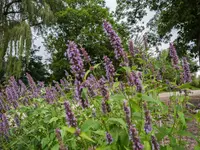
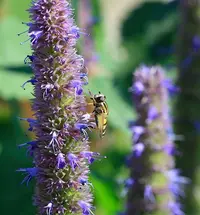
Agastache 'Black Adder' is a perennial herb in the mint family, grown mainly for its aromatic foliage and long-lasting flower spikes. It forms upright clumps with square stems, toothed leaves, and dense bottlebrush flowers in purple-blue tones with darker bracts.
The species group is native to North America, especially prairies and open meadows, and this cultivar has been selected for garden performance and strong flowering. It attracts bees, butterflies, and other pollinators, which makes it useful in wildlife and cottage-style planting schemes.
This plant is generally considered easy to grow, as it tolerates heat, short dry periods, and lean, well-drained soils. Full sun and good drainage are the key factors in how to care for Anise Hyssop.

Care Difficulty
Easy Care

Light Preference
Full Sun

Water Requirements
Low Water

Temperature Preference
Cold Hardy

Hardiness Zone
5–9

Soil Texture
Sandy, Loamy, Rocky

Soil pH
Slightly acidic (6.5–7.0), Slightly alkaline (7.0–7.5)

Soil Drainage
Well-drained

Fertilization
Minimal (feed rarely)
Scan your plant to receive care tips personalized for your specific plant
Available on iOS and Android
Agastache 'Black Adder' thrives in bright, open sites with long daily sun exposure.
Agastache 'Black Adder' prefers slightly dry, well-drained conditions rather than constant moisture.
This plant is a hardy perennial that handles a wide range of outdoor temperatures once established.
Agastache 'Black Adder' handles a wide humidity range, so humidity is rarely a limiting factor outdoors.
Agastache 'Black Adder' prefers lean, well-structured soil that dries quickly between waterings.
This species is well suited to container growing when drainage and stability are managed carefully.
Agastache 'Black Adder' benefits from light feeding but grows best in relatively lean, well-drained soil.
Pruning helps maintain compact growth and strong flowering in Agastache 'Black Adder'.
This plant is usually grown in garden beds, so focus on careful transplanting rather than frequent repotting.
Propagation of Agastache 'Black Adder' is commonly done by stem cuttings or division.
Agastache 'Black Adder' is fairly cold hardy but benefits from simple winter care in colder regions.

Plant Health Check
Not sure what's wrong with your plant? Check your plant's health inside the app.
This hybrid produces deep violet-purple flower spikes with smoky dark bracts that remain relatively color-fast through the season, instead of fading quickly as in many other Agastache cultivars.
In suitable conditions it often flowers from mid-summer into early fall, providing one of the longest continuous floral displays among commonly grown Agastache selections.
Trials in public gardens have repeatedly noted very high visitation by bees, butterflies, and hoverflies, showing a stronger and more consistent attraction than many lighter-colored or shorter Agastache types.

This plant was selected in Europe from a deliberate cross between North American parent species, combining the cold tolerance and durability of Agastache foeniculum with the intense flower color of Agastache rugosa, which results in a hybrid that performs reliably across a wide range of temperate garden climates.
Yes, the leaves and flowers are edible and often used fresh or dried for teas, salads, garnishes, and desserts. The flavor is sweet with anise and mint notes. Avoid plants treated with systemic pesticides or unknown chemicals.
Keep your plants happy and healthy with plant identification, disease detection, and easy care guidance.