Parsley Care (Petroselinum crispum var. crispum)

Also known as: Curly Parsley
Parsley

About Parsley

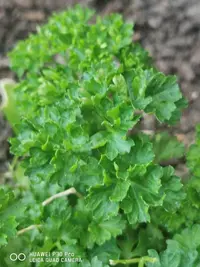
Parsley (Petroselinum crispum var. crispum) is a cool-season herb grown mainly for its fresh, aromatic leaves. It forms a compact rosette of finely divided, bright green foliage and sends up slender flowering stems in its second year.

This plant is native to the Mediterranean region but is now widely cultivated in kitchen gardens and containers. It is generally easy to grow if given consistent moisture, reasonably fertile, well-drained soil, and moderate sun exposure.

Its dense leaf growth responds well to regular harvesting, which also helps keep plants compact for longer. Understanding how to care for Parsley from seedling to mature plant helps maintain steady, flavorful leaf production.

Main Plant Requirements

Care Difficulty

Moderate Care

Light Preference

Full Sun

Water Requirements

Regular Water

Temperature Preference

Cool Climate

Hardiness Zone

4–9

Soil Texture

Loamy, Sandy, Organic-rich

Soil pH

Acidic (5.5–6.5), Slightly acidic (6.5–7.0)

Soil Drainage

Moist but well-drained

Fertilization

Light (every 4–6 weeks)

Get Personalized Care Plan

Scan your plant to receive care tips personalized for your specific plant

Available on iOS and Android

How to Care for the Parsley

This herb prefers consistent light that balances energy for leaf growth with protection from harsh heat.

  • Provide 4–6 hours of direct sun daily, ideally gentle morning sun with light or partial shade in the afternoon to prevent leaf scorch.
  • Outdoors, Parsley handles partial shade, especially in hotter regions, but less than 3–4 hours of sun leads to sparse, pale growth and weaker flavor.
  • In summer, protect from intense midafternoon sun with shade cloth or nearby taller plants; in low-light seasons, choose the brightest, unobstructed spot available.

Watering should maintain evenly moist soil without leaving roots saturated.

  • Before watering, check the top 2–3 cm of soil; water only when this layer is dry, allowing moisture to soak in slowly and drain freely.
  • In warm, windy weather, expect faster drying and more frequent watering, while in cool seasons the soil may stay moist for several days.
  • Signs of overwatering include yellowing, limp leaves and sour-smelling, soggy soil; underwatering shows as wilting, dry leaf tips, and soil pulling from the bed or pot sides.

Temperature control supports steady leaf production and reduces stress for this cool-season herb.

  • Optimal growth occurs around 60–70°F (16–21°C), with usable growth from about 50–75°F (10–24°C) in most outdoor beds.
  • The plant tolerates light frost down to roughly 25–28°F (-4 to -2°C), but repeated hard freezes below this range can damage crowns and roots.
  • In hot spells above 80–85°F (27–29°C), growth slows and Petroselinum crispum var. crispum may bolt sooner; provide afternoon shade and consistent soil moisture to reduce heat stress.

Humidity is usually not a limiting factor for flat-leaf parsley grown indoors or outdoors.

  • Target 30–60% humidity, which matches most homes, as the foliage handles moderate indoor dryness well.
  • Expect slightly quicker leaf wilting and crispy tips in very dry heated rooms below about 30% humidity.
  • Increase humidity only if air is very dry by grouping pots together or placing trays of water near the plants, not directly under them.

This herb prefers loose, evenly moist, well-drained soil that allows deep root growth.

  • Use a loamy mix with moderate organic matter, such as 2 parts all-purpose potting mix, 1 part compost, and 1 part coarse sand or perlite for drainage.
  • Aim for slightly acidic to neutral pH around 6.0–7.0, which supports nutrient availability and healthy growth in Petroselinum crispum var. crispum.
  • Ensure the mix holds moisture but never stays waterlogged; roots should feel firm and white, not mushy or brown from excess water.
  • Avoid heavy clay, compacted garden soil, or mixes loaded with fine peat that dry to a hard crust and limit aeration.

This species is well-suited to container growing on patios, balconies, or near kitchen doors.

  • Choose a pot at least 20–25 cm deep so the taproot can develop without curling tightly at the bottom.
  • Use a slightly wider container than a typical herb pot to allow dense leaf clusters without crowding air circulation.
  • Select a heavier clay or ceramic pot in windy spots to keep the plant stable as foliage becomes dense and top-heavy.

This culinary herb benefits from modest feeding to support leafy growth without becoming coarse or overly lush.

  • Use a balanced water-soluble fertilizer (for example 10-10-10) at 1/4–1/2 strength every 3–4 weeks during active growth in spring and summer.
  • Alternatively, incorporate light compost or a slow-release organic fertilizer into the top 2–3 in of soil at the start of the season.
  • Skip feeding or reduce to very light applications in fall and winter, especially for indoor pots with lower light levels.
  • Always water before and after applying fertilizer to reduce root burn and keep nutrients moving evenly through the soil.

Petroselinum crispum var. crispum responds well to light, frequent harvest-style pruning that maintains vigorous, leafy plants.

  • Harvest stems from the outer clump first, cutting at the base with clean scissors or a small knife to encourage new central growth.
  • Remove any yellowing, dead, or damaged leaves promptly to maintain hygiene and limit fungal problems.
  • Thin crowded interior stems to improve air movement and light penetration, which supports denser foliage.
  • Avoid cutting the central growing point too low, as this can slow regrowth and shorten the productive life of the plant.

This herb performs best when transplanted or potted on just enough to relieve root crowding without disturbing the taproot excessively.

  • Check containers for roots circling the drainage holes or slowed top growth, which indicates the need for a larger pot.
  • Plan repotting or outdoor transplanting in early spring or very early summer, avoiding the hottest and driest weeks.
  • Move plants only every 1 season or when clearly rootbound, choosing a container 2–5 cm wider with fresh, well-drained mix.
  • Water thoroughly before and after moving, handle the root ball gently, and keep plants shaded for 2–3 days to limit transplant shock.

New plants are most reliably raised from seeds, as this parsley is a short-lived biennial with a sensitive taproot.

  • Sow fresh seeds in early spring or late summer, as germination is quicker in cool, evenly moist soil at 60–70°F.
  • Pre-soak seeds in lukewarm water for 12–24 hours to speed germination, then cover lightly with 0.5–1 cm of fine mix.
  • Keep the seed tray or pot consistently moist, not waterlogged, and provide bright light once seedlings emerge.
  • Avoid division or cuttings because root disturbance reduces vigor; instead, succession sowing supports continuous harvests when growing Parsley.

This biennial herb is moderately cold hardy but benefits from basic protection in colder regions, especially in containers.

  • In-ground plants tolerate light frosts but may suffer below about 10–15°F without snow cover or mulch.
  • Apply 3–5 cm of loose mulch around the crown in late fall, keeping it slightly away from the stems to reduce rot risk.
  • Move container plants into a bright, cool indoor spot or unheated garage where temperatures stay above freezing.

Care Tips

Sequential harvesting

Cut outer stems at the base with clean scissors every few days rather than taking random leaves, which encourages continuous new growth from the center and keeps the plant productive longer.

Root-zone mulching

Apply a thin 1–2 cm layer of fine compost or shredded bark around the base, keeping it off the crown, to stabilize soil moisture and reduce summer bolting caused by stress.

Bolting management

Remove any emerging flower stalks as soon as they appear to slow seed production and extend the usable leaf harvest period, especially in late spring and early summer.

Container root checks

If parsley in pots begins to yellow or wilt despite proper watering, slide the root ball out and check for tight circling roots, then move it to a 2–3 cm wider pot to restore vigorous growth.

Winter protection outdoors

In colder regions, place low hoops or a simple cloche over in-ground plants and add a light mulch, allowing enough airflow, to keep crowns alive and usable further into winter when growing Parsley.

Common Pests and Diseases

Carrot family aphids

This pest feeds on parsley sap, causing curling, yellowing, and distortion of young leaves and sticky honeydew on stems and foliage. Symptoms include slowed growth and reduced leaf quality, especially in clustered young shoots.

Solution

Rinse plants thoroughly with a strong stream of water to dislodge colonies, then repeat every few days as needed. For heavier infestations, use insecticidal soap or neem oil, making sure to coat the undersides of leaves, and remove heavily infested or distorted stems to improve air circulation.

Parsley leaf miners

This pest lives inside the leaf, creating pale, winding tunnels that reduce leaf quality and make foliage unappealing for harvest. Symptoms include thin, serpentine trails that turn brown and papery as tissue dies.

Solution

Remove and discard mined leaves as soon as tunnels are noticed to interrupt the insect life cycle. Use fine insect netting over outdoor beds or pots to prevent egg-laying, and avoid using broad-spectrum insecticides that can kill natural parasitoid wasps that help control this pest.

Septoria leaf spot

This disease causes numerous small, tan to gray spots with darker borders on lower, older leaves, which may yellow and collapse over time. Symptoms include a gradual move upward through the plant in dense, moist conditions.

Solution

Promptly remove and discard affected leaves and any plant debris around the base to reduce spore spread. Water at soil level, increase spacing and airflow, avoid wetting foliage, and if the problem recurs outdoors, rotate crops so parsley and other Apiaceae are not grown in the same spot for at least 2–3 years.

Powdery mildew

This disease produces a white, powdery film on leaf surfaces, leading to dull, distorted foliage and reduced flavor quality. Symptoms include leaves that may yellow and dry from the edges when coverage is heavy.

Solution

Improve airflow by thinning crowded plants and avoid overhead watering, especially in the evening. At first signs, remove badly affected leaves and apply a sulfur or potassium bicarbonate product labeled for edible herbs, following directions carefully, which supports effective Petroselinum crispum var. crispum plant care in humid conditions.

Parsley caterpillars

These insects, often the larvae of swallowtail butterflies, chew large holes in leaves and can quickly defoliate small plants. Symptoms include missing leaf sections and visible green or patterned caterpillars on stems and foliage.

Solution

Hand-pick caterpillars and relocate them to non-edible host plants such as dill or fennel if butterfly conservation is desired, or remove and dispose of them if damage is severe. Use floating row covers on outdoor plants to prevent egg-laying, and keep plants vigorous with steady moisture so they can regrow after moderate feeding.

Interesting Facts

Curly leaf morphology

The crispum variety is characterized by strongly curled, ruffled leaf blades caused by genetic differences in leaf development compared to flat-leaf forms, which increases surface area and makes the foliage more compact and fluffy in appearance.

Biennial life cycle

This variety is naturally biennial, forming a rosette of leaves and storing energy in a taproot in the first year, then sending up a tall flowering stalk and setting seed in the second year before dying.

Double-duty taproot

Although grown mainly for its foliage, this curled variety also develops an edible taproot, which is smaller and less swollen than in root parsley types but still functions as the main carbohydrate storage organ for the plant.

Botan icon

Did you know?

Curly parsley became strongly associated with European and North American cuisine partly because its tightly frilled leaves trap less soil and are easier to rinse clean than flat-leaf types, which made it especially popular as a fresh garnish and plate decoration in restaurants for much of the 19th and 20th centuries.

FAQs about Parsley

Yellowing usually comes from nutrient deficiency, aging leaves, or root problems caused by compacted or waterlogged soil. Check drainage, avoid standing water, and refresh with a balanced fertilizer. Remove the oldest yellow leaves to redirect growth.

Grow Healthy Plants with Botan Care

Keep your plants happy and healthy with plant identification, disease detection, and easy care guidance.

Botan plant care app — identify plants on mobile

Explore More Plants