Staggered lifting
Harvest roots in several small batches from late fall through winter instead of all at once, re-firming soil around remaining plants to keep crowns healthy and productive for the next flush of roots.

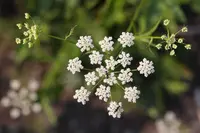
Skirret, Sium sisarum, is a perennial root vegetable grown mainly for its sweet, slender, white roots. It forms clumps of upright, hollow stems with finely divided, feathery green leaves and small white flower clusters in summer.
The plant likely originated in Central or Eastern Europe and has been cultivated since medieval times as a hardy food crop. It tolerates cool climates and is generally robust, which makes it relatively simple to care for skirret in a home garden.
Skirret prefers consistently moist but not waterlogged soil, good drainage, and a sunny to lightly shaded position, which helps support steady root development and healthy top growth.

Care Difficulty
Moderate Care

Light Preference
Full Sun

Water Requirements
Regular Water

Temperature Preference
Cold Hardy

Hardiness Zone
4–9

Soil Texture
Loamy, Silty, Organic-rich

Soil pH
Slightly acidic (6.5–7.0), Neutral (7.0)

Soil Drainage
Moist but well-drained

Fertilization
Light (every 4–6 weeks)
Scan your plant to receive care tips personalized for your specific plant
Available on iOS and Android
This root crop performs best in consistent light that supports steady leaf and root growth.
This species prefers steadily moist soil that never stays waterlogged.
This cool-season perennial root crop handles a wide range of outdoor temperatures.
Humidity is not a major factor for Sium sisarum, which thrives in typical outdoor conditions.
Sium sisarum prefers deep, loose, moist but well-drained soil to produce straight, tender roots.
This species can be grown in containers if the pot is deep enough for its long roots.
This root crop benefits from moderate feeding to support steady vegetative growth and root development.
Sium sisarum needs only light, functional pruning to keep plants healthy and productive.
This species is usually field-grown, so care focuses more on thoughtful transplanting than frequent repotting.
New Sium sisarum plants are most commonly raised from division or seed under suitable moisture and temperature conditions.
This hardy perennial usually needs minimal winter attention in temperate climates, as roots tolerate normal frost levels.

Plant Health Check
Not sure what's wrong with your plant? Check your plant's health inside the app.
Sium sisarum, commonly called skirret, was a valued root vegetable in medieval and Renaissance Europe and appears in historical kitchen garden records and cookbooks as a sweet, high-status ingredient.
The plant forms a clump of multiple slender, white storage roots with a naturally sweet, slightly aromatic taste, which led to its comparison with parsnip and carrot in older horticultural texts.
Skirret shows a strong preference for consistently moist, deep soils and often grows near streams and damp meadows in its native range, reflecting its adaptation to high soil moisture without root rot under cool conditions.

Historical accounts indicate that skirret was cultivated in royal and monastic gardens in parts of Europe before the widespread adoption of potato, then largely disappeared from mainstream agriculture as newer staple crops became dominant, making it an example of a nearly forgotten heritage vegetable.
Yes, the plant is grown mainly for its sweet, white, pencil‑thick roots, which are cooked or eaten raw. Young shoots and leaves are sometimes used as a vegetable, but roots are the primary culinary part.
Keep your plants happy and healthy with plant identification, disease detection, and easy care guidance.