Gray Pine Care (Pinus sabiniana)

Also known as: California foothill pine, Bull Pine, Foothill Pine, ghost pine
Gray Pine

About Gray Pine

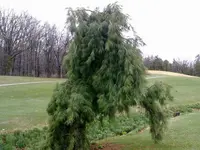
Gray pine (Pinus sabiniana) is a large, drought-tolerant conifer native to the foothills of California. It forms an irregular, open crown with sparse, gray-green needles that give the tree a distinctly airy look.

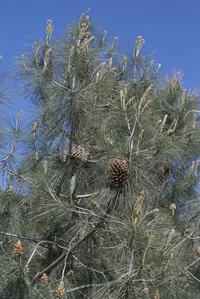
Cones are long, heavy, and very woody, remaining on the tree for many years and adding to its rugged appearance. The species is adapted to hot, dry summers and poor, rocky soils.

It suits low-maintenance, dry landscapes where there is space for its wide, sometimes asymmetric growth. Those who want to care for Gray Pine should provide full sun, good drainage, and minimal summer watering once the tree is established.

Main Plant Requirements

Care Difficulty

Moderate Care

Light Preference

Full Sun

Water Requirements

Low Water

Temperature Preference

Warm Climate

Hardiness Zone

8–10

Soil Texture

Sandy, Loamy, Rocky

Soil pH

Slightly acidic (6.5–7.0), Neutral (7.0)

Soil Drainage

Well-drained

Fertilization

Minimal (feed rarely)

Get Personalized Care Plan

Scan your plant to receive care tips personalized for your specific plant

Available on iOS and Android

How to Care for the Gray Pine

Pinus sabiniana thrives in open, bright sites with long daily sun exposure.

  • Provide full sun for 6–10 hours per day; Gray Pine develops denser crowns and stronger trunks in unobstructed light.
  • Tolerates light partial shade, especially in the first 2–3 years, but persistent shade leads to sparse, weak growth and reduced cone production.
  • Plant away from tall buildings or dense canopies; ensure winter sun access and avoid narrow north-facing exposures that cast long seasonal shadows.

Pinus sabiniana is drought-tolerant once established and prefers infrequent, deep watering.

  • During the first 2–3 years, water deeply when the top 5–8 cm of soil is dry, then allow the soil to fully drain before the next watering.
  • Use fast-draining, rocky or sandy soil; standing water, sour smell, or yellowing needles indicate overwatering and poor drainage.
  • In mature trees, reduce supplemental water to prolonged dry periods; watch for browning needle tips and dropped older needles as signs of extended drought stress.

This pine is adapted to hot, dry climates with cool winters and tolerates a wide temperature range.

  • Active growth is strongest around 65–85°F (18–29°C); young trees benefit from these moderate temperatures in spring and early summer.
  • Established trees tolerate winter lows near 15–20°F (-9 to -6°C), but extended freezes below this range can damage buds and fine roots.
  • Handles intense summer heat up to 100–110°F (38–43°C) if soil is not waterlogged; hot, dry winds increase stress, so deep soil moisture during heat waves is helpful.

This pine tolerates a wide humidity range and rarely needs special humidity management outdoors.

  • Target 30–60% humidity, which matches typical outdoor and unmodified indoor air in most homes.
  • Dry air is usually tolerated, but prolonged exposure below 25% can brown needle tips and increase spider mite activity.
  • In very dry climates, group plants near other vegetation or use a pebble tray outdoors to slightly raise local humidity around Gray Pine.

This species prefers sharply drained, mineral soils that mimic dry foothill or mountain slopes.

  • Use a sandy or gravelly loam with low to moderate organic matter to keep the root zone airy and fast-draining.
  • Aim for slightly acidic to neutral pH, roughly 6.0–7.5, which suits Pinus sabiniana in most landscapes.
  • Combine 2 parts coarse sand or grit, 1 part loam, and 1 part fine bark to improve structure, drainage, and aeration.
  • Avoid heavy clay, compacted areas, or sites where water lingers after rain, since sustained saturation promotes root rot.

This pine is generally unsuited to long-term container growing, especially beyond the juvenile stage.

  • If grown temporarily in a pot, choose a deep, heavy container that resists tipping from the developing top-heavy canopy.
  • Use a very coarse, fast-draining mix with extra gravel to prevent water from pooling around the taproot region.
  • Position the container where wind exposure is limited, since tall, rigid growth can act as a lever and destabilize the pot.

This drought-adapted conifer needs minimal feeding, but light nutrition can support establishment and container-grown Gray Pine.

  • Use a balanced slow-release fertilizer (for example 10-10-10) or well-aged compost in early spring for young or potted trees.
  • Apply once each growing season for in-ground plants; containers may benefit from a second very light application in midsummer.
  • Use fertilizer at 50% label strength to avoid excessive, weak growth and salt buildup in dry soils.
  • Stop feeding in late summer so new growth hardens before winter and the tree remains structurally strong.

Pruning needs for Pinus sabiniana are low and focus mainly on safety and health rather than shaping.

  • Best time for structural pruning is late winter to very early spring, before active growth starts.
  • Remove dead, diseased, storm-damaged, or crossing branches using clean, sharp bypass pruners or a pruning saw.
  • Thin crowded interior branches sparingly to improve air flow and branch strength, avoiding heavy canopy reduction.
  • Avoid cutting back into bare older wood; retain the natural open form instead of forcing tight, dense growth.

This pine is usually grown in the ground, with transplanting focused on young nursery trees rather than long-term containers.

  • Transplant in late winter to early spring while dormant and soil is moist but workable.
  • Choose young trees with compact, non-circling roots; older specimens resent major root disturbance and establish poorly.
  • If container-grown, shift up only when roots circle the pot or growth slows, typically every 2–3 years in youth.
  • Water deeply after planting, mulch 5–8 cm around (not against) the trunk, and shade temporarily to reduce transplant shock.

Pinus sabiniana is almost always propagated from seed, and vegetative methods are rarely successful outside professional settings.

  • Collect mature cones in late summer to fall, then dry until scales open and release seeds.
  • Provide cold stratification at about 35–40°F for 6–8 weeks to break seed dormancy and improve germination.
  • Sow in deep, well-drained, sandy mix with full sun to bright light and good air movement.
  • Protect seedlings from overwatering, damping-off disease, and extreme heat in the first 1–2 growing seasons.

This species is cold hardy through typical low-elevation winter conditions in much of its range and usually needs little special care.

  • Established in-ground trees tolerate moderate frost once roots are well developed.
  • Young or container plants in colder zones benefit from 5–8 cm of mulch over the root zone, kept away from the trunk.
  • Move containers to a sheltered, unheated but frost-moderated spot and ensure drainage holes stay open.

Care Tips

Establish deep roots

During the first 2–3 years, water less often but for longer periods to encourage deep taproot development, then gradually reduce supplemental irrigation so the tree becomes drought-resilient in line with its natural adaptation.

Maintain weed-free basin

Keep a 60–90 cm radius around the trunk free of turf and weeds using mulch or shallow cultivation so the young tree does not compete for limited soil moisture and nutrients.

Plan for large size

Site young trees at least 9–12 m away from buildings, overhead lines, and septic systems to accommodate their eventual height and wide, heavy crown without future structural conflicts.

Manage heavy cones

Avoid placing seating, play areas, or parking directly under mature trees, since large, heavy cones can fall and cause damage or injury when fully developed.

Reduce fire risk

In fire-prone areas, remove dry lower branches and accumulated needle litter within 1–3 m of the trunk, and maintain a low-fuel zone around the tree as part of broader landscape fire management when caring for Gray Pine.

Common Pests and Diseases

Western pine beetle

This pest bores into the trunk and larger branches, causing pitch tubes, reddish boring dust, and progressive crown yellowing and dieback. Symptoms include weakened, drought‑stressed trees being attacked first, often in groups.

Solution

Reduce stress by providing adequate but not excessive water during prolonged drought, avoiding root disturbance, and preventing trunk wounding. Remove and dispose of heavily infested trees or limbs before the next beetle flight period, and consult a local forestry professional about the need for trunk-applied preventive insecticides on high‑value specimens when regional beetle pressure is high.

California five-spine ips

This pest attacks the upper trunk and smaller branches, creating galleries under the bark that disrupt water flow and cause scattered branch dieback and top kill. These insects are drawn to stressed or recently pruned trees and to slash left on the ground.

Solution

Schedule pruning during cool seasons when beetle activity is low, and promptly chip, burn, or remove fresh pine slash and storm-damaged wood. Improve overall tree vigor through proper watering and avoiding soil compaction, and in areas with repeated ips outbreaks, seek local forestry guidance on timing and necessity of protective insecticide treatments for valuable trees.

Western gall rust

This disease causes round to oval woody galls on branches and sometimes trunks, which can lead to branch distortion, breakage, and reduced growth. Symptoms include swollen, rough, sometimes cracked galls that may persist for years.

Solution

Prune out infected branches several inches below the gall during dry weather and dispose of the material away from pines. Maintain good spacing and airflow around trees to reduce humidity, and for plantings with ongoing issues, select replacement trees with better rust resistance instead of adding more gray pine; these steps form part of practical Pinus sabiniana care.

Needle blight

This disease affects needles, causing tan to brown spots that enlarge, banding, and eventual needle browning and premature drop, often starting in the lower crown. Symptoms include a thin or tufted appearance in affected branch tips over time.

Solution

Rake and remove fallen needles from under trees to reduce fungal spores, and avoid overhead irrigation that keeps foliage wet for long periods. Improve air circulation by proper spacing and selective thinning of crowded branches, and consult a local arborist or extension service about timing for targeted fungicide sprays if the disease recurs yearly on high‑value trees.

Heterobasidion root disease

This disease infects roots and the lower stem, leading to progressive canopy thinning, yellowing, and eventual tree death, especially in planted or managed stands. Symptoms include reduced growth, dieback, and sometimes conks (shelf-like mushrooms) at the base of the tree or on nearby stumps.

Solution

Avoid unnecessary wounding of roots and lower trunks, and do not leave freshly cut pine stumps untreated in areas where the disease is known to occur. In managed plantings, remove and properly dispose of infected stumps and severely affected trees, and consult local forestry or extension specialists about preventative stump treatments and site selection before planting new gray pines in previously infected areas.

Interesting Facts

Massive three-needle pine

This California endemic carries its long needles in bundles of three, which can reach 20–30 cm, and produces some of the largest, heaviest cones of any North American pine.

Key food for wildlife

Its large, oily seeds are an important food source for California ground squirrels, woodpeckers, and other birds and mammals in the dry foothill woodlands where it grows.

Adapted to hot drought

The species is naturally adapted to very hot, dry summers on rocky slopes and foothills, with deep roots and sparse foliage that reduce water loss in its Mediterranean-type climate.

Botan icon

Did you know?

Indigenous peoples of California traditionally harvested the large, protein- and fat-rich seeds of this pine as a staple wild food, using specialized gathering techniques and often managing tree stands with fire to improve cone production.

FAQs about Gray Pine

This species grows moderately fast when young, often 30–60 cm per year, then slows with age. Growth rate depends on sun exposure, soil depth, and water availability. In very dry or shallow soils it can grow much more slowly.

Grow Healthy Plants with Botan Care

Keep your plants happy and healthy with plant identification, disease detection, and easy care guidance.

Botan plant care app — identify plants on mobile

Explore More Plants