Spring site marking
Flag or discreetly stake the colony area in late fall so you do not disturb the shallow rhizomes when the stems are still invisible in early spring.

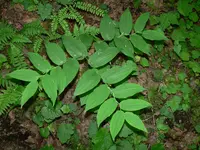
Claspleaf twistedstalk, Streptopus amplexifolius, is a woodland perennial native to cool, moist forests in North America and parts of Europe and Asia. It grows from rhizomes, forming arching, slender stems with clasping leaves and small, nodding, tubular flowers that hang beneath the stems.
After flowering, it produces red, berry-like fruits that add seasonal interest and help with identification. In gardens, it suits shade or woodland plantings where soil stays consistently moist and rich in organic matter.
Its need for cool, damp, shaded conditions makes it somewhat finicky in warmer or dry climates. Gardeners who understand how to care for claspleaf twistedstalk often have best results in sheltered, woodland-style beds.

Care Difficulty
Moderate Care

Light Preference
Shade

Water Requirements
Keep Soil Moist

Temperature Preference
Cold Hardy

Hardiness Zone
3–7

Soil Texture
Loamy, Silty, Organic-rich

Soil pH
Strongly acidic (4.5–5.5), Acidic (5.5–6.5)

Soil Drainage
Moist but well-drained

Fertilization
Minimal (feed rarely)
Scan your plant to receive care tips personalized for your specific plant
Available on iOS and Android
This woodland perennial prefers cool, shaded conditions that mimic moist forest understories.
This species thrives in consistently moist, cool soils without prolonged drying or standing water.
This cool-climate woodland plant favors mild temperatures and tolerates cold better than heat.
This woodland perennial prefers consistently moist air but adapts if the root zone stays evenly damp.
This species thrives in cool, moist, humus-rich substrates that resemble a shaded forest floor.
This species can be grown in containers if the pot supports cool, consistently moist roots and shaded placement.
This woodland perennial needs minimal feeding, as claspleaf twistedstalk is adapted to low-nutrient forest soils.
Pruning Streptopus amplexifolius is usually limited to light cleanup rather than shaping.
This plant is best grown in the ground and only occasionally needs transplanting or container adjustment.
Streptopus amplexifolius is usually propagated by careful division or seed under cool, moist conditions.
This species is cold hardy in temperate climates and normally needs little specific winter care.

Plant Health Check
Not sure what's wrong with your plant? Check your plant's health inside the app.
This species forms distinctive arching stems that grow in a gentle zigzag, with each bend producing a leaf, which helps it position leaves efficiently for low, dappled forest light.
The leaves have bases that completely clasp the stem, a feature reflected in the name amplexifolius, meaning clasping-leaved, and this trait helps distinguish it from similar woodland herbs.
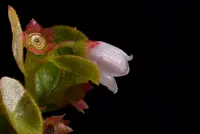
Its pale, bell-shaped flowers hang singly or in pairs from slender, kinked stalks that emerge from the leaf axils and usually face downward, making them easy to miss in dense understory vegetation.

The berries of this plant are eaten by wildlife such as birds and small mammals, which disperse its seeds across moist, cool forest habitats, contributing to its broad distribution across northern and montane regions of North America and Eurasia.
Young shoots, leaves, and ripe berries have been used as wild edibles by some Indigenous groups, but identification must be absolutely certain. It resembles toxic lilies, so most home gardeners are safer treating it as an ornamental woodland species only.
Keep your plants happy and healthy with plant identification, disease detection, and easy care guidance.