purpleflowering raspberry Care (Rubus odoratus)

Also known as: American bramble, purple-flowered raspberry
purpleflowering raspberry

About purpleflowering raspberry

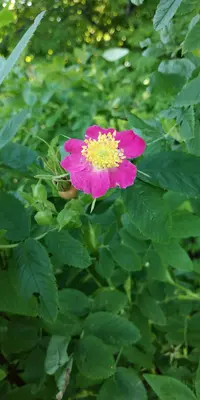
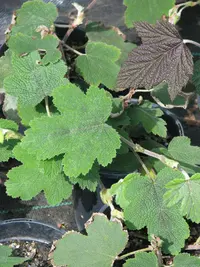
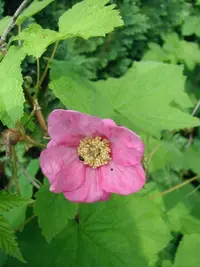
Purpleflowering raspberry (Rubus odoratus) is a deciduous shrub in the rose family, grown mainly for its large, rich purple flowers and soft, maple-like leaves. It forms an open, bushy clump with upright canes and a somewhat wild, thicket-forming habit that fits naturalistic or woodland-style gardens.

This species is native to eastern North America, where it grows in forest edges, clearings, and rocky slopes. It is generally easy to grow, as it tolerates cold, partial shade, and a range of soils, though it prefers moist, well-drained conditions.

Gardeners who care for purpleflowering raspberry value it for long seasonal interest and its ability to attract pollinators, but its suckering habit can require space and light pruning control.

Main Plant Requirements

Care Difficulty

Easy Care

Light Preference

Partial Shade

Water Requirements

Regular Water

Temperature Preference

Cold Hardy

Hardiness Zone

3–8

Soil Texture

Loamy, Silty, Organic-rich

Soil pH

Acidic (5.5–6.5), Slightly acidic (6.5–7.0)

Soil Drainage

Moist but well-drained

Fertilization

Minimal (feed rarely)

Get Personalized Care Plan

Scan your plant to receive care tips personalized for your specific plant

Available on iOS and Android

How to Care for the purpleflowering raspberry

This shrub thrives in bright outdoor conditions with a balance of sun and shade.

  • Provide 4–6 hours of direct sun daily, ideally with morning sun and light afternoon shade to protect leaves from scorching.
  • Allow partial shade, especially in hotter climates; purpleflowering raspberry flowers and fruits best with at least 3–4 hours of sun.
  • In summer, avoid intense west-facing exposure; in cooler seasons, more direct sun is beneficial to support flowering and ripening.

This species prefers consistently moist, well-drained soil rather than alternating extremes of wet and dry.

  • Water when the top 3–5 cm of soil feels dry, aiming for soil that stays evenly moist but never saturated.
  • During hot, dry periods, increase watering frequency and watch for wilting, drooping leaves, or dry, crisp edges as signs of underwatering.
  • Reduce watering in cool or rainy seasons; yellowing, soft leaves or a sour smell in the root zone suggest overwatering and poor drainage.

This hardy shrub tolerates a wide temperature range but grows best in cool to mild conditions.

  • Active growth and flowering are strongest around 60–75°F (16–24°C), especially in spring and early summer.
  • Mature plants tolerate winter lows near -20°F (-29°C) when fully dormant, though young plants benefit from mulch for root insulation.
  • In hot spells above 85°F (29°C), expect some stress; provide extra mulch and moisture, as prolonged extreme heat can reduce flowering and vigor.

This shrub handles typical outdoor humidity well and rarely needs special moisture management.

Rubus odoratus grows best in deep, moist, well‑drained, organic‑rich soil.

  • Use a loamy structure with roughly equal parts garden soil, compost, and leaf mold to retain moisture yet stay airy.
  • Ensure drainage is free by avoiding compacted clay; incorporate coarse sand or fine gravel if water lingers after rain.
  • Aim for slightly acidic to neutral pH around 5.5–7.0, adjusting with elemental sulfur or garden lime if tests show extremes.
  • Avoid waterlogged, heavy, or very shallow soils, which restrict root oxygen and increase the risk of root rot.

This species can be grown in large outdoor containers but is better suited to spacious sites in the ground.

  • Choose a wide, heavy container at least 40–50 cm across to accommodate spreading roots and prevent the shrub from tipping in wind.
  • Use a stable pot material such as thick plastic or clay to support the plant’s height and reduce sideways rocking as canes lengthen.
  • Position the container where lateral shoots have room to arch outward without snagging walkways, as this species forms a broad clump.

Rubus odoratus is a robust shrub that benefits from light feeding in poorer soils but often copes well without heavy fertilization.

  • Apply a balanced slow-release fertilizer (around 10-10-10) in early spring at half the label rate for flowering shrubs.
  • Alternatively, top-dress with 2–5 cm of well-rotted compost around the drip line to support healthy purpleflowering raspberry growth.
  • Skip further feeding after midsummer to avoid soft late growth that may be damaged by frost.
  • Do not fertilize during winter dormancy; maintain a nutrient-light period to match the plant’s rest phase.

Pruning Rubus odoratus maintains structure, encourages vigorous new canes, and supports good flowering.

  • Prune in late winter or very early spring, before buds fully break, using clean, sharp bypass pruners.
  • Cut out dead, diseased, or damaged canes at ground level to reduce pest and disease pressure.
  • Thin crowded stems, keeping the strongest, well-spaced canes to improve airflow and light penetration.
  • Shorten excessively long or arching shoots to shape the shrub and keep growth within its allotted space.

This species is usually grown in the ground, so management focuses on transplanting rather than long-term container culture.

  • Transplant young plants or established clumps in early spring or early fall, when temperatures are mild and soil is workable.
  • Move shrubs if growth is stunted, roots circle a container, or suckers spread where they are not wanted.
  • Dig a wide hole, keep as much root ball as possible, and water deeply before and after transplanting to limit shock.
  • Set the crown at the same soil level as before, firm soil gently, and mulch 5–8 cm deep, keeping mulch off stems.

Rubus odoratus is commonly propagated from suckers, division, and softwood or semi-ripe cuttings.

  • Lift and divide rooted suckers or clumps in early spring or fall, replanting divisions at the same depth in moist soil.
  • Take 10–15 cm softwood cuttings in late spring, using non-flowering shoots, and insert into a free-draining, moist mix.
  • Provide bright, indirect light and high humidity for cuttings, keeping temperatures around 65–75°F for reliable rooting.
  • Seeds are possible but slower; cold stratification in a refrigerator for several weeks improves germination consistency.

This shrub is generally cold hardy in much of the US and needs only modest winter care once established.

  • Tolerates typical winters in USDA zones roughly 3–7 when planted in open ground with good drainage.
  • Apply a 5–8 cm mulch layer over the root zone in late fall to moderate soil temperature and moisture swings.
  • In very cold or exposed sites, loosely tie canes and use a breathable shrub cover to limit desiccating wind.
  • Container-grown plants are more vulnerable; move pots into an unheated garage or against a sheltered wall for winter.

Care Tips

Sucker Management

Check several times each growing season for root suckers spreading beyond the desired area and remove or spade-edge them while young to keep the thicket contained and easier to maintain when growing purpleflowering raspberry.

Wind-Smart Placement

Site plants where taller shrubs, fences, or buildings break strong prevailing winds, as this reduces cane breakage and helps flowers and leaves stay intact through storms.

Mulch Collar Setup

Maintain a 5–8 cm deep ring of organic mulch around but not touching the stems to suppress weeds, stabilize soil moisture, and protect shallow roots from mechanical damage by mowers or string trimmers.

Targeted Cane Thinning

In late winter, remove the oldest, most congested canes at ground level to improve air flow through the clump, which lowers disease pressure and encourages stronger new flowering shoots.

Wildlife-Friendly Netting

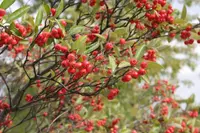
If birds strip immature fruit, use light, large-mesh netting supported on simple stakes or hoops so it sits off the canes, protecting the crop while still allowing light and air to reach the plant.

Common Pests and Diseases

Raspberry cane borer

This pest is a beetle whose larvae tunnel inside young canes, causing wilting and dieback of shoot tips.

Solution

Prune out and destroy wilted cane tips 15–20 cm below the lowest wilted leaves as soon as symptoms appear, which removes the larvae before they move deeper. Keep plantings well spaced and avoid excessive nitrogen, which reduces lush, vulnerable growth and makes monitoring easier when caring for purpleflowering raspberry.

Raspberry cane blight

This disease causes dark, sunken lesions on canes that may crack and girdle stems, leading to sudden wilting and death of lateral shoots.

Solution

Cut out and destroy infected canes at ground level during dry weather, disinfecting pruners between cuts. Improve air circulation by thinning crowded stems, avoid wounding canes, and keep irrigation at the soil level rather than wetting the foliage and stems.

Raspberry leaf spot

This disease produces small, round, pale to grayish spots on leaves that may coalesce, leading to yellowing and premature leaf drop, especially in dense, humid plantings.

Solution

Rake and remove fallen leaves, and thin stems to improve airflow and light penetration. Water at the base early in the day, avoid overhead irrigation, and if the problem recurs, consider applying a labeled copper or other raspberry-safe fungicide in early spring before heavy disease pressure builds.

Raspberry cane and leaf rust

This disease forms orange to rust-colored pustules on the undersides of leaves and sometimes on canes, which can weaken plants and reduce flowering if severe.

Solution

Promptly remove and dispose of heavily infected leaves and canes, and clear plant debris at the end of the season to reduce overwintering spores. Provide good spacing and sun exposure, and in areas with a history of rust, a preventive fungicide labeled for raspberries can be used at bud break and repeated as directed during wet periods.

Interesting Facts

Naturally hairless canes

Unlike many other Rubus species, this shrub has upright, woody canes that are essentially spineless and lack the stiff prickles typical of raspberries, which makes handling and pruning much easier.

Maplelike foliage

Its large, soft, 3–5-lobed leaves resemble those of a maple tree more than a typical raspberry, creating a coarse, almost shrub–maple appearance in the landscape.

Long blooming season

Individual plants can produce new magenta-purple flowers over several months in summer, providing an extended nectar source for bees and other pollinators compared with many native shrubs that flower in a short flush.

Botan icon

Did you know?

Purpleflowering raspberry is native to the eastern parts of North America and often colonizes rocky slopes, forest edges, and disturbed sites, where its spreading, suckering root system helps stabilize soil and gradually form dense thickets that provide cover for small wildlife.

FAQs about purpleflowering raspberry

This shrub spreads by suckers and can form dense thickets over time, especially in moist, fertile soil. In small gardens, control spread by removing unwanted shoots and installing root barriers or regularly cutting back new canes at ground level.

Grow Healthy Plants with Botan Care

Keep your plants happy and healthy with plant identification, disease detection, and easy care guidance.

Botan plant care app — identify plants on mobile

Explore More Plants