Wind-hardening young plants
In the first 1–2 seasons, stake young stems lightly and expose them gradually to stronger wind so they build sturdy, flexible canes without snapping in coastal or open sites.

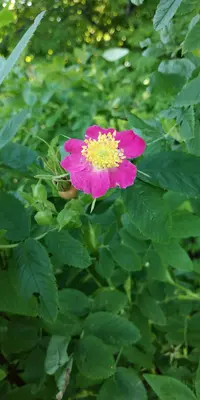
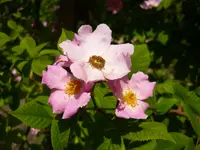
Russian rose, Rosa glabrifolia, is a deciduous shrub rose valued for its simple, elegant flowers and relatively sparse, smooth foliage. It typically forms an upright, bushy habit suited to mixed borders or informal hedges.
This species is native to parts of Eurasia, where it grows in open, sunny sites with well-drained soils. Its natural hardiness and tolerance of less-than-perfect conditions make it moderately easy to grow for gardeners who learn how to care for Russian rose.
It generally prefers full sun, moderate moisture, and soil that does not stay waterlogged, which supports healthy flowering and balanced growth.

Care Difficulty
Moderate Care

Light Preference
Full Sun

Water Requirements
Moderate Water

Temperature Preference
Cool Climate

Hardiness Zone
5–8

Soil Texture
Loamy, Sandy, Clay

Soil pH
Acidic (5.5–6.5), Slightly acidic (6.5–7.0)

Soil Drainage
Moist but well-drained

Fertilization
Minimal (feed rarely)
Scan your plant to receive care tips personalized for your specific plant
Available on iOS and Android
Rosa glabrifolia performs best with consistent, direct sun exposure for strong flowering and compact growth.
Rosa glabrifolia prefers evenly moist, well-drained soil, with deeper but less frequent watering.
This rose is a hardy shrub that tolerates a wide temperature range but grows best in moderate conditions.
This species is mainly grown outdoors and humidity is rarely a limiting factor.
Rosa glabrifolia prefers a deep, well‑structured loam that stays evenly moist but drains freely.
This species can be grown in containers if the pot size and drainage are carefully managed.
Rosa glabrifolia usually needs only light feeding, especially in reasonably fertile soil.
Rosa glabrifolia responds well to thoughtful pruning that maintains an open, healthy framework.
This species is normally grown in the ground, so transplanting Rosa glabrifolia is more relevant than container repotting.
Rosa glabrifolia is commonly propagated by semi-ripe cuttings and by seed for conservation or breeding.
Rosa glabrifolia is generally cold-hardy in temperate climates and needs only modest winter care in the ground.

Plant Health Check
Not sure what's wrong with your plant? Check your plant's health inside the app.
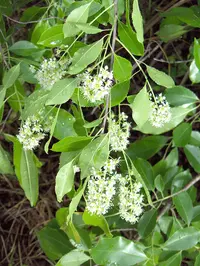
Rosa glabrifolia is noted for its unusually narrow, almost willow-like leaflets that are largely glabrous, meaning they lack the typical fine hairs seen on many wild roses, which gives the foliage a cleaner, smoother look.
This species has relatively sparse, fine prickles compared with many other wild roses, which makes its stems appear more slender and can help botanists separate it from closely related taxa in the field.
Rosa glabrifolia is typically associated with specific regional habitats in its native range, where it grows as part of mixed shrub communities and contributes to structural diversity and shelter for small animals and insects.
Lack of flowers often comes from insufficient light, heavy pruning at the wrong time, or low nutrient levels. Old, exhausted wood also flowers poorly. Focus on balanced fertilization and correct seasonal pruning rather than frequent shaping cuts.
Keep your plants happy and healthy with plant identification, disease detection, and easy care guidance.