Columbian Windflower Care (Anemonastrum deltoideum)

Columbian Windflower

About Columbian Windflower

Columbian windflower, Anemonastrum deltoideum, is a small perennial wildflower in the buttercup family. It typically forms loose clumps with slender stems and delicate, deeply divided leaves.

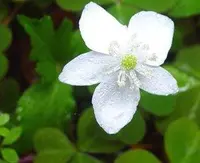
The plant carries simple, star-like white flowers that give a light, airy look to woodland or meadow-style plantings. It is native to parts of western North America, where it grows in moist, cool mountain habitats.

This species prefers cool summers, consistent moisture, and well-drained, humus-rich soil, which can make it more challenging in hot or very dry gardens. Understanding these natural conditions helps clarify how to care for Columbian Windflower in cultivation.

Main Plant Requirements

Care Difficulty

Moderate Care

Light Preference

Partial Shade

Water Requirements

Moderate Water

Temperature Preference

Cool Climate

Hardiness Zone

5–7

Soil Texture

Loamy, Silty, Organic-rich

Soil pH

Acidic (5.5–6.5), Slightly acidic (6.5–7.0)

Soil Drainage

Moist but well-drained

Fertilization

Minimal (feed rarely)

Get Personalized Care Plan

Scan your plant to receive care tips personalized for your specific plant

Available on iOS and Android

How to Care for the Columbian Windflower

This woodland perennial prefers cool, bright conditions with protection from harsh midday sun.

  • Provide dappled or filtered light with 2–4 hours of gentle morning sun; avoid direct afternoon sun that can scorch foliage and fade Columbian Windflower blooms.
  • Plant on the east or north side of buildings or under open tree canopies to mimic forest-edge light levels.
  • In hotter summers, increase shade from late spring to early fall, while in cooler climates some light, low-angle afternoon sun is usually tolerated.

This species prefers evenly moist, never waterlogged soil that dries slightly at the surface between waterings.

  • Water when the top 2–3 cm of soil feels dry, then soak the root zone thoroughly so moisture penetrates 10–15 cm deep.
  • Use humus-rich, well-drained soil; pooling water or a sour smell in the root area indicates poor drainage and risk of root rot.
  • In spring and early summer, monitor closely during active growth; in late summer and dormancy, reduce watering as foliage dies back and soil remains damp longer.

This plant is adapted to cool, temperate climates with distinct winters and mild summers.

  • Optimal growth occurs around 55–70°F (13–21°C) during the growing season, with cooler nights encouraging sturdy stems and good flowering.
  • Established plants typically tolerate winter lows down to about 0°F (−18°C) if soil drains well and crowns are not exposed.
  • Prolonged heat above 85°F (29°C) can stress plants; provide shade and consistent soil moisture during hot spells, and avoid planting in heat-reflective spots such as south-facing walls.

This species handles a wide humidity range but prefers moderately moist air.

  • Aim for 40–60% humidity, similar to most temperate outdoor conditions.
  • It tolerates short spells of drier air, but prolonged indoor heating can cause leaf edge browning or faster wilting in Columbian Windflower.
  • Increase humidity by grouping pots, using a pebble tray with water below the pot base, or positioning near (not in) a humid microclimate such as a pond.

Anemonastrum deltoideum grows best in moist, airy, humus-rich soil with reliable drainage.

  • Use a loose loam with high organic matter, such as garden loam mixed with leaf mold or compost at about 30–40%.
  • Ensure free drainage; in containers or raised beds, combine compost with sharp sand or fine grit to prevent waterlogging around the crown.
  • Aim for slightly acidic to neutral pH, roughly 6.0–7.0, avoiding strongly alkaline or chalky soils that can restrict nutrient uptake.
  • Improve aeration in heavier soils by incorporating fine bark or coarse sand through the top 15–20 cm rather than just adding a thin surface layer.

This species can be grown in containers if moisture and root space are carefully managed.

  • Choose a deep, stable pot so the fibrous root system can spread while the slender stems are not easily tipped by wind.
  • Use a heavier clay or ceramic container outdoors to buffer rapid moisture loss and keep the root zone cooler in summer.
  • Raise the pot slightly on feet or bricks so drainage holes stay clear and runoff does not pool under the container.

This woodland perennial, often called Columbian Windflower, grows well in average garden soil and benefits from light feeding only.

  • Apply a balanced, slow-release fertilizer (such as 10-10-10) at half label rate once in early spring as new growth starts.
  • In richer soils, use a thin layer of compost instead of granular fertilizer to avoid excess vigor and weak stems.
  • Avoid feeding in midsummer onward so growth can harden before dormancy, and do not fertilize during winter.
  • Water after applying any fertilizer to distribute nutrients evenly and reduce the risk of root burn.

Pruning Anemonastrum deltoideum is mainly about tidiness and encouraging healthy flowering.

  • In late spring to early summer, deadhead spent flowers by cutting stems back to a strong leaf to prolong blooming.
  • Remove dead, damaged, or diseased leaves whenever noticed, using clean, sharp scissors or hand pruners.
  • Thin out congested clumps after flowering by cutting weak or crossing stems at the base to maintain air flow and shape.
  • At season’s end, allow foliage to yellow naturally, then cut back to ground level to tidy beds and reduce disease carryover.

This species is usually grown in beds or woodland borders, so focus on careful transplanting rather than frequent repotting.

  • Transplant in early spring or early fall when growth is slow and temperatures are mild.
  • Move clumps only when flowering declines, centers thin out, or plants crowd nearby species.
  • Lift the clump with a broad fork, keeping as much soil around the roots as possible to limit transplant shock.
  • Replant at the same depth in moist, well-drained soil, water thoroughly, and shade lightly for 1–2 weeks while roots re-establish.

Anemonastrum deltoideum is commonly propagated by division or seed under cool, moist conditions.

  • Divide established clumps in early spring or early fall, cutting sections with several buds and healthy roots.
  • Replant divisions immediately in humus-rich, well-drained soil and water to settle air pockets around the roots.
  • Sow fresh seed in pots or trays outdoors in fall, allowing natural winter chilling to break dormancy.
  • Keep seed pots evenly moist and shaded; seedlings can be pricked out and planted into beds once sturdy and past frost risk.

This hardy perennial generally needs minimal winter attention in climates with cold winters.

  • Tolerates normal frosts once established, with top growth dying back and underground parts overwintering.
  • After the first hard frost, cut back collapsed stems and remove diseased debris to reduce fungal problems.
  • Apply a 5–8 cm mulch layer over the root zone in colder regions, keeping mulch slightly away from crowns.
  • Container-grown plants in cold areas can be sunk into the ground or placed in a sheltered, unheated spot to moderate root freezing.

Care Tips

Stolon management

Inspect the plant in early spring and gently lift and redirect or remove excess stolons (spreading stems) to keep the clump compact and prevent it from invading nearby beds.

Shaded mulch ring

Apply a thin 2–3 cm ring of fine compost or leaf mold around, but not touching, the crown to keep roots cool and moist while reducing weed competition without encouraging rot at the base.

Divide at bud stage

Schedule division when new growth buds are visible but before stems elongate fully, then replant divisions at the same depth and water in once to improve establishment and flowering the following season.

Spring slug barriers

Before new shoots emerge, place copper tape rings or low slug collars around the planting area and refresh them after heavy rain to protect tender growth without needing frequent pellet applications.

Mark dormant clumps

After foliage dies back, mark the clump locations with discreet stakes or labels so later digging or replanting does not disturb dormant crowns or stolons when caring for Columbian Windflower.

Common Pests and Diseases

Powdery mildew

This disease causes a white, powdery coating on leaves and stems, often appearing in dense or shaded plantings. Symptoms include distorted new growth and premature leaf yellowing or drop in humid but not overly wet conditions.

Solution

Remove and dispose of heavily infected leaves to reduce spore load, then improve spacing and airflow around clumps and avoid overhead watering. In persistent cases, apply a sulfur or potassium bicarbonate fungicide labeled for ornamental perennials, treating early at the first signs of infection as part of broader Anemonastrum deltoideum care.

Downy mildew

This disease produces yellow, pale, or blotchy patches on the upper leaf surface and a grayish to violet downy growth on the underside, especially in cool, wet conditions. Symptoms include leaf curling and eventual collapse of affected foliage if humidity stays high.

Solution

Promptly remove and discard infected leaves, water at soil level in the morning, and avoid crowding plants to lower humidity around foliage. In areas with a history of downy mildew, use a phosphonate or copper-based fungicide preventively during prolonged cool, wet periods following label directions.

Leaf spot

This disease causes small brown, purple, or tan spots on foliage that may enlarge and merge, leading to tattered or scorched-looking leaves. Symptoms include weakened growth and reduced flowering when defoliation recurs each season.

Solution

Cut off and destroy affected leaves and all senescent foliage at season’s end to limit overwintering spores, and keep irrigation directed to the soil surface. In severe or recurring cases, apply a broad-spectrum ornamental fungicide containing chlorothalonil or mancozeb at the first appearance of spots, repeating as instructed on the label if wet weather continues.

Leaf miners

These insects create pale, winding tunnels within the leaf blades as the larvae feed between upper and lower leaf surfaces. Symptoms include serpentine or blotchy trails that can reduce photosynthesis and cause early leaf drop when infestations are heavy.

Solution

Remove and discard mined leaves as soon as tunnels are seen, which physically removes larvae and limits spread within clumps. For repeated infestations, use a systemic insecticide containing spinosad or an appropriate neem-based product applied according to label directions when new growth begins to emerge.

Aphids

These insects cluster on young stems, buds, and leaf undersides, sucking sap and excreting sticky honeydew that can attract sooty mold. Symptoms include distorted new growth, reduced vigor, and sometimes reduced flowering if colonies become dense on the flowering stems.

Solution

Wash colonies off with a firm stream of water, repeating several times per week until numbers drop, and encourage natural predators such as lady beetles by minimizing broad-spectrum insecticide use nearby. If needed, treat persistent populations with insecticidal soap or horticultural oil, fully coating stems and leaf undersides and reapplying as new aphids appear.

Interesting Facts

Taxonomic name change

This species was long placed in the genus Anemone and is still widely cited as Anemone deltoidea in floras of western North America, reflecting an older classification that grouped many windflowers together.

Pacific Northwest native

It is naturally distributed in the Pacific Northwest of North America, especially in western Oregon and Washington, where it grows in open woods, forest margins, and grassy slopes on well-drained soils.

Spreading rhizome habit

The plant forms slender underground rhizomes that allow it to spread slowly into loose colonies, creating patches of low, white-flowered spring groundcover in suitable woodland habitats.

FAQs about Columbian Windflower

This species spreads slowly by short rhizomes and self-seeding, but it is not usually aggressive. In average garden conditions it forms small clumps over time. Unwanted seedlings can be pulled easily to keep it contained.

Grow Healthy Plants with Botan Care

Keep your plants happy and healthy with plant identification, disease detection, and easy care guidance.

Botan plant care app — identify plants on mobile

Explore More Plants