Staggered Bulb Planting
Plant bulbs in small groups at different depths (6–8 cm and 8–10 cm) and slightly offset spacing to extend bloom interest and reduce the visual impact of any bulbs that fail.

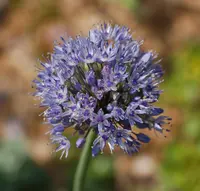
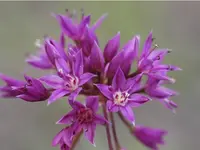
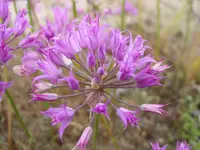
Blue ornamental onion (Allium caeruleum) is a small bulb-forming perennial grown mainly for its vivid sky-blue flower globes. It sends up slender, upright stems topped with dense, rounded clusters of star-shaped flowers above narrow, grasslike leaves.
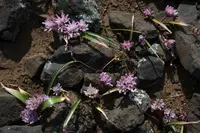
This species is native to Central Asia, where it grows in open, sunny, and often dry habitats. In gardens it is usually easy to grow, as long as the soil drains well and the bulbs do not sit in waterlogged conditions.
Gardeners who want to care for blue ornamental onion should provide plenty of sun, moderately moist but free-draining soil, and avoid heavy summer watering once foliage starts to die back.

Care Difficulty
Easy Care

Light Preference
Full Sun

Water Requirements
Moderate Water

Temperature Preference
Cold Hardy

Hardiness Zone
4–8

Soil Texture
Sandy, Loamy, Rocky

Soil pH
Slightly acidic (6.5–7.0), Slightly alkaline (7.0–7.5)

Soil Drainage
Well-drained

Fertilization
Minimal (feed rarely)
Scan your plant to receive care tips personalized for your specific plant
Available on iOS and Android
Allium caeruleum grows best in open, bright conditions that mimic a sunny meadow.
Allium caeruleum prefers infrequent, deep watering in freely draining soil.
This hardy bulb tolerates a wide temperature range when grown in the ground.
Humidity is not a key factor for Allium caeruleum, which is well adapted to dry outdoor air.
Allium caeruleum prefers free-draining, mineral-rich soil that never stays waterlogged.
This species is suitable for container growing when drainage and bulb depth are managed carefully.
Allium caeruleum needs only light feeding to support flowering and bulb health.
Allium caeruleum needs minimal pruning, mainly to keep clumps tidy and support bulb vigor.
Blue ornamental onion is usually grown in the ground and only needs infrequent lifting or transplanting.
Allium caeruleum is commonly propagated by bulb division and sometimes from seed.
Allium caeruleum is generally cold hardy in temperate climates and needs little winter attention once established.

Plant Health Check
Not sure what's wrong with your plant? Check your plant's health inside the app.
This species is one of the few ornamental onions with naturally clear, sky‑blue flower clusters, unlike the more common purple or white alliums, which makes it useful in breeding work focused on introducing true blue tones.
Allium caeruleum is native to dry steppes of Kazakhstan and surrounding regions, where it evolved to tolerate cold winters, summer drought, and nutrient‑poor, well‑drained soils.
Its compact, nectar‑rich flower heads are highly attractive to bees and other pollinating insects, providing a focused food source early to mid summer when some spring flowers have already faded.

Historical records indicate that this species was introduced into European horticulture in the 19th century as a botanical curiosity specifically prized for its unusually intense blue color among bulbous onions, quickly becoming a parent in breeding programs for ornamental alliums.
Lack of flowers usually comes from insufficient cold during winter, too much shade, overcrowded bulbs, or bulb exhaustion after many years. Dividing clumps and replanting at the correct depth often restores reliable flowering.
Keep your plants happy and healthy with plant identification, disease detection, and easy care guidance.