Encourage Self‑Seeding
Leave some spent flower spikes on the plant until they fully dry, then gently shake them over the desired area so the seeds fall where you want new plants next season.

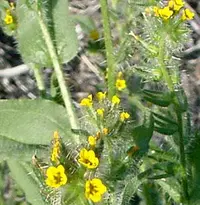
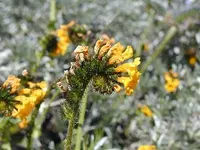
Bristly fiddleneck (Amsinckia tessellata) is an annual wildflower in the borage family, known for its coiled flower spikes and rough, bristly foliage. It usually grows as a small, upright plant with narrow leaves and yellow to orange funnel-shaped flowers that unroll as they open.
This species is native to dry, open habitats in western North America, especially deserts and scrublands. It tends to thrive in full sun and well-drained, often poor soils, which makes it relatively easy to establish in low-water, naturalistic plantings.
Because it is adapted to arid conditions and lean soils, it generally needs minimal attention once established, though understanding how to care for bristly fiddleneck helps it perform reliably in garden settings.

Care Difficulty
Easy Care

Light Preference
Full Sun

Water Requirements
Low Water

Temperature Preference
Warm Climate

Hardiness Zone
6–10

Soil Texture
Sandy, Loamy, Rocky

Soil pH
Slightly acidic (6.5–7.0), Neutral (7.0)

Soil Drainage
Well-drained

Fertilization
Minimal (feed rarely)
Scan your plant to receive care tips personalized for your specific plant
Available on iOS and Android
This annual wildflower prefers strong sun similar to its native desert and scrub habitats.
This species is adapted to dry conditions and prefers infrequent, light watering once established.
This desert-adapted annual thrives in warm, dry conditions but is sensitive to hard frost.
This annual wildflower tolerates a wide humidity range and usually does not need special adjustment in typical outdoor conditions.
This species prefers lean, fast-draining mineral soils that mimic dry, open habitats.
This species can be grown in containers, mainly for short-term display or wildflower-style plantings.
This desert annual needs very little feeding, especially in native or lean soils.
Pruning Amsinckia tessellata is minimal and mainly focused on tidiness and seed management.
This annual wildflower is best direct‑sown, with only light transplanting when necessary.
Propagation of Amsinckia tessellata is most reliable from fresh seed.
This species behaves as a cool‑season annual in many regions and usually needs little specific winter care.

Plant Health Check
Not sure what's wrong with your plant? Check your plant's health inside the app.
The flowers open yellow and gradually turn orange as they age, a color shift that helps pollinators focus on younger, more rewarding blooms.
This species is an annual adapted to arid regions of western North America, timing its life cycle to brief spring moisture and completing growth, flowering, and seed set before intense summer drought.
Stems and leaves are covered with stiff hairs that reduce herbivory and limit water loss by creating a small boundary layer of still air around the plant surface.

Amsinckia tessellata often forms dense, short-lived wildflower displays after winter and early spring rains in desert and chaparral regions, contributing significantly to early-season nectar resources for native bees and other insects in otherwise sparse landscapes.
The flowers are highly attractive to native bees, honeybees, small wasps, and some butterflies. It provides early-season nectar and pollen, making it useful in wildflower meadows and habitat plantings for supporting beneficial insects.
Keep your plants happy and healthy with plant identification, disease detection, and easy care guidance.