Red Clover Care (Trifolium pratense)

Red Clover

About Red Clover

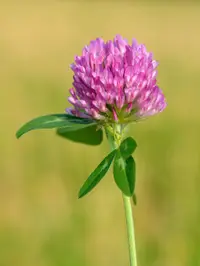
Red clover, Trifolium pratense, is a short-lived perennial legume commonly grown in meadows, lawns, and pasture mixes. It forms low clumps with trifoliate leaves marked by pale chevrons.

Rounded pink to reddish flower heads rise above the foliage and attract bees and other pollinators. The plant fixes nitrogen in the soil, which improves fertility and makes it useful in crop rotations and cover crops.

It is native to Europe and western Asia but is now naturalized across much of North America in roadsides, fields, and disturbed ground. In general, it prefers full sun, moderate moisture, and well-drained soil, and these adaptable traits make it relatively simple to care for Red Clover.


Main Plant Requirements

Care Difficulty

Easy Care

Light Preference

Full Sun

Water Requirements

Moderate Water

Temperature Preference

Cold Hardy

Hardiness Zone

3–9

Soil Texture

Sandy, Loamy, Clay

Soil pH

Acidic (5.5–6.5), Slightly acidic (6.5–7.0)

Soil Drainage

Well-drained

Fertilization

Minimal (feed rarely)

Get Personalized Care Plan

Scan your plant to receive care tips personalized for your specific plant

Available on iOS and Android

How to Care for the Red Clover

This species grows best in open, bright conditions with consistent sun exposure.

  • Provide 6–8 hours of direct sun daily; morning sun with light afternoon shade helps prevent leaf scorch in hot summers.
  • Red Clover tolerates light partial shade (3–4 hours sun), but flowering and vigor decrease as shade increases.
  • Avoid prolonged deep shade, which leads to weak, leggy growth, and watch for wilting or crisped leaf edges in very intense midsummer sun.

This plant prefers evenly moist, well-drained soil rather than constant saturation.

  • Water when the top 3–5 cm of soil feels dry and the foliage just begins to lose some turgor, then moisten the root zone thoroughly.
  • Ensure free-draining soil or field conditions so Trifolium pratense roots are not sitting in water, which encourages rot and yellowing leaves.
  • In cool, rainy seasons, reduce or skip irrigation; in hot, dry periods, increase checks for dry soil, pale leaves, and slow recovery after wilting.

This cool-season perennial performs best in moderate climates with distinct seasonal changes.

  • Optimal growth occurs around 60–75°F (16–24°C), supporting strong foliage and flower production during spring and early summer.
  • Plants tolerate down to about 5–10°F (-15 to -12°C) once established, surviving winter dormancy in many temperate regions.
  • Heat above 86°F (30°C), especially with drought, can reduce growth and flowering, so combine mulch and timely watering during hot spells.

This clover grows best in moderate ambient humidity and usually does not need special adjustment outdoors.

  • Target 40–60% humidity; typical outdoor air in most regions suits Red Clover without intervention.
  • Plants tolerate short dry spells in the air but may show browning leaflet edges and slower growth if paired with drought in the soil.
  • In unusually dry, hot conditions, reduce humidity stress by mulching the soil surface and watering early in the day to limit evaporative demand.

Trifolium pratense prefers moderately fertile, well-drained but moisture-retentive soil.

  • Use a loamy soil with some organic matter, such as garden loam mixed with 20–30% compost for structure and nutrient supply.
  • Ensure free drainage; water should infiltrate quickly without pooling, so avoid heavy, compacted clay or low-lying, waterlogged spots.
  • Aim for slightly acidic to neutral pH, around 6.0–7.0, which supports nutrient availability and healthy root nodulation.
  • Improve aeration and drainage in heavier soils by incorporating coarse sand or fine grit plus well-rotted compost before sowing.

This species can grow in containers if the pot allows adequate root depth and drainage.

  • Choose a container at least 20–25 cm deep so roots can anchor and access consistent moisture without crowding.
  • Use a heavier or wider-based pot outdoors to prevent toppling when foliage becomes dense or when exposed to wind.
  • Select a slightly porous material like unglazed terracotta if excess moisture is an issue, as it allows faster evaporation and helps avoid root rot.

Trifolium pratense in average garden soil needs only modest feeding to maintain healthy growth and flowering.

  • Apply a light layer of mature compost in early spring to enrich the root zone without excess nitrogen.
  • In poor soils, use a balanced NPK fertilizer at 1/2 strength every 4–6 weeks during the main growing season.
  • Avoid high-nitrogen products, since this legume already fixes atmospheric nitrogen through its root nodules.
  • Stop feeding in late summer to early fall so plants harden off before winter dormancy.

Trifolium pratense responds well to light, timely cutting that maintains dense, flowering growth.

  • Cut back spent flower heads in late spring and summer to encourage repeat blooming and a compact habit.
  • Shear plants lightly with clean scissors or shears when growth becomes leggy, leaving at least 5–8 cm of foliage.
  • Remove any dead, diseased, or winter-damaged stems in early spring to reduce disease pressure.
  • Avoid cutting to bare soil; retain some leafy growth so plants recover quickly.

This species is usually grown in the ground, so management focuses more on transplanting than repotting.

  • Transplant Red Clover in early spring or early fall when temperatures are mild and soil is evenly moist.
  • Move plants if growth is stunted, clumps thin out, or soil has become compacted and poorly drained.
  • Lift plants with a trowel, keeping a generous soil ball around the taproot to limit transplant shock.
  • Water thoroughly after transplanting and shade lightly for a few days to reduce stress and improve establishment.

Trifolium pratense is most commonly raised from seed, which germinates reliably under basic cool-season conditions.

  • Sow seeds in early spring or late summer into loose, well-drained soil, just 3–5 mm deep.
  • Maintain consistent moisture and 60–70°F soil temperature for fast, even germination.
  • For small patches, broadcast seed over a prepared bed, then rake lightly to ensure good soil contact.
  • Division is possible for established clumps, but deep taproots make frequent splitting impractical.

Mature Trifolium pratense plants are cold hardy in most temperate climates and usually need minimal winter care.

  • The top growth often dies back after hard frosts, while the root system survives and resprouts in spring.
  • Apply a thin mulch layer around the crown in late fall in colder regions to buffer freeze–thaw cycles.
  • Container-grown plants benefit from moving to a sheltered, unheated area to reduce root freezing and drying.

Care Tips

Encourage Root Nodules

When establishing a new patch, lightly mix a commercial clover or legume inoculant into the top 2–3 cm of soil so beneficial Rhizobium bacteria can form nitrogen-fixing nodules on the roots and reduce the need for added fertilizer.

Staggered Cutting Schedule

Instead of a single hard cut, mow or trim sections of the stand at different times so plants can recover more easily, extend the flowering window, and maintain continuous forage or pollinator resources.

Support Against Lodging

In windy or exposed sites, keep plants shorter by cutting when stems reach 20–25 cm and avoid heavy late-spring nitrogen so stems stay more upright and resist lodging, where plants lean or fall over.

Targeted Pest Monitoring

From spring through mid-summer, check undersides of leaves and young shoots weekly for aphids, leafhoppers, and weevils, and if numbers increase, use a strong water spray or an approved low-toxicity insecticide only on affected areas rather than the whole stand.

Rotation And Reseeding

After 2–3 years in the same spot, rotate to a non-legume crop for at least 1–2 years and, if stand density has thinned, overseed in early spring to maintain healthy cover and improve long-term success when growing Red Clover.

Common Pests and Diseases

Clover root borer

This pest is a small beetle larva that tunnels inside roots and crowns, causing plants to weaken and die out in patches. Symptoms include stunted growth, poor regrowth after cutting, and plants that pull up easily due to destroyed roots.

Solution

Rotate out of clover for 2–3 years and avoid planting new clover next to heavily infested stands. Encourage good plant vigor with proper fertilization and avoid continuous close mowing; in field settings, till and destroy infested residues to break the life cycle.

Clover root curculio

This pest is a snout beetle whose larvae feed externally on roots, leaving brown feeding scars that reduce vigor and winter survival. Above ground, plants appear thin, with small leaves and poor regrowth.

Solution

Use crop rotation and avoid repeated planting of clover on the same site. Maintain dense, healthy stands to reduce stress and, in production settings, consider timing mowing or cutting to disrupt adult egg-laying cycles.

Crown and root rot complex

This disease is caused by several soilborne fungi that attack the crown and main roots, especially under wet or compacted soil conditions. Symptoms include dark, rotted crowns, poor overwintering, and gradual thinning of the stand.

Solution

Improve soil drainage, avoid overwatering, and prevent soil compaction. Remove and discard severely affected plants and rotate out of clover for several years before replanting to reduce pathogen levels in the soil.

Northern anthracnose

This disease produces sunken, brown lesions on stems and petioles that can girdle and kill individual shoots. Symptoms include yellowing, dieback of stems, and reduced stand density, especially in humid weather.

Solution

Mow and remove or finely chop infected plant debris to reduce inoculum, and avoid overhead irrigation that keeps foliage wet for long periods. Use resistant or tolerant varieties where available and maintain good air circulation around plants.

Bean yellow mosaic virus

This disease causes yellow mottling, leaf distortion, and stunted growth, often leading to reduced flowering and biomass. Symptoms include irregular yellow patterns on leaves and general decline of affected plants.

Solution

Remove and destroy symptomatic plants to limit virus sources and control aphids, which spread the virus, by encouraging natural predators and reducing lush, overfertilized growth. When starting new plantings or growing Red Clover indoors, use clean, virus-free seed and avoid planting near known virus host species.

Interesting Facts

Nitrogen-fixing specialist

This species forms nodules on its roots with Rhizobium bacteria that convert atmospheric nitrogen into forms usable by plants, enriching the soil for subsequent crops or neighboring plants.

Short-lived perennial

Although often treated as a biennial in agriculture, red clover is botanically a short-lived perennial that can persist for several years under favorable conditions before stands naturally thin out.

High-value forage

It is widely used as a forage plant for cattle and other livestock because it offers relatively high protein content and good digestibility compared with many grasses when properly managed.

Botan icon

Did you know?

Red clover has been introduced and naturalized far beyond its native range in Europe and western Asia, and it now plays a central role in crop rotations in temperate regions worldwide as a classic example of a legume used to rebuild soil fertility after cereal crops.

FAQs about Red Clover

Lack of flowers often comes from low light, poor soil fertility, or mowing and cutting too low or too often. Heavy nitrogen fertilizer can also reduce flowering, as it favors leafy growth over flower production.

Grow Healthy Plants with Botan Care

Keep your plants happy and healthy with plant identification, disease detection, and easy care guidance.

Botan plant care app — identify plants on mobile

Explore More Plants