cacao tree Care (Theobroma cacao)

Also known as: cacao tree, cocoa tree
cacao tree

About cacao tree

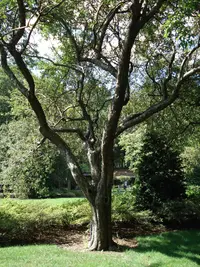
The cacao tree, Theobroma cacao, is a small evergreen tree grown for its seeds, which are processed into cocoa and chocolate. It has glossy, drooping leaves and small, star-shaped flowers that grow directly on older branches and the trunk. Native to the tropical rainforests of Central and South America, it prefers warm, humid, and sheltered conditions. The tree can be demanding outside the tropics, so care for cacao tree usually requires stable warmth, high humidity, and consistently moist but well-drained soil.

Main Plant Requirements

Care Difficulty

Hard Care

Light Preference

Partial Shade

Water Requirements

Keep Soil Moist

Temperature Preference

Tropical / Frost Sensitive

Hardiness Zone

11–13

Soil Texture

Loamy, Silty, Organic-rich

Soil pH

Strongly acidic (4.5–5.5), Acidic (5.5–6.5)

Soil Drainage

Moist but well-drained

Fertilization

Moderate (every 2–4 weeks)

Get Personalized Care Plan

Scan your plant to receive care tips personalized for your specific plant

Available on iOS and Android

How to Care for the cacao tree

This tropical understory tree needs bright, gentle light that mimics dappled forest conditions.

  • Provide 4–6 hours of bright, filtered light daily, such as under light shade cloth or beneath taller trees, to protect leaves from scorching.
  • Allow soft morning sun but avoid strong midday and afternoon sun; direct exposure in hot climates can cause leaf burn and curling edges.
  • In cooler seasons or cloudy regions, reduce shade slightly to maintain growth, watching for elongated, pale shoots as a sign of insufficient light.

Consistent, even moisture is essential, but roots must never sit in stagnant water.

  • Water when the top 2–4 cm of soil feels slightly dry, aiming for soil that stays moist but not soggy down to the root zone.
  • Use deep, slow watering and well-drained, organic-rich soil so excess water can escape, reducing risk of root rot and sour odors from anaerobic conditions.
  • In cooler months reduce frequency but not completely; drooping, crisp leaves suggest underwatering, while yellowing, soft leaves indicate excess moisture.

Stable, warm temperatures support healthy growth and flowering of this tropical species.

  • Aim for 70–85°F (21–29°C) for active growth, with minimal daily swings, as sudden shifts can stress foliage and developing pods.
  • Protect from cold; growth slows below 60°F (16°C), tissue damage occurs near 40°F (4°C), and any frost can kill young shoots and small trees.
  • In hot spells above 90°F (32°C), increase shade and humidity while ensuring airflow, as prolonged intense heat combined with dry air can cause leaf scorch and flower drop.

This species needs high, stable humidity to grow and set pods well.

  • Aim for 70–85% humidity; prolonged exposure below 50% leads to leaf edge browning and stalled growth.
  • Watch for curling leaves, crispy tips, and rapid flower or tiny pod drop as signs of humidity stress.
  • Group plants, run a nearby humidifier, or use a covered humidity tray rather than misting to support a cacao tree.

Soil for Theobroma cacao must be loose, deep, and consistently moist yet fast-draining.

  • Use a loamy mix with high organic matter, such as 2 parts peat or coco coir, 1 part compost, and 1 part perlite or fine bark.
  • Target slightly acidic soil, around pH 6.0–6.5, which supports nutrient availability and healthy root activity.
  • Ensure strong drainage so water passes through in seconds, but keep the mix moisture-retentive to avoid full drying between waterings.
  • Avoid heavy clay, compacted substrates, or mixes with large amounts of un-decomposed wood that can tie up nitrogen.

This species can be grown in containers if the pot supports its deep, spreading root system and top-heavy canopy.

  • Choose a tall, broad container that allows a stable root mass and reduces the risk of tipping in strong wind.
  • Use a sturdy, heavier pot material when possible, which anchors the trunk and offsets the weight of a developing canopy.
  • Place the container where excess drainage water can be removed immediately, preventing any standing water around the base.

Nutrient-rich but gentle feeding supports steady growth and pod production in the cacao tree.

  • Use a balanced liquid fertilizer (around 10-10-10 or 20-20-20) at 1/2 strength every 4–6 weeks during the warm growing season.
  • Alternatively, apply a thin layer of well-rotted compost or an organic slow-release fertilizer at the start of spring and mid-summer.
  • Always water before and after feeding to avoid root burn, especially in container-grown plants.
  • Reduce or stop fertilizing in fall and winter when growth slows, resuming only once new growth is active.

Thoughtful pruning keeps Theobroma cacao manageable, healthy, and productive.

  • Carry out main pruning at the end of winter or early spring before vigorous new growth starts.
  • Remove dead, diseased, crossing, or crowded branches using clean, sharp bypass pruners or loppers.
  • Shorten overly long shoots to maintain an open, layered canopy that allows light into the inner branches.
  • Make clean cuts just above a bud or branch junction, avoiding heavy cuts on the main trunk where possible.

Container-grown cacao benefits from careful transplanting to support its deep root system.

  • Repot or transplant when roots circle the pot, emerge from drainage holes, or when growth slows despite good care.
  • Choose late spring or early summer, aiming for every 2–3 years in containers, stepping up only 1 pot size each time.
  • Handle the root ball gently, loosening only the outer roots and trimming broken ones with sterile tools to limit stress.
  • Replant at the same soil level in a deep, well-draining mix, water thoroughly, then keep shaded and wind-sheltered for 1–2 weeks.

New plants of Theobroma cacao are usually raised from fresh seed under warm, humid conditions.

  • Sow seeds as soon as possible after harvest, as they lose viability quickly if dried.
  • Use a sterile, well-draining mix, keep temperatures around 75–85°F, and maintain high humidity for consistent germination.
  • Place seeds horizontally and cover lightly, then keep the medium evenly moist but not waterlogged.
  • Semi-hardwood cuttings are possible in warm seasons but need bottom heat, high humidity, and rooting hormone for better success.

Consistent warmth is essential because cacao is highly sensitive to cold and frost.

  • Avoid exposure below 50°F; even brief frosts can kill foliage and young stems.
  • Move container plants indoors or into a heated greenhouse before nighttime temperatures drop in fall.
  • For in-ground trees in marginal climates, insulate the root zone with a 5–10 cm mulch layer, keeping it away from the trunk.
  • In indoor settings, combine reduced watering with 40–60% humidity and bright, indirect light during winter.

Care Tips

Trunk shaping

Select 3–4 strong primary branches at about 1–1.2 m height and remove lower, weak shoots gradually so the plant forms a clear trunk and balanced canopy that can support future pods.

Shade management

Use 30–50% shade cloth or the filtered shade of taller plants to protect young cacao from leaf scorch while still allowing enough light to keep internodes short and growth compact.

Mulch for roots

Apply a 3–5 cm layer of fine bark or leaf mulch over the root zone, keeping it a few cm away from the stem, to keep roots cool, stabilize moisture, and encourage surface feeder roots.

Targeted hand pollination

If flowering indoors or in a greenhouse, use a small, soft paintbrush to transfer pollen between flowers in the cool morning hours to increase pod set where natural pollinators are absent.

Preventive pest scouting

Inspect young leaves, stems, and flower cushions every 7–10 days with a hand lens so scale, mealybugs, and mites are detected early and can be removed with targeted treatments before they spread when growing cacao tree.

Common Pests and Diseases

Cocoa pod borer

This pest is a small moth whose larvae tunnel into young pods, causing premature ripening, dark entry holes, and poor or damaged beans.

Solution

Collect and destroy infested and prematurely ripening pods, prune and remove dense shade to reduce adult moth shelter, and use fine netting or bagging of young pods where practical; in larger plantings, pheromone traps and targeted biological insecticides based on Bacillus thuringiensis can help lower larval populations.

Cocoa mirids

These insects, also called capsid bugs, pierce and suck sap from shoots and pods, leading to brown lesions, canker‑like patches, dieback, and malformed pods.

Solution

Regularly inspect pods and new shoots, prune out heavily damaged twigs, maintain good shade balance to avoid dense, humid canopies, and apply targeted contact or systemic insecticides only when monitoring shows significant mirid activity, following label directions and avoiding spray drift onto non‑target plants.

Black pod disease

This disease, caused mainly by Phytophthora species, produces brown to black spreading lesions on pods, often with a whitish fungal growth on the pod surface in humid conditions.

Solution

Promptly harvest and remove all infected pods from the tree and ground, improve airflow with careful pruning, avoid water standing around trunks, and apply copper‑based or other registered fungicides preventively during wet periods following local extension or product guidance.

Witches’ broom

This disease, caused by the fungus Moniliophthora perniciosa in affected regions, leads to dense clusters of misshapen shoots (brooms), swollen flower cushions, and deformed pods that often fail to mature normally.

Solution

Cut out and destroy all brooms and deformed infected tissues during dry weather, disinfect pruning tools between trees, maintain an open canopy for better air movement, and, where possible, use resistant or tolerant cacao varieties as part of long‑term Theobroma cacao care instructions.

Cacao swollen shoot virus

This disease causes red leaf vein banding, leaf distortion, stem and vein swelling, and eventual decline and death, and is spread mainly by mealybugs feeding on infected trees.

Solution

Remove and destroy infected trees completely, control mealybugs with regular inspection, washing with water and mild insecticidal soap where feasible, and by managing ant populations that protect mealybugs, and replant only with certified virus‑free planting material spaced to allow good airflow and easy monitoring.

Interesting Facts

Cauliflorous flower habit

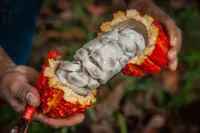
Cacao forms flowers and pods directly on its trunk and main branches, a trait called cauliflory that allows small midges, which cannot fly high, to pollinate the flowers efficiently in the shaded forest understory.

Specialized midge pollinators

In natural habitats, tiny Ceratopogonid midges are the main pollinators of cacao, and their dependence on consistently moist, leaf-litter rich environments links cacao productivity closely to forest floor health.

Genetic diversity in wild stands

Wild cacao in the Amazon basin shows very high genetic variability, and this diversity has been critical for breeding disease-resistant and regionally adapted cultivars used in modern cocoa production.

Botan icon

Did you know?

Cacao seeds are so rich in lipids that they germinate with a large, energy-dense storage reserve, enabling seedlings to establish and grow under very low light in the deep shade of tropical rainforest canopies.

FAQs about cacao tree

Brown leaf edges usually come from low humidity, underwatering, or salt buildup from fertilizer. Increase humidity, water thoroughly but less often, and occasionally flush the potting mix with plain water to remove accumulated salts.

Grow Healthy Plants with Botan Care

Keep your plants happy and healthy with plant identification, disease detection, and easy care guidance.

Botan plant care app — identify plants on mobile

Explore More Plants