Acclimate To Wind
When moving a plant from sheltered nursery conditions outdoors, gradually expose it to wind over 2–3 weeks to strengthen the fronds and reduce tearing in coastal or elevated sites.

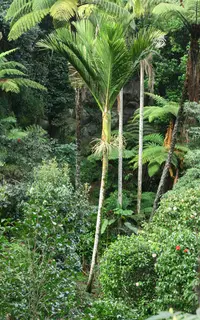
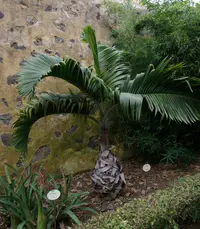
Nikau palm, Rhopalostylis sapida, is a slender, single-trunk palm native to coastal and lowland forests of New Zealand. It is the only palm naturally occurring on the New Zealand mainland. The plant forms a smooth, ringed gray trunk topped with a rounded crown of arching, feather-like fronds. Growth is slow and steady, which suits long-term container culture but requires patience. It prefers mild, frost-free conditions, consistent moisture, and well-drained, organic-rich soil. For gardeners learning how to care for Nikau palm, its main challenges are sensitivity to cold, low humidity, and poorly drained or compacted substrates.

Care Difficulty
Hard Care

Light Preference
Partial Shade

Water Requirements
Keep Soil Moist

Temperature Preference
Warm Climate

Hardiness Zone
9–11

Soil Texture
Loamy, Sandy, Organic-rich

Soil pH
Acidic (5.5–6.5), Slightly acidic (6.5–7.0)

Soil Drainage
Moist but well-drained

Fertilization
Minimal (feed rarely)
Scan your plant to receive care tips personalized for your specific plant
Available on iOS and Android
This coastal palm prefers bright, gentle light similar to a bright forest edge.
This species prefers steadily moist, cool soil without becoming waterlogged.
This palm thrives in mild, oceanic-type climates with cool summers and frost-free winters.
This palm prefers consistently moist air but adapts moderately in typical indoor homes.
Rhopalostylis sapida grows best in deep, moist, well-aerated soil that never becomes waterlogged.
This species is suitable for container growing when the pot supports its tall, eventually heavy crown.
This palm benefits from light, steady feeding rather than heavy fertilization.
Rhopalostylis sapida needs minimal pruning, mainly to maintain health and safety.
Container-grown plants and young transplants need careful handling to protect the sensitive root system.
This species is propagated almost exclusively from seed and requires patience and stable warmth.
In mild climates this palm tolerates light frost but benefits from extra winter protection in colder areas.

Plant Health Check
Not sure what's wrong with your plant? Check your plant's health inside the app.
This species is the only palm naturally native to mainland New Zealand and is among the southernmost-growing palms in the world, tolerating cool, maritime climates where most palms cannot survive.
Its leaflets often show fine, parallel grooves and can twist slightly along their length, which gives mature crowns a softly pleated, almost fern-like appearance distinct from many tropical palms.
The tightly overlapping bases of the leaves form a smooth, green crownshaft below the fronds, a structural feature that helps channel water down the stem and is prominent even in relatively young plants.

In traditional Māori culture, the cooked young shoots and the soft tissue near the top of the stem were sometimes eaten as a survival food, but this practice killed the plant, so the species was not heavily used in this way to avoid depleting local populations.
Brown tips usually result from low humidity, salt buildup from fertilizer, or irregular watering. Use soft, low-salt water, flush the soil occasionally, and maintain even moisture. Cold wind exposure can also scorch fronds and cause browning.
Keep your plants happy and healthy with plant identification, disease detection, and easy care guidance.