Bottle palm Care (Hyophorbe lagenicaulis)

Bottle palm

About Bottle palm

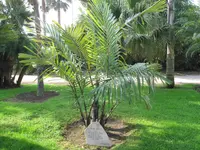
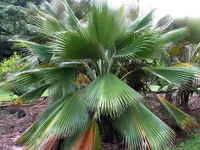
Bottle palm, Hyophorbe lagenicaulis, is a small, slow-growing palm known for its swollen, bottle-shaped trunk and short crown of stiff, arching fronds. It stays compact, which makes it a popular choice for tropical-style gardens and large containers in warm climates.

This species is native to Round Island near Mauritius, where it grows in a hot, sunny, coastal environment. It prefers bright light, warmth, and sharply draining soil, and it resents cold or waterlogged conditions.

Its slow growth and sensitivity to low temperatures make it a bit more demanding than many common palms, but it is manageable once conditions are stable. Understanding how to care for Bottle palm mainly means protecting it from cold and excess moisture.

Main Plant Requirements

Care Difficulty

Moderate Care

Light Preference

Full Sun

Water Requirements

Moderate Water

Temperature Preference

Tropical / Frost Sensitive

Hardiness Zone

10–11

Soil Texture

Sandy, Loamy, Organic-rich

Soil pH

Acidic (5.5–6.5), Slightly acidic (6.5–7.0)

Soil Drainage

Well-drained

Fertilization

Light (every 4–6 weeks)

Get Personalized Care Plan

Scan your plant to receive care tips personalized for your specific plant

Available on iOS and Android

How to Care for the Bottle palm

This palm prefers strong light and needs several hours of sun daily for compact, healthy growth.

  • Provide 4–6 hours of direct morning sun with light shade or filtered light from early afternoon, especially in hot climates.
  • In very bright, all-day sun, protect Bottle palm with 30–40% shade cloth to reduce leaf scorch, bleaching, and rapid soil drying.
  • In partial shade (2–3 hours of sun), expect slower growth and more open crowns; avoid deep shade, which causes weak, stretched fronds.

This species prefers evenly moist but never waterlogged soil and reacts quickly to extremes.

  • Water when the top 3–5 cm of soil feels dry, allowing deeper soil to stay slightly moist rather than fully drying out.
  • Ensure fast drainage through sandy or gritty soil; standing water around roots greatly increases risk of root rot and trunk base softening.
  • In hot, windy periods, watch for limp or folded leaflets as a sign to water, while yellowing lower fronds and soft, browning crown can indicate overwatering.

This palm is strongly warmth-loving and only marginally tolerant of cool conditions.

  • Aim for 70–88°F (21–31°C) for active growth, with warm nights above 60°F (16°C) for best leaf and trunk development.
  • Protect from cold; growth slows below 60°F (16°C) and damage often appears below 45°F (7°C), especially on young plants.
  • Avoid frost entirely; brief dips near 32°F (0°C) can kill foliage and small specimens, while extreme heat above 100°F (38°C) requires extra shade and soil moisture.

This palm prefers moderately humid air but adapts to many home environments.

  • Aim for 40–60% humidity to support steady leaf growth and reduce tip browning.
  • It tolerates short spells of dry air, but prolonged levels below 30% can cause crispy leaf tips and marginal browning.
  • Increase humidity with a nearby humidifier, grouped plants, or a pebble tray, keeping Bottle palm foliage dry to limit fungal risk.

This species prefers a sharply draining, sandy to loamy substrate that never stays waterlogged.

  • Use a mix of roughly 50% coarse sand or fine grit, 30–40% commercial potting mix, and 10–20% perlite or bark to keep structure open and aerated.
  • Target slightly acidic to neutral pH around 6.0–7.0, avoiding strongly alkaline mixes that can reduce nutrient uptake for Hyophorbe lagenicaulis.
  • Incorporate only modest amounts of composted organic matter so the mix retains some moisture without becoming heavy or compacted.
  • Avoid clay-heavy soils, peat-only mixes, or any medium that clumps when squeezed, as poor drainage greatly increases root rot risk.

This palm is suitable for container growing when stability and drainage are carefully managed.

  • Choose a deep, heavy pot such as thick-walled terracotta or ceramic to counterbalance the swelling trunk and reduce tipping risk outdoors.
  • Select a container just 2–5 cm wider than the root mass to limit excess wet substrate and help the mix dry evenly between waterings.
  • Raise the pot slightly on feet or bricks so drainage holes stay clear and water can exit quickly during heavy rain or irrigation.

Bottle palm benefits from modest, consistent feeding during the warm growing season.

  • Use a slow-release, balanced palm fertilizer (for example 10-10-10 or similar) with added magnesium and micronutrients.
  • Apply every 8–12 weeks in spring through early fall for outdoor plants; indoor plants need slightly less frequent feeding.
  • Reduce or stop feeding in late fall and winter when growth slows noticeably.
  • For liquid feeds, use at 1/2–1/4 label strength on moist soil to avoid root burn.

Hyophorbe lagenicaulis needs minimal pruning focused on safety and appearance rather than shaping.

  • Carry out pruning in late winter or early spring, or during stable warm weather in the tropics or subtropics.
  • Remove only dead, diseased, or badly damaged fronds at the base, leaving green fronds intact to support growth.
  • Use clean, sharp bypass loppers or a pruning saw, disinfecting blades between plants to limit disease spread.
  • Avoid cutting the trunk or green crown shaft, as this single growing point controls the palm’s form and survival.

Container-grown plants tolerate infrequent repotting and prefer stable conditions with minimal root disturbance.

  • Check for roots circling the pot, pushing through drainage holes, or noticeably slowed growth as signals to move up a size.
  • Plan repotting or outdoor transplanting in late spring to early summer, once nights stay reliably above 60°F.
  • Expect to repot every 2–3 years, shifting to a pot only 1–2 in wider with fast-draining, sandy palm mix.
  • Water thoroughly before and after moving, keep the root ball intact, and shade the plant for 7–10 days to limit transplant shock.

This palm is almost always propagated from seed, and Hyophorbe lagenicaulis plant care starts best with high-quality, fresh seed.

  • Sow fresh, cleaned seeds in late spring or early summer for warm, stable temperatures.
  • Use a sterile, very free-draining mix such as 50% coarse sand or perlite with 50% peat or coco coir.
  • Maintain 75–85°F bottom warmth and high humidity, as germination is slow and may take several months.
  • Keep the medium just barely moist, provide bright indirect light, and avoid disturbing seedlings until roots are well formed.

This tropical palm is highly frost-sensitive and demands careful winter management in most climates.

  • Avoid exposure below 40°F; brief dips near freezing can cause leaf damage and trunk injury.
  • Move container plants indoors or to a heated greenhouse before the first expected frost.
  • For in-ground specimens in mild zones, mulch 5–10 cm around the root zone, keeping mulch off the trunk.
  • Wrap the crown and upper trunk with breathable frost cloth during cold snaps, then remove once temperatures stabilize.

Care Tips

Container size planning

Select a heavy, wide container with good drainage and repot only when roots circle the pot, since restricting root space slightly helps keep this naturally slow palm stable and reduces toppling in wind.

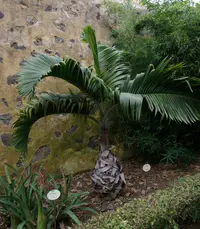
Trunk base protection

Leave the swollen trunk base fully exposed above the soil line and avoid piling mulch or soil against it, which reduces aeration and increases the risk of rot at the most vulnerable tissue.

Salt and wind strategy

In coastal landscapes, place the plant where it gets good air flow but some shelter from the strongest salt-laden winds, and lightly hose off foliage during dry spells to reduce salt buildup on leaves.

Cold event preparation

Before a forecast cold snap, water the root zone thoroughly, apply a dry mulch layer over the soil, and wrap the crown with frost cloth rather than plastic to reduce cold damage to the growing point.

Monitoring spear health

Check the central spear leaf monthly and contact a local extension or professional if it pulls out easily or shows blackening, since early treatment of spear rot is critical when caring for Bottle palm.

Common Pests and Diseases

Palm aphids

This pest feeds on the sap of young fronds and flower stalks, often causing curling, yellowing, and sticky honeydew on Bottle palm leaves. Sooty mold fungi may develop on the honeydew, making foliage look blackened.

Solution

Prune and discard heavily infested fronds, then hose down remaining foliage with a strong stream of water to dislodge insects. If needed, apply insecticidal soap or neem oil thoroughly to leaf undersides every 7–10 days until populations decline, and reduce excess nitrogen fertilization that encourages soft, aphid-prone growth.

Palm scale

These insects attach to leaf blades and petioles, appearing as small bumps that cause yellow spotting, loss of vigor, and premature frond decline. Heavy infestations can weaken Bottle palm, especially in containers or stressed plants.

Solution

Gently scrub affected areas with a soft cloth or brush dipped in a mild soapy water solution to remove scales and their protective coverings. For persistent infestations, use horticultural oil, coating all leaf surfaces and repeating as the label directs, and improve plant vigor with proper watering and balanced fertilization to increase resistance.

Lethal yellowing

This disease is a phytoplasma infection spread by planthoppers and is a significant problem in many warm coastal areas where Bottle palms are grown. Symptoms include premature fruit drop, yellowing and collapse of lower fronds, and eventual death of the crown.

Solution

Prompt removal and destruction of severely affected palms is important to reduce disease spread in landscapes. In regions where this disease is common, preventive injections with oxytetracycline by a certified arborist and planting tolerant palm species nearby are the main long-term management practices.

Fusarium wilt

This disease is caused by Fusarium fungus and often produces one-sided yellowing, browning, and death of individual fronds, sometimes starting on a single side of the canopy. Symptoms include brown streaks on leaf bases and progressive decline of the crown.

Solution

Remove and dispose of infected fronds and avoid using pruning tools on healthy palms without first disinfecting them in a 10% bleach solution or 70% alcohol. There is no reliable cure, so focus on preventing spread by avoiding mechanical injury, improving drainage, and not replanting highly susceptible palms in the same site.

Ganoderma butt rot

This disease is caused by the wood-decaying fungus Ganoderma zonatum, which attacks the lower trunk and root base of Bottle palms in warm, humid regions. Symptoms include slow decline, wilting, and the appearance of hard, shelf-like conks at the base of the trunk.

Solution

There is no effective chemical treatment, so remove and destroy affected palms, including the stump, as soon as decline is confirmed and conks are visible. Preventive Hyophorbe lagenicaulis plant care includes avoiding trunk wounds, maintaining good soil drainage, and not leaving old palm stumps in the ground where the fungus can persist.

Interesting Facts

Distinctive bottle trunk

This palm develops a swollen, bottle-shaped trunk that stores water, an adaptation to the dry, rocky conditions of its native Mascarene Islands in the Indian Ocean.

Critically endangered wild

In its natural habitat on Round Island near Mauritius, it is classified as Critically Endangered due to habitat loss and invasive species, even though it is widely cultivated in tropical and subtropical landscapes.

Slow but steady growth

This species grows slowly and typically produces only a few large, pinnate leaves each year, which helps it conserve resources in nutrient-poor, exposed coastal environments.
Botan icon

Did you know?

The natural population of this palm was once reduced to only a handful of mature individuals in the wild, making it one of the rarest native palms of the Mascarene Islands despite its popularity in cultivation worldwide.

FAQs about Bottle palm

This species grows slowly, often adding only 5–15 cm of trunk height per year in warm climates. Reaching a noticeably thick, decorative bottle-shaped trunk can take 8–15 years under good conditions.

Grow Healthy Plants with Botan Care

Keep your plants happy and healthy with plant identification, disease detection, and easy care guidance.
Botan plant care app — identify plants on mobile

Explore More Plants