Rotate container regularly
Turn the pot 90° every 2–3 weeks so the crown develops evenly and the trunk stays vertical rather than leaning toward the light source.

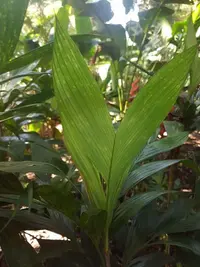
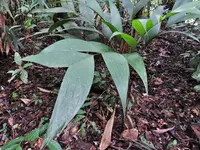
Geonoma elegans is a small, understory palm native to tropical forests of Central and South America. It usually forms slender stems with narrow, elegant leaflets.
In cultivation it stays relatively compact and has a delicate, refined look, which makes it interesting for shaded gardens or spacious indoor collections. Its slow growth and preference for stable, warm conditions can make it a bit demanding.
This species favors filtered light, consistent moisture, and well-drained, humus-rich soil. Understanding how to care for Geonoma elegans starts with replicating its naturally sheltered, humid forest habitat as closely as possible.

Care Difficulty
Hard Care

Light Preference
Partial Shade

Water Requirements
Keep Soil Moist

Temperature Preference
Tropical / Frost Sensitive

Hardiness Zone
11–12

Soil Texture
Loamy, Peaty, Organic-rich

Soil pH
Acidic (5.5–6.5)

Soil Drainage
Moist but well-drained

Fertilization
Light (every 4–6 weeks)
Scan your plant to receive care tips personalized for your specific plant
Available on iOS and Android
This understory palm prefers gentle, filtered light that mimics bright forest shade.
This species needs consistently moist but not waterlogged soil around its fibrous root system.
This palm performs best in stable, warm conditions without sharp temperature swings.
This palm prefers consistently moist air and reacts quickly to dry indoor conditions.
This species needs airy, moisture-retentive but free-draining soil to support fine roots and prevent rot.
This palm is suitable for container growing when housed in a stable, moisture-retentive yet well-draining setup.
This palm benefits from light, steady feeding during the warm growing season.
Pruning is mainly hygienic for this species and focuses on removing spent foliage.
This palm has a modest root system and dislikes frequent disturbance, so repot only when necessary.
This species is most often propagated from seed and tends to be slow and technical for home growers.
This palm is tropical and needs careful winter management in most temperate climates.

Plant Health Check
Not sure what's wrong with your plant? Check your plant's health inside the app.
This palm typically grows in the shaded understory of lowland to premontane tropical forests in Central and parts of South America, where it experiences consistently high humidity and filtered light rather than direct sun.
Geonoma elegans usually forms thin, cane-like stems that may occur in small clusters, creating a narrow vertical profile that helps it fit into dense forest vegetation.
Within its native range, this species shows variation in leaf division, with some individuals having more entire leaves and others more deeply pinnate leaves, a trait thought to reflect adaptation to different light conditions on the forest floor.
This palm grows relatively slowly, often adding only 5–15 cm of stem height per year. Growth is fastest in warm, humid, frost-free conditions with consistently moist but well-drained soil and regular, balanced fertilization during the growing season.
Keep your plants happy and healthy with plant identification, disease detection, and easy care guidance.