Anoectochilus roxburghii Care

Anoectochilus roxburghii

About Anoectochilus roxburghii

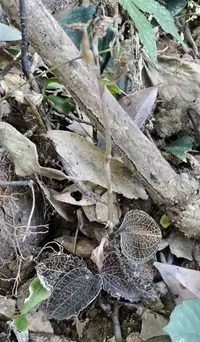
Anoectochilus roxburghii is a small terrestrial orchid known as a jewel orchid, valued more for its foliage than its flowers. It forms low rosettes on the forest floor rather than tall upright stems.

Its leaves are dark velvety green to brownish, crossed by fine golden or coppery veins that create a metallic, net-like pattern. Flowers are small and pale, usually secondary to the foliage display.

In nature, A. roxburghii grows in shaded, humid forests across parts of Southeast and East Asia, often in leaf litter or mossy substrates. It can be moderately challenging to grow, as it dislikes low humidity, strong light, and drying out.

Those who want to learn how to care for Anoectochilus roxburghii should focus on stable warmth, soft filtered light, and evenly moist, airy substrate.

Main Plant Requirements

Care Difficulty

Hard Care

Light Preference

Bright Indirect Light

Water Requirements

Keep Soil Moist

Temperature Preference

Tropical / Frost Sensitive

Hardiness Zone

11–12

Soil Texture

Loamy, Peaty, Organic-rich

Soil pH

Strongly acidic (4.5–5.5), Acidic (5.5–6.5)

Soil Drainage

Moist but well-drained

Fertilization

Light (every 4–6 weeks)

Get Personalized Care Plan

Scan your plant to receive care tips personalized for your specific plant

Available on iOS and Android

How to Care for the Anoectochilus roxburghii

This terrestrial jewel orchid prefers gentle, filtered light that mimics a forest-floor environment.

  • Provide bright, indirect light or dappled shade, such as under a sheer curtain or beneath taller plants, for about 6–8 hours per day.
  • Tolerate only soft morning sun; protect Anoectochilus roxburghii from direct midday or afternoon sun, which easily scorches thin leaves and fades veining.
  • In summer, move slightly farther from strong windows or add shading; in winter, shift closer to brighter spots to avoid leggy, stretched growth.

This species needs consistently moist but airy substrate around its shallow roots.

  • Water when the top 1–2 cm of substrate feels just starting to dry, keeping the lower layer lightly moist rather than wet or soggy.
  • Use a loose, well-draining mix so water drains within 20–30 seconds; empty saucers to prevent rhizome rot and foul, stagnant smell from overwatering.
  • Reduce volume slightly in cooler seasons, watching for limp, wrinkling leaves as a sign of underwatering and yellowing, mushy bases as a sign of excess moisture.

Stable, warm conditions support steady growth and protect this orchid from stress.

  • Aim for 68–77°F (20–25°C) as the main growing range, with slight nighttime drops of 3–5°F (2–3°C) to mimic natural woodland conditions.
  • Avoid letting temperatures fall below 59°F (15°C); prolonged exposure near this minimum slows growth and increases risk of root problems.
  • Protect from drafts, heaters, and hot windows where temperatures can exceed 86°F (30°C), which causes leaf edge curl and dulling of the metallic venation.

This species needs consistently high humidity to maintain healthy foliage.

  • Aim for 70–85% humidity; growth slows and leaves dull below about 60%.
  • Dry air causes leaf edges to crisp, venation to fade, and tips to brown over several days.
  • Use a closed terrarium, humidity dome, or room humidifier rather than misting to keep levels stable.

This orchid prefers a loose, moisture-retentive yet airy substrate rather than dense potting soil.

  • Use a fine orchid-style mix of sphagnum moss, small-grade bark, and perlite to create a soft, fibrous, organic-rich medium.
  • Ensure very fast drainage; the mix should feel damp, never waterlogged, and excess water must drain within seconds.
  • Keep pH slightly acidic, roughly 5.5–6.5, which supports nutrient uptake and root health for Anoectochilus roxburghii.
  • Avoid compact peat-only mixes or garden soil, which reduce aeration and quickly suffocate the shallow, delicate roots.

This species is well suited to container culture, especially in shallow, enclosed setups.

  • Choose a wide, shallow pot that matches the creeping habit so roots and shoots can spread horizontally rather than downward.
  • Select plastic or glazed ceramic to slow evaporation, which helps maintain the consistently moist substrate it prefers.
  • If used in a terrarium tray, slightly elevate the pot so any pooled condensation cannot wick up and saturate the root zone.

Nutrient needs are moderate, so use light, consistent feeding to support Anoectochilus roxburghii foliage and root health.

  • During active growth in spring–summer, apply a balanced liquid fertilizer (around 10-10-10 or 20-20-20) every 3–4 weeks.
  • Dilute fertilizer to 1/4–1/2 strength to avoid root and leaf burn in this sensitive orchid.
  • Choose urea-free or orchid-specific formulations, as these are gentler on fine roots.
  • In autumn–winter, reduce feeding to once every 6–8 weeks or stop if growth slows significantly.

Pruning needs are minimal and focus on hygiene and maintaining compact growth in Anoectochilus roxburghii.

  • Best time for light pruning is during active growth, checking plants every few weeks.
  • Remove yellowing, dead, or damaged leaves with small, sharp sterilized scissors to limit disease spread.
  • Trim only stretched or leggy stems to encourage denser rosette-like growth without over-thinning.
  • Discard pruned material and clean tools with alcohol between plants to reduce pathogen transfer.

Careful repotting keeps this jewel orchid stable, hydrated, and free from stale, compacted substrate.

  • Plan to repot every 1–2 years in spring when growth starts, or when roots circle the pot or growth slows.
  • Water lightly the day before to soften the medium and reduce root stress during handling.
  • Shift into a shallow, slightly wider pot with fresh, loose orchid mix blended with fine bark and sphagnum.
  • Set the plant at the same depth, firm gently, water sparingly at first, and keep humidity high for 1–2 weeks.

Propagation of Anoectochilus roxburghii is possible but somewhat delicate, best done under stable indoor conditions.

  • The most practical method is division in spring, when plants have several healthy rosettes or creeping stems.
  • Gently unpot and separate sections with at least 2–3 growth points and an intact root portion each.
  • Plant divisions into a fine, moist, well-drained orchid mix and maintain 70–80% humidity.
  • Keep in warm, shaded light and avoid strong feeding until new roots and leaves are clearly established.

Anoectochilus roxburghii is a tropical orchid that requires warm, frost-free conditions through winter.

  • Maintain indoor temperatures around 65–75°F and avoid exposure below 55°F to prevent tissue damage.
  • For container plants outdoors in mild climates, move them indoors well before first frost.
  • Reduce watering slightly in low light, keeping the mix lightly moist but never waterlogged.
  • Use a thin layer of sphagnum on the surface to buffer root temperature and humidity away from drafts.

Care Tips

Stable microclimate

Place the pot inside a larger cachepot or terrarium-style container to buffer against sudden drops in humidity and temperature, which helps this jewel orchid maintain even growth and stable leaf coloration.

Low-mineral water

Use rainwater, distilled water, or reverse-osmosis water and flush the potting mix lightly every 4–6 weeks to prevent mineral buildup that can burn this species’ fine roots and dull the metallic leaf veins.

Gentle air movement

Provide very soft, indirect airflow from a small fan set on low and not aimed directly at the plant to reduce fungal issues without drying the delicate foliage and moss surface too quickly.

Moss layer management

If using a topdressing of sphagnum moss, keep it as a thin, airy layer and lift or replace compacted patches every few months to avoid stagnant, anaerobic spots around the rhizomes.

Division and renewal

Every 2–3 years, divide healthy creeping stems with at least 2–3 growth points and replant them shallowly in fresh mix to rejuvenate the clump and maintain a compact, attractive specimen when growing Anoectochilus roxburghii.

Common Pests and Diseases

Spider mites

This pest often colonizes the undersides of the thin, velvety leaves in warm, dry conditions, causing fine stippling, dull foliage, and delicate webbing. Symptoms include slow decline of shoots and loss of the plant’s metallic leaf sheen.

Solution

Rinse leaves gently with lukewarm water and a mild, fragrance‑free soap solution, then repeat every 5–7 days for several cycles to disrupt the life cycle. Increase ambient humidity to 60–80%, improve gentle air movement, and, if needed, apply a targeted miticide or horticultural oil labeled for orchids, avoiding direct application to flowers and testing on a small area first.

Soft scale

These insects appear as small, rounded or oval bumps on stems and leaf midribs, feeding on sap and excreting sticky honeydew that encourages sooty mold. Symptoms include weakened growth and a tacky film on leaves and nearby surfaces.

Solution

Remove heavily infested leaves and gently scrape or wipe remaining scale with cotton swabs dipped in isopropyl alcohol. Maintain stable temperatures, avoid overfertilizing soft new growth, and repeat inspections weekly, applying a light horticultural oil or insecticidal soap specifically labeled for ornamental orchids if crawlers continue to appear.

Bacterial leaf spot

This disease produces water‑soaked, translucent patches on the delicate leaves that quickly turn brown or almost black with a yellow margin. Symptoms include rapid expansion of spots in warm, humid, and poorly ventilated conditions.

Solution

Remove and discard all affected leaves with sterile scissors, then keep foliage dry and reduce overhead watering. Improve airflow around the plant, lower humidity slightly if above 80%, and use a copper‑based bactericide suitable for orchids as a preventive treatment on nearby healthy tissue, following label directions closely for sensitive foliage like Anoectochilus roxburghii indoor care.

Fusarium wilt

This disease affects the vascular tissue, leading to gradual wilting, poor recovery after watering, and sometimes a purple or brown discoloration in stems or roots. Symptoms include stunted new growth and collapse of individual shoots despite apparently adequate care.

Solution

Isolate the plant, remove and discard affected shoots and roots, and repot into fresh, sterile, very airy orchid mix in a disinfected container. Avoid reusing contaminated media, keep watering moderate with good drainage, sterilize cutting tools between plants, and in early or mild cases consider a systemic fungicide labeled for Fusarium on ornamentals, applied strictly according to directions.

Snails and slugs

This pest hides in moist substrates and under pots, chewing irregular holes in tender leaves and new shoots, often at night. Symptoms include missing leaf sections, ragged edges, and slime trails near the plant or on the growing bench.

Solution

Hand‑pick snails and slugs at night with a flashlight, and use physical barriers such as copper tape around benches or pot rims. Reduce hiding places by keeping the area clean, use shallow beer or yeast traps if needed, and in severe cases apply an iron phosphate bait labeled safe for ornamental plants, keeping it away from children and pets.

Interesting Facts

Jewel orchid venation

This jewel orchid has distinctive dark olive to brownish-green leaves with metallic golden or coppery veins that are actually translucent cells reflecting light, an adaptation that helps it capture low, filtered forest light.

Forest floor specialist

It naturally grows on shaded, humid forest floors in parts of China and Southeast Asia, often in mossy leaf litter or on decaying wood, which is why it prefers cool, stable, and low-light microhabitats in cultivation.

Night-fragrant flowers

The small white flowers with a slight yellow tint are often more noticeably fragrant in the evening and at night, which is linked to pollination by nocturnal or crepuscular insects in its native range.

Botan icon

Did you know?

In parts of East and Southeast Asia, this species has been so heavily collected from the wild for traditional uses that some local populations have declined significantly, leading to conservation attention and efforts to cultivate it sustainably rather than harvest it from natural habitats.

FAQs about Anoectochilus roxburghii

Brown leaf edges or patches usually result from low humidity, fertilizer salts, or past underwatering. Check roots for rot, flush the potting mix with clean water, trim damaged leaves, and stabilize moisture and humidity levels.

Grow Healthy Plants with Botan Care

Keep your plants happy and healthy with plant identification, disease detection, and easy care guidance.


Botan plant care app — identify plants on mobile

Explore More Plants