Cool root management
Place the pot inside a slightly larger cachepot with damp sphagnum around the outer pot to keep roots cool and evenly moist without overwatering the medium itself.

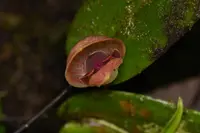
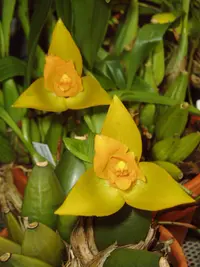
Pleurothallis palliolata is a small epiphytic orchid that typically grows on trees in humid forests. It forms tight clumps of slender leaves and produces delicate, often hooded flowers close to the foliage.
This species is native to cloud forests of Central and South America, where it enjoys cool to mild temperatures and constant moisture. Its compact size makes it suitable for terrariums, orchid cases, or shaded indoor setups with stable humidity.
Because it prefers high humidity, good air movement, and gentle, filtered light, it is moderately challenging for beginners. Learning how to care for Pleurothallis palliolata mainly involves keeping conditions cool, evenly moist, and sheltered from harsh sun.

Care Difficulty
Hard Care

Light Preference
Partial Shade

Water Requirements
Keep Soil Moist

Temperature Preference
Tropical / Frost Sensitive

Hardiness Zone
Unknown

Soil Texture
Peaty, Organic-rich

Soil pH
Acidic (5.5–6.5)

Soil Drainage
Moist but well-drained

Fertilization
Light (every 4–6 weeks)
Scan your plant to receive care tips personalized for your specific plant
Available on iOS and Android
This species prefers low to medium light similar to shaded, humid forest understories.
This orchid requires consistently moist conditions without staying waterlogged.
This is a cool- to intermediate-growing orchid that dislikes temperature extremes.
This cloud-forest orchid needs consistently high humidity to grow well indoors.
Pleurothallis palliolata prefers a very airy, moisture-retentive but free-draining orchid substrate rather than conventional potting soil.
This species is very suitable for container or basket cultivation under controlled humidity.
Light, dilute feeding supports steady growth of Pleurothallis palliolata without stressing its fine roots.
Pruning needs are minimal and mainly focus on hygiene and maintaining a tidy clump.
Repotting is infrequent but important to maintain a fresh, airy medium around the roots.
Propagation of this species is usually done by careful division rather than seed at home.
This orchid is not frost hardy and needs cool but frost-free winter conditions.

Plant Health Check
Not sure what's wrong with your plant? Check your plant's health inside the app.
This species is native to high-elevation cloud forests in Ecuador, where it grows as an epiphyte on mossy tree trunks and branches in cool, very humid, and shaded conditions.
Its small flowers have a distinctive hooded or helmet-like lip structure, which inspired the epithet palliolata (from Latin palliolum, meaning small cloak or hood).
Individual inflorescences can produce multiple flowers over time, with new blooms appearing sequentially rather than all at once, a common trait in Pleurothallidinae but particularly noticeable in this species due to its miniature size.
Lack of blooms usually comes from insufficient humidity, too little temperature drop between day and night, or mild nutrient deficiency. Provide stable moisture, high humidity, gentle air movement, and a slight nighttime cooldown to support reliable flowering.
Keep your plants happy and healthy with plant identification, disease detection, and easy care guidance.