Philodendron Care (Philodendron 'Moonlight')

Also known as: Lime Philodendron

About Philodendron

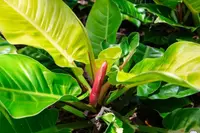
Philodendron 'Moonlight' is a compact, evergreen tropical plant prized for its bright chartreuse to lime-green leaves that gradually deepen to medium green as they mature. It forms a low, bushy clump rather than climbing, which makes it suitable for tabletops and smaller indoor spaces.

This cultivar originates from hybrid breeding of South American Philodendron species, which naturally grow in warm, shaded forest understories. Its sturdy leaves and relatively slow, tidy growth habit make it forgiving for beginners.

Philodendron 'Moonlight' generally prefers bright, indirect light, moderate moisture, and a well-drained, airy potting mix. Understanding how to care for Philodendron in these conditions helps maintain strong color and healthy new growth.

Main Plant Requirements

Care Difficulty

Easy Care

Light Preference

Bright Indirect Light

Water Requirements

Moderate Water

Temperature Preference

Tropical / Frost Sensitive

Hardiness Zone

10–11

Soil Texture

Loamy, Peaty, Organic-rich

Soil pH

Acidic (5.5–6.5), Slightly acidic (6.5–7.0)

Soil Drainage

Moist but well-drained

Fertilization

Light (every 4–6 weeks)

Get Personalized Care Plan

Scan your plant to receive care tips personalized for your specific plant

Available on iOS and Android

How to Care for the Philodendron

This cultivar prefers bright, indirect light with some soft direct sun to maintain its lime-green color.

  • Provide 4–6 hours of bright, filtered light daily, such as an east window with gentle morning sun and shade from harsh midday and afternoon rays.
  • Plant can tolerate light partial shade, but growth slows and leaves may darken if kept in low light corners or under dense tree canopies.
  • Avoid strong midday sun through glass, which can scorch leaves; in winter, move slightly closer to windows or use sheer curtains instead of heavy shading.

Watering should aim for evenly moist, never soggy soil that partially dries between waterings.

  • Water when the top 2–4 cm of soil feels dry, using enough water to moisten the full root zone, then let excess drain away completely.
  • In spring and summer, drying may occur every 5–10 days; in cooler or darker months, expect slower drying and reduce watering frequency accordingly.
  • Yellowing, soft leaves and a musty smell suggest overwatering or poor drainage; dull, curling, or limp leaves and very dry, pulling soil indicate underwatering in Philodendron 'Moonlight'.

Stable, warm conditions support compact growth and healthy foliage color.

  • Aim for 65–80°F (18–27°C) for best growth; short exposures up to about 85°F (29°C) are tolerated if humidity and soil moisture are adequate.
  • Avoid temperatures below 60°F (16°C); growth slows noticeably under this level, and brief dips near 50°F (10°C) can cause leaf damage or drop.
  • Protect from frost at all times, and keep away from cold drafts, heater blasts, or hot, sun-baked walls that can stress foliage and dry the potting mix rapidly.

This plant benefits from moderately humid air for sustained lush growth.

  • Aim for 50–70% humidity to keep leaves thick, glossy, and actively growing.
  • It tolerates short spells of 35–40% indoor air, but tips may brown and new leaves may emerge smaller.
  • Watch for curled edges, dull foliage, and stalled growth as signs of humidity stress.
  • Increase humidity with a nearby humidifier or grouped plants rather than misting, which adds only brief surface moisture.

Philodendron 'Moonlight' prefers a loose, airy, organic-rich mix that drains quickly but retains light, even moisture.

  • Use a base of peat or coco coir with chunky bark and perlite to create a fibrous, well-aerated structure.
  • Target a slightly acidic pH around 5.5–6.5, which keeps nutrients available without risking toxicity.
  • Increase drainage and oxygen around roots by using at least 30–40% coarse materials such as perlite, pumice, or orchid bark.
  • Avoid dense garden soil, straight compost, or mixes that stay wet longer than 3–4 days, as these promote root rot.

This species is very suitable for container growing in homes and sheltered outdoor spaces.

  • Choose a pot just 2–5 cm wider than the root mass so the mix dries evenly instead of staying wet at the center.
  • Select a slightly heavier or wider-based container to prevent the broad foliage rosette from becoming top-heavy and tipping.
  • Use a pot material that matches your climate, such as terracotta for faster drying in humid areas or plastic for slower drying in arid homes.

Balanced feeding supports compact, bright foliage in Philodendron 'Moonlight' grown indoors.

  • Use a balanced liquid fertilizer (such as 10-10-10 or 20-20-20) diluted to 1/4–1/2 strength for container plants.
  • Apply every 4–6 weeks during the growing season, when the plant is actively producing new leaves.
  • Skip or greatly reduce feeding in winter, as growth slows and excess salts can build up in the potting mix.
  • Organic options like light compost top-dressing or slow-release granules can be used sparingly in spring.

Targeted pruning keeps Philodendron 'Moonlight' dense, tidy, and healthy indoors.

  • Best time for structural pruning is late winter to early spring, before strong new growth starts.
  • Remove yellowing, dead, or damaged leaves at the base with clean, sharp scissors or pruning shears.
  • Thin out crowded interior leaves to improve air movement and maintain a low, rounded form.
  • Disinfect tools before and after use to reduce disease risk, especially after cutting any suspect tissue.

Thoughtful repotting prevents stress and supports stable foliage color in Philodendron 'Moonlight'.

  • Plan to repot every 2–3 years, or when roots circle the pot, grow from drainage holes, or growth slows noticeably.
  • Best timing is in spring to early summer, allowing warm conditions to help the root system re-establish.
  • Choose a pot 2–5 cm wider with drainage and use a chunky, airy mix suited to aroid roots.
  • Handle roots gently, loosen circling roots lightly, water thoroughly after repotting, and keep in medium light for 1–2 weeks.

New Philodendron 'Moonlight' plants are most often produced from stem cuttings under warm, stable conditions.

  • Take 1–2 node stem cuttings in late spring or summer, each with at least one healthy leaf and node.
  • Root cuttings in water or a moist, airy substrate, keeping temperature around 70–80°F and humidity moderate to high.
  • Provide bright, indirect light and avoid direct sun, which can dehydrate unrooted cuttings quickly.
  • Plant into a small pot once roots reach 3–5 cm, then resume normal Philodendron indoor care as growth strengthens.

This tropical cultivar is frost-sensitive and needs indoor-style winter care in most temperate climates.

  • Keep temperatures above 60°F; avoid cold drafts from windows, doors, and HVAC vents.
  • For outdoor containers, move plants indoors before nights drop below 55°F, supplying bright, indirect light.
  • Reduce watering in winter, allowing the top 2–3 cm of potting mix to dry to prevent cold, wet roots.
  • In very dry heated homes, use a humidity tray or room humidifier to limit leaf edge browning.

Care Tips

Rotate For Symmetry

Rotate the pot 90° every 1–2 weeks so new leaves receive even light, which keeps the rosette compact and prevents leaning toward the window.

Support Heavy Petioles

If outer leaves begin to flop, place a low, discreet ring stake or short bamboo sticks around the plant to keep petioles upright without crowding the crown.

Leaf Cleaning Routine

Wipe leaves every 3–4 weeks with a soft, slightly damp cloth to remove dust, improving light capture and making it easier to spot early pests while caring for Philodendron.

Controlled Pot Upsizing

When roots circle the pot base, move up only 2–5 cm in pot diameter and choose a wide, shallow container to match the plant’s naturally spreading, non-climbing habit.

Prevent Salt Buildup

Every 2–3 months, slowly run lukewarm water through the pot for several minutes and let it drain fully to flush excess fertilizer salts that can burn roots and leaf edges.

Everything About Philodendron

Common Pests and Diseases

Spider mites

This pest feeds on leaf sap, causing pale speckling, dull foliage, and fine webbing between leaves and stems, especially in dry indoor air.

Solution

Rinse leaves thoroughly with a strong but gentle stream of lukewarm water, then wipe both leaf surfaces with a soft cloth. Increase humidity, improve air movement, and use a horticultural soap or neem oil spray every 5–7 days until no new damage or webbing appears.

Mealybugs

These insects appear as white, cottony clusters in leaf bases and along stems, leading to sticky honeydew and slow, distorted new growth.

Solution

Isolate the plant, then dab visible insects with cotton swabs dipped in isopropyl alcohol (70%) and wipe leaf axils carefully. Follow with a thorough application of insecticidal soap or neem oil, repeating weekly until no new mealybugs are seen, and check neighboring plants for early infestations when growing Philodendron.

Bacterial leaf spot

This disease causes water-soaked, translucent patches that turn brown with yellow halos, often starting on older leaves after splashing water.

Solution

Remove and discard affected leaves, avoiding contact with healthy tissue, and keep foliage dry by watering at the soil level. Improve air circulation, reduce leaf crowding, and if spread continues, use a copper-based bactericide according to label directions while avoiding overhead misting.

Fungal leaf blight

This disease leads to tan or dark, irregular lesions that expand rapidly in warm, humid, low-airflow conditions, sometimes causing sections of the leaf to collapse.

Solution

Cut off and discard affected leaves and any mushy tissue, sterilizing tools between cuts. Reduce humidity around the plant, space plants further apart, ensure good air movement, and apply a broad-spectrum houseplant-safe fungicide if new lesions continue to form.

Scale insects

These insects look like small, brown or tan bumps on stems and leaf veins, sucking sap and causing yellowing leaves and sticky residue on nearby surfaces.

Solution

Scrape or gently pry off visible scale with a fingernail or soft brush, then wipe stems and leaf undersides with an alcohol-dampened cloth. Follow with repeated applications of horticultural oil or insecticidal soap every 7–10 days, focusing on stem joints and leaf midribs where young crawlers hide.

Interesting Facts

Neon juvenile foliage

Young leaves emerge a bright, almost fluorescent yellow-green, then gradually harden off to a deeper light green as chlorophyll density increases with leaf age.

Compact hybrid origin

This plant is a man-made hybrid selected for its naturally compact, clumping growth and self-heading habit, so it stays bushy without needing a support to climb.

Non-variegated color change

The color shift from yellow to lime green is not true variegation; it is a temporary developmental stage in the leaf’s pigment composition, mainly involving changing ratios of chlorophyll and carotenoids.

FAQs about Philodendron

Brown, crispy leaf edges usually result from low humidity, salt buildup from fertilizer, or inconsistent watering. Flush the pot with clean water, trim damaged parts, increase humidity slightly, and adjust feeding to a light, regular schedule.

Grow Healthy Plants with Botan Care

Keep your plants happy and healthy with plant identification, disease detection, and easy care guidance.

Botan plant care app — identify plants on mobile

Explore More Plants