

Philodendron (Philodendron 'Moonlight') Light Needs

Philodendron grows best in bright, indirect light, with gentle morning sun tolerated for short periods.

Light Preference

Bright Indirect Light

Philodendron 'Moonlight' is a cultivated selection, so it does not have a wild native range of its own. Its background reflects warm, humid forest-edge and understory conditions, where the canopy breaks direct sun into filtered light and short periods of softer exposure.

This helps explain its indoor preference for strong ambient light without hot, direct rays. Preferred light is bright indirect or filtered light.

  • Ideal exposure:

    Philodendron 'Moonlight' needs about 6–8 hours of bright, indirect or filtered light daily, including up to 1–2 hours of gentle direct morning sun.

  • Direct sun:

    Soft morning sun is tolerated, but midday and afternoon rays can scorch exposed leaves.

  • Lower light:

    Shade is tolerated for survival, but growth may become slower and the bright leaf color may dull.

  • Seasonal change:

    A brighter position is often useful in winter, when indoor light intensity drops.

Indoors, place it where light is bright for much of the day but not harsh.

NConditional
North-facing window:

Use a north-facing window only if it is large, unobstructed, and the plant sits close to the glass.

EBest
East-facing window:

An east-facing window is usually ideal because it gives gentle morning sun and bright indirect light later.

SConditional
South-facing window:

Set it 3–6 ft from a south-facing window, or use a sheer curtain to soften direct rays.

WConditional
West-facing window:

A west-facing window can work behind a sheer curtain or several feet back from the glass.

Adjust placement if the newest leaves fade, stretch, or show pale scorch marks.

Excess light usually shows on the most exposed leaves first.

Bleached patches:

Strong sun can leave washed-out yellow or pale areas that do not return to the normal chartreuse-green tone.

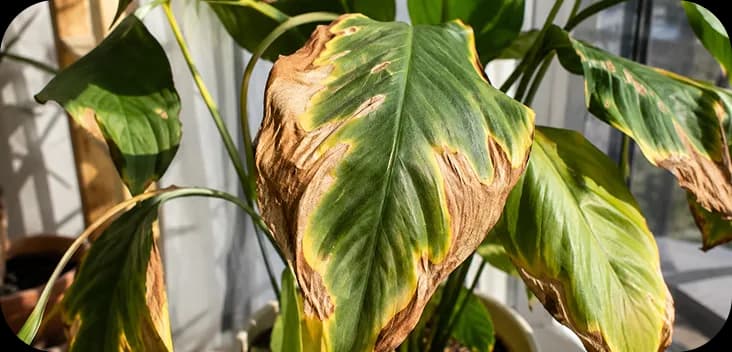
Papery scorch:

Sudden direct sun may create tan, dry patches on the side facing the window or outdoor light.

Curling leaves:

Leaves may curl, fold, or angle away when light is intense and heat builds on the leaf surface.

Dull new growth:

Philodendron 'Moonlight' can lose its clean, bright color when light is both harsh and prolonged.

Move it out of direct afternoon sun right away. Filter the light with a sheer curtain, or shift the pot a few feet back.

Weak light changes growth shape before severe decline appears.

  • Stretched posture:

    New leaves may sit on longer petioles, making the plant look open instead of compact.

  • Leaning growth:

    The crown may angle toward the nearest bright area when one side receives most of the usable light.

  • Smaller leaves:

    New growth can emerge smaller than older leaves during the active growing season.

  • Muted color:

    Philodendron 'Moonlight' may produce less vivid new leaves when light stays too dim for good color development.

  • Slow growth:

    Little change in spring or summer can point to low light when temperature and care are otherwise steady.

Move it gradually into brighter indirect light. Avoid jumping from shade to direct sun, which can cause scorch.

If ideal bright indirect light is limited, choose the brightest spot that avoids hot afternoon rays. A slightly dimmer but steady position is better than a sunny, scorch-prone one.

Move the pot 1–2 ft at a time when testing brighter light, then watch new growth for 2–3 weeks. Rotate the pot monthly to keep the rosette even.

A room lit only by distant ambient light is unsuitable because compact growth and bright color usually decline there.

Get Personalized Care Plan

Scan your plant to receive care tips personalized for your specific plant

FAQ

This plant grows best in bright, indirect or filtered light for most of the day. Gentle morning sun is useful, but harsh afternoon exposure is usually too strong indoors.

More Plant Light Guides

Get the Botan App

Discover how to care for your plants with Botan.

Botan app identifying a plant with a phone camera
How To Revive a Dying Plant: 6 Steps To Bring A Plant Back To Life

6 min read · 1 Sept 2026

How To Revive a Dying Plant: 6 Steps To Bring A Plant Back To Life

Drooping leaves and brown tips don't always mean the end, and a weakened plant can often recover with a little help. These six simple steps will help you revive a dying plant and restore its health.

Plant Care
How To Revive a Dying Plant: 6 Steps To Bring A Plant Back To Life
Rice Water for Plants – Which Plants Love It and How to Make It

8 min read · 14 Jul 2026

Rice Water for Plants – Which Plants Love It and How to Make It

Rice water can be an ideal DIY solution for orchids, roses, or fruiting plants. It supports growth, leaf count, and height. We’ll share how to make and apply it correctly for your plant.

Plant Care
Rice Water for Plants – Which Plants Love It and How to Make It
How Long Can Flowers Go Without Water? Everything You Need to Know

6 min read · 10 Jul 2026

How Long Can Flowers Go Without Water? Everything You Need to Know

Flowers can survive without water anywhere from 1-2 hours to several months, depending on the plant type, species, and growing conditions. Some strong-looking flowers are drought-sensitive, while delicate-looking plants may tolerate long dry periods surprisingly well.

Plant Care
How Long Can Flowers Go Without Water? Everything You Need to Know