Dinema Care (Dinema polybulbon)

Dinema

About Dinema

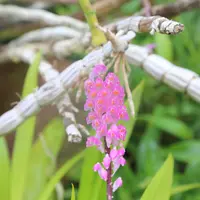
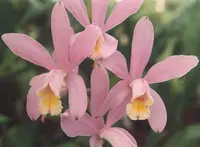
Dinema polybulbon is a miniature epiphytic orchid, often called a creeping or mat-forming orchid, valued for its small size and delicate star-shaped flowers. It typically grows over bark or moss, forming low, spreading clumps with short pseudobulbs and narrow leaves.

This species is native to Central America and parts of the Caribbean, where it inhabits humid forests and often grows on tree trunks or branches. It is considered moderately easy if its need for consistent moisture, gentle air movement, and stable conditions is respected.

Light shade, even humidity, and a well-drained, airy orchid substrate support healthy growth. Understanding how to care for Dinema mainly involves keeping roots evenly moist while avoiding stagnant, soggy conditions.

Main Plant Requirements

Care Difficulty

Moderate Care

Light Preference

Partial Shade

Water Requirements

Regular Water

Temperature Preference

Tropical / Frost Sensitive

Hardiness Zone

11–13

Soil Texture

Loamy, Peaty, Organic-rich

Soil pH

Acidic (5.5–6.5)

Soil Drainage

Moist but well-drained

Fertilization

Light (every 4–6 weeks)

Get Personalized Care Plan

Scan your plant to receive care tips personalized for your specific plant

Available on iOS and Android

How to Care for the Dinema

This small orchid prefers bright, gentle light that mimics a forest canopy.

  • Provide bright, filtered light with 2–4 hours of soft morning sun; avoid harsh midday sun through glass to prevent leaf scorch.
  • Allow partial shade, especially in summer; light green, firm leaves indicate suitable light, while very dark green, weak growth suggests too little light.
  • In winter, move Dinema closer to an east or lightly shaded south window to compensate for shorter days, but still protect from direct midday rays.

Watering should keep roots evenly moist but never waterlogged.

  • Let the top 1–2 cm of the substrate just begin to dry, then water thoroughly so it drains freely; never leave the pot standing in water.
  • Reduce watering slightly in cooler months, allowing a bit more drying time, and increase frequency during active warm-season growth if the medium dries faster.
  • Signs of overwatering include black, mushy roots and yellowing leaves, while wrinkled pseudobulbs and dry, papery roots indicate Dinema polybulbon is too dry.

This orchid prefers intermediate temperatures with mild seasonal variation.

  • Aim for 65–80°F (18–27°C) during active growth for reliable flowering and healthy root activity.
  • Avoid letting temperatures drop below 55°F (13°C); brief dips to 50°F (10°C) may be tolerated but repeated cold can stress the plant and slow growth.
  • In summer, it tolerates up to 85°F (29°C) if humidity and air movement are good; protect from frost and cold drafts at windows in winter.

This orchid prefers consistently moist air similar to cloud-forest conditions.

  • Aim for 60–80% humidity, as drier air slows growth and reduces flowering.
  • Tolerates short dips to 40–50%, but leaf tips browning or wrinkled pseudobulbs indicate humidity stress.
  • Increase humidity with a nearby humidifier, grouped plants, or a pebble tray, while keeping leaves well ventilated to prevent fungal issues.

Dinema polybulbon thrives mounted or in a very open, airy orchid substrate rather than standard potting soil.

  • Use a fine to medium orchid mix of bark, sphagnum moss, and perlite to create a loose, fibrous structure.
  • Ensure very rapid drainage so roots remain moist but never waterlogged, mimicking its epiphytic habit.
  • Keep pH slightly acidic to neutral, around 5.5–7.0, which supports nutrient uptake and healthy root growth.
  • Avoid compact peat-based mixes or garden soil, which collapse around roots, restrict aeration, and promote rot.

This species adapts well to container culture, especially in shallow pots or baskets that mimic mounting.

  • Choose a wide, shallow pot to allow creeping rhizomes to spread horizontally without crowding new growths.
  • Use a slatted basket or ventilated plastic pot to keep the airy mix from staying wet for long periods at the center.
  • Place the container on a stable surface or hanger, as the spreading growth and moist substrate can make it top-light and easy to tip.

This miniature orchid benefits from light, balanced feeding during active growth for steady flowering and healthy roots.

  • Use a balanced orchid fertilizer (around 20-20-20) at 1/4–1/2 strength, formulated for epiphytic orchids.
  • Feed Dinema every 2–3 weeks in spring and summer when new roots and shoots are developing.
  • Rinse the medium with plain water between feedings to prevent salt buildup on roots and media.
  • Reduce feeding to 1x month or stop entirely in fall and winter, depending on light and temperature.

Pruning for Dinema polybulbon is minimal and focuses mainly on hygiene and maintaining a compact mat of growth.

  • Best time for light pruning is after the main flowering flush, when new growths can be seen starting.
  • Remove only dead or shriveled pseudobulbs, spent flower spikes, and obviously damaged leaves with sterile scissors.
  • Avoid cutting healthy pseudobulbs, as these store water and nutrients and support future flowering.
  • Trim overly crowded, tangled sections only if ventilation is poor, to limit rot and maintain a neat clump.

This species prefers stable conditions and only occasional repotting or remounting when the support breaks down or becomes overcrowded.

  • Check for signs like roots circling a small pot, slow growth despite good care, or decaying bark or moss.
  • Plan repotting or remounting every 2–3 years, ideally in early spring when new root tips first appear.
  • Gently remove old medium, keeping root disturbance minimal, and secure the plant on fresh bark, cork, or in a fine orchid mix.
  • Water lightly at first, maintain high humidity, and keep bright but indirect light to reduce stress while roots reattach.

Propagation of this orchid is commonly done by careful division rather than from seed in home conditions.

  • Divide mature clumps in late winter to early spring, just before strong new root growth begins.
  • Use a sterile knife or scissors to separate sections with at least 3–4 healthy pseudobulbs and active roots.
  • Mount or pot divisions in a fine, airy orchid medium, then secure them firmly so new roots can grip.
  • Maintain 70–80% humidity, gentle airflow, and bright, indirect light to encourage fast establishment of new divisions.

Winter care for this orchid focuses on frost-free conditions and slightly cooler, drier rest periods.

  • Dinema is frost sensitive and should be kept above 50°F, with an ideal winter range of 55–65°F.
  • Move container or mounted plants indoors or into a greenhouse before night temperatures drop near 50°F.
  • Reduce watering and allow the medium or mount surface to dry slightly more between waterings in winter.
  • Maintain bright, indirect light and good air movement to prevent rot during cooler, slower growth.

Care Tips

Mounting strategy

Use a small piece of cork bark or hardwood with a thin pad of long-fiber sphagnum over the roots to keep this miniature securely mounted while still allowing rapid drying and good air movement around the pseudobulbs.

Microclimate zoning

Place the plant slightly below and to the side of a fan or air outlet so it receives gentle, constant air movement without being in the direct draft, which reduces fungal issues on the fine roots.

Fine-scale watering check

Instead of relying on calendar schedules, lift the mount and mist or dunk only when it feels very light and the sphagnum is crisp to the touch, which matches the species’ preference for frequent but brief wet-dry cycles.

Cool-season adjustment

In late fall and winter, reduce fertilizer and let the plant dry slightly more between waterings while maintaining good light, which helps strengthen new growths and flower spikes for the next season when growing Dinema.

Flower spike protection

Once spikes appear, avoid handling or rotating the mount frequently and direct airflow slightly above spike level so that delicate buds do not desiccate or snap from sudden air blasts.

Common Pests and Diseases

Scale insects

This pest feeds on sap along the thin pseudobulbs and undersides of leaves, often appearing as tiny brown or tan bumps. Symptoms include sticky honeydew on mounts and a gradual decline in vigor.

Solution

Remove visible insects with a cotton swab dipped in isopropyl alcohol, then rinse the plant thoroughly with lukewarm water. Improve air movement around the mounted plant and repeat alcohol spot-treatments weekly until no new scale appears; for larger infestations, use a labeled systemic insecticide suitable for orchids, applied at reduced strength to avoid stressing the fine roots typical of Dinema polybulbon care.

Spider mites

These insects thrive on Dinema polybulbon grown in overly dry, warm air, causing silvery stippling on leaves and very fine webbing along the leaf bases and pseudobulbs. This pest can quickly desiccate the thin foliage when the plant is mounted or on cork with low humidity.

Solution

Rinse the entire plant under a gentle, lukewarm shower, focusing on leaf undersides and crevices, then increase humidity to 60–70% with good airflow. Repeat washing every few days and, if needed, apply a miticide or horticultural oil formulated for orchids, taking care to spray in the early part of the day so foliage dries by night.

Soft rot (Erwinia)

This disease causes rapidly spreading, water-soaked, foul-smelling lesions on pseudobulbs and leaf bases, often starting where water stays trapped on compact mounts. Symptoms include tissue that collapses and turns mushy within hours to days.

Solution

Immediately cut away all affected tissue with a sterile blade, removing some healthy margin, then dust cuts with powdered cinnamon or a commercial bactericide. Adjust care by providing stronger air movement, watering in the morning only, and avoiding water pooling in the tight junctions where pseudobulbs attach to the mount.

Leaf spot fungi

This disease presents as small yellow to brown spots on leaves that may merge into irregular patches, often triggered by frequent overhead misting and cool, stagnant air around the mounted plant. Symptoms include spots that may develop a darker center as they age.

Solution

Remove and discard heavily marked leaves, then improve ventilation and avoid wetting foliage late in the day. If new spotting continues, use a fungicide labeled for orchids at the lowest effective rate and adjust watering so the plant dries within a few hours after each irrigation.

Snails and slugs

These pests are attracted to the moist bark, cork, or sphagnum used for mounting and can chew notches in new shoots, roots, and flower spikes during the night. Symptoms include ragged holes, missing root tips, and slime trails on the mount or bench.

Solution

Inspect the plant and its mount after dark, handpick any snails or slugs, and rinse the mount thoroughly. Use barrier methods such as copper tape on benches, place iron phosphate bait away from the plant but within the growing area, and keep the space around mounts clean and dry to reduce hiding places while still maintaining suitable humidity for growing Dinema.

Interesting Facts

Miniature pseudobulb chains

This orchid forms creeping mats of closely spaced pseudobulbs that look like tiny beads strung along a rhizome, an adaptation that helps it store water and nutrients while spreading over bark or rock surfaces.

Cool-growing cloud epiphyte

In nature it often grows as an epiphyte in cool, humid cloud forests at mid to higher elevations, where it experiences bright but filtered light and strong air movement.

Temperate to subtropical range

Its native distribution stretches from Mexico through Central America into parts of South America, making it unusually widespread for such a small, specialized orchid species.

Botan icon

Did you know?

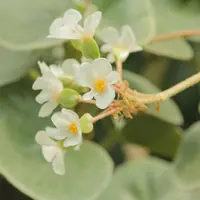
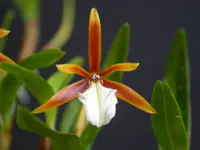
The flowers of this species can be nearly as large as its entire vegetative growth, so when in bloom the plant often appears as a mat of leaves dotted with disproportionately large yellow to brown star-shaped flowers.

FAQs about Dinema

Insufficient light intensity, overly warm nights, or lack of a slight drier rest after growth can reduce flowering. Mature pseudobulbs must form fully. Occasional low-dose, bloom-balanced fertilizer and stable conditions support reliable spikes and flowers.

Grow Healthy Plants with Botan Care

Keep your plants happy and healthy with plant identification, disease detection, and easy care guidance.

Botan plant care app — identify plants on mobile

Explore More Plants