Cattleya loddigesii Care

Cattleya loddigesii

About Cattleya loddigesii

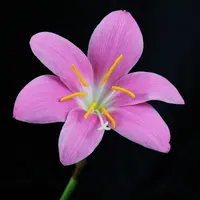
Cattleya loddigesii is an epiphytic orchid, usually growing on trees, with upright pseudobulbs and showy, pastel to lavender flowers that appear in clusters. The blooms often have a contrasting lip and a light fragrance, making it a popular choice among orchid growers.

This species is native to Brazil, where it grows in bright, airy forest habitats with good air movement. It is considered moderately easy for growers who can provide stable conditions and understand how to care for Cattleya loddigesii.

The plant prefers bright, filtered light, regular moisture with good drying between waterings, and a very free-draining orchid mix. Consistent airflow and avoiding prolonged wetness on leaves and roots help maintain plant health.

Main Plant Requirements

Care Difficulty

Moderate Care

Light Preference

Partial Sun

Water Requirements

Moderate Water

Temperature Preference

Tropical / Frost Sensitive

Hardiness Zone

Unknown

Soil Texture

Sandy, Organic-rich

Soil pH

Acidic (5.5–6.5)

Soil Drainage

Well-drained

Fertilization

Moderate (every 2–4 weeks)

Get Personalized Care Plan

Scan your plant to receive care tips personalized for your specific plant

Available on iOS and Android

How to Care for the Cattleya loddigesii

This orchid needs bright, filtered light to bloom reliably without leaf damage.

  • Provide 4–6 hours of bright, indirect light daily, such as early morning sun with light shade from late morning onward.
  • Outdoors, grow Cattleya loddigesii under 40–60% shade cloth or dappled tree shade to avoid harsh midday and afternoon sun burns.
  • Monitor leaves: medium green with a slight yellow cast indicates enough light; dark green means too little, while yellow, leathery, or scorched patches indicate excess sun.

This species prefers thorough watering followed by a distinct drying period around the roots.

  • Water when roots look silvery and the medium feels dry in the top 2–3 cm, then soak fully and let excess drain away completely.
  • During active growth in spring and summer, expect to water more often; in autumn and winter, extend the interval as growth and evaporation slow.
  • Watch for signs: wrinkled pseudobulbs signal underwatering, while black, mushy roots or a sour smell indicate overwatering and poor drainage.

This orchid grows best with warm days, cooler nights, and protection from temperature extremes.

  • Aim for daytime temperatures of 70–85°F (21–29°C) and night temperatures of 55–65°F (13–18°C) for steady growth and flowering.
  • Avoid letting it drop below 45–50°F (7–10°C); protect from frost, cold drafts, and sudden temperature swings, especially in late fall and winter.
  • In hot spells above 90°F (32°C), increase shade, air movement, and humidity to prevent heat stress, leaf scorch, and bud blast.

This orchid prefers moderately high humidity but copes briefly with drier indoor air if other conditions are stable.

  • Aim for 50–70% humidity, with steady air movement to prevent fungal spots on leaves and pseudobulbs.
  • Cattleya loddigesii shows humidity stress through shriveling pseudobulbs, dull wrinkled leaves, and stalled new roots.
  • Use a pebble tray, room humidifier, or grouping of plants to raise humidity, rather than misting heavily.

This epiphytic orchid needs a very airy, fast-draining medium rather than compact soil.

  • Use a chunky mix such as medium orchid bark with some perlite and a small amount of sphagnum moss for moisture balance.
  • Ensure the mix drains within seconds after watering; waterlogged conditions quickly suffocate roots and promote rot.
  • Aim for slightly acidic to neutral conditions around pH 5.5–7.0, which suits typical orchid bark-based media.
  • Refresh or flush the medium periodically to prevent salt buildup and compaction that reduce aeration around the roots.

This species is well suited to container growing in small pots or baskets.

  • Choose a pot only slightly larger than the root mass to keep the open medium drying at a predictable rate.
  • Use a rigid, heavier container or hang a basket securely to stabilize tall flower spikes and prevent tipping.
  • Select slotted or net-style orchid pots so roots receive both rapid drainage and increased airflow through the sides.

Nutrient inputs support strong growth and flowering in Cattleya loddigesii grown in pots.

  • Use a balanced orchid fertilizer (for example 20-20-20) at 1/4–1/2 label strength, always on moist media, not bone-dry roots.
  • Feed every 1–2 weeks during active growth with liquid fertilizer, or use a light, slow-release orchid formula as directed.
  • In winter or when growth slows, reduce feeding to 1× per month or pause if plants rest in cooler, lower-light conditions.
  • Flush the pot with clear water about once per month to reduce salt buildup from fertilizers in bark-based mixes.

Pruning needs are light and mainly sanitary for Cattleya loddigesii.

  • Best timing is after flowering, when new growths are clearly visible and flower sheaths have finished.
  • Cut away dead or damaged pseudobulbs and leaves with sterilized scissors or pruners to limit disease spread.
  • Remove spent flower spikes at the base without cutting into live pseudobulbs, which store energy for future blooms.
  • Thin very crowded, shriveled back bulbs during division to improve air movement and overall plant structure.

Repotting keeps Cattleya loddigesii roots healthy and prevents media breakdown.

  • Plan to repot every 2–3 years, or when roots circle the pot, grow over the rim, or growth slows despite good light.
  • Best time is just as new roots start to emerge from fresh growth, usually in late winter to spring.
  • Gently remove old bark, trim dead roots, and place the rhizome slightly above fresh, coarse orchid mix to maintain air around roots.
  • Water lightly at first, keep humidity moderate, and shade slightly for 1–2 weeks to reduce transplant stress.

Division is the standard method for multiplying Cattleya loddigesii in home collections.

  • Divide only mature clumps in late winter to spring, when new roots are starting to show.
  • Use a sterile knife or shears to cut the rhizome into sections with at least 3–4 healthy pseudobulbs each.
  • Dust cuts with a fungicide or cinnamon, then pot each division in fresh, coarse orchid mix with good drainage.
  • Keep divisions warm, bright, and slightly more humid, watering sparingly until new roots and growth are established.

Cool-season care focuses on temperature management and moisture control for Cattleya loddigesii.

  • This orchid is frost-sensitive and should be kept above 50°F, with an ideal winter range of 55–65°F.
  • Move outdoor plants indoors or to a greenhouse before night temperatures drop below 55°F.
  • Provide bright, filtered light and good air movement while keeping the potting mix just barely moist, never soggy.

Care Tips

Optimize air movement

Place a small oscillating fan near the plant on a low setting to keep air moving gently around the leaves and pseudobulbs, which reduces fungal problems and helps roots dry correctly between waterings.


Use slotted pots

Grow the plant in a slotted or net-style orchid pot so that thick roots receive high oxygen levels and excess water drains rapidly, then set the pot inside a heavier cachepot for stability and to catch drips.

Stabilize new growth

When new pseudobulbs and roots start, secure the rhizome firmly to its medium or mount using soft wire or orchid clips so that tender root tips are not damaged by wobbling during handling.

Seasonal light adjustment

Shift the plant slightly closer to the light source in autumn and winter and back a bit in spring and summer, matching its seasonal growth rhythm while avoiding direct midday sun scorch.

Flowering support routine

As sheathes swell and buds form, rotate the pot a quarter turn each week and provide a thin stake only if spikes lean heavily, which helps buds open evenly without twisting or kinking the inflorescence when growing Cattleya loddigesii.

Common Pests and Diseases

Scale insects

This pest feeds on orchid leaves, pseudobulbs, and sheaths, appearing as small, rounded bumps that can cause yellowing and loss of vigor. Symptoms include sticky honeydew and sooty mold on nearby surfaces.

Solution

Isolate the plant, then manually remove scales with a cotton swab dipped in isopropyl alcohol and gently wipe leaf undersides and pseudobulbs. Follow with 2–3 applications of a horticultural oil or insecticidal soap at 7–10 day intervals and improve air movement and light to support recovery.

Spider mites

These insects thrive on Cattleya foliage in warm, dry conditions, causing fine stippling, dull leaves, and webbing, especially on the undersides. Symptoms include slow growth and leaves that feel rough when rubbed lightly.

Solution

Shower the plant with lukewarm water, thoroughly rinsing the undersides of leaves, then apply insecticidal soap or a miticide labeled for orchids, repeating every 7–10 days until no new damage appears. Maintain higher humidity (50–70%), avoid very dry heated air, and increase air circulation to reduce reinfestation risk while growing Cattleya loddigesii.

Mealybugs

This pest appears as white, cottony clusters in leaf axils, on roots, and around pseudobulb bases, sucking sap and weakening the plant. Symptoms include distorted new growth and sticky honeydew deposits.

Solution

Remove visible mealybugs with cotton swabs dipped in isopropyl alcohol and flush the plant, including root zone and pot, with a strong stream of water. Follow with targeted applications of systemic or contact insecticide labeled safe for orchids and monitor weekly, removing any new insects promptly.

Black rot

This disease, usually caused by water molds such as Phytophthora or Pythium, produces rapidly spreading black, water-soaked lesions on pseudobulbs and new growths. Symptoms include a foul odor and tissue that collapses and turns mushy, especially after prolonged wetness.

Solution

Immediately cut away all affected tissue with a sterile blade, dust cuts with a fungicidal powder or cinnamon, and keep the plant dry at the base while it heals. Discard old, wet medium, repot into fresh, free-draining bark, improve air circulation, and avoid water sitting in new growths or crowns, especially in cool conditions.

Bacterial brown spot

This disease starts as small, soft, water-soaked spots on leaves that enlarge and turn brown, often with a yellow halo. Symptoms include a characteristic foul smell and rapid spread in warm, wet conditions or when water sits on leaves overnight.

Solution

Remove and discard affected leaves or sections with sterile tools, cutting well into healthy tissue, then treat remaining foliage with a bactericide labeled for orchids or a dilute hydrogen peroxide rinse. Keep leaves dry, water early in the day, increase air movement, and avoid overhead misting to prevent recurrence.

Interesting Facts

Fragrant twilight bloomer

Flowers often open toward late afternoon and evening and release a sweet, complex fragrance that becomes stronger at dusk, likely aligning with natural pollinator activity in its native range.

Color‑variable populations

Wild populations show notable variation in flower color, from pale lilac to deeper magenta tones with a contrasting lip, which has made this species a classic parent in breeding programs for showy Cattleya hybrids.

Seasonal growth rhythm

In its native southeastern Brazil, this orchid typically produces new growth and roots in the warmer, wetter months and flowers after a rest period, a cycle important to understand for proper Cattleya loddigesii care instructions.

Botan icon

Did you know?

This species has been documented growing both as an epiphyte on trees and as a lithophyte on rocks in its native Brazilian habitats, showing an unusual flexibility in how it anchors and supports itself compared with many more specialized orchids.

FAQs about Cattleya loddigesii

Lack of flowering often relates to insufficient light, inadequate day–night temperature difference, or underfed pseudobulbs. Ensure strong but protected light, a 10–15°F nighttime drop, and balanced orchid fertilizer so bulbs mature before expecting blooms.

Grow Healthy Plants with Botan Care

Keep your plants happy and healthy with plant identification, disease detection, and easy care guidance.

Botan plant care app — identify plants on mobile

Explore More Plants