pineneedle beardtongue Care (Penstemon pinifolius)

pineneedle beardtongue

About pineneedle beardtongue

Pineneedle beardtongue (Penstemon pinifolius) is a small perennial native to dry, rocky slopes of the southwestern United States. It belongs to the figwort family and is well adapted to arid conditions.

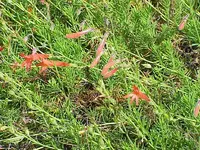
The plant forms low, bushy mounds of very narrow, pine needle-like leaves, topped in season with many tubular, usually red to orange flowers. These flowers attract hummingbirds and other pollinators.

Its naturally compact habit and drought tolerance make it suitable for rock gardens, slopes, and low-maintenance borders. Those who want to learn how to care for pineneedle beardtongue should know it prefers full sun, sharply drained soil, and relatively dry conditions once established.

Main Plant Requirements

Care Difficulty

Moderate Care

Light Preference

Full Sun

Water Requirements

Low Water

Temperature Preference

Cold Hardy

Hardiness Zone

4–9

Soil Texture

Sandy, Loamy, Rocky

Soil pH

Slightly acidic (6.5–7.0), Neutral (7.0)

Soil Drainage

Well-drained

Fertilization

Minimal (feed rarely)

Get Personalized Care Plan

Scan your plant to receive care tips personalized for your specific plant

Available on iOS and Android

How to Care for the pineneedle beardtongue

This sun-loving perennial thrives in bright, open sites typical of dry, rocky landscapes.

  • Provide 6–8 hours of direct sun daily; morning and midday sun are ideal, with light afternoon shade in very hot climates.
  • Tolerates light partial shade (3–4 hours sun), but flowering and compact growth decline as shade increases.
  • In summer, watch for leaf scorch or wilting in reflected heat; in low-light sites, pineneedle beardtongue becomes leggy with fewer blooms.

This drought-tolerant species prefers infrequent, deep watering once established.

  • Allow the top 5–7 cm of soil to dry completely before watering; in many climates this means waiting until foliage looks slightly less taut, not on a fixed schedule.
  • Use sharply drained, gritty soil or a sloped bed so water never pools around the crown; soggy conditions quickly lead to root rot.
  • In the first growing season, water when new growth softens or droops; once established, reduce frequency, and avoid watering during prolonged cool, wet periods.

This species is adapted to climates with cool winters and warm, dry summers.

  • Optimal growth and flowering occur around 65–80°F (18–27°C) during the growing season, with cooler nights improving vigor.
  • Mature plants typically survive down to about -10°F (-23°C) in well-drained soil; winter wet is more damaging than cold alone.
  • Tolerates summer heat up to about 90–95°F (32–35°C) if soil is dry and air is moving; prolonged heat with high humidity increases stress and shortens lifespan.

Humidity is rarely a concern for Penstemon pinifolius, which thrives in dry air typical of heated or air-conditioned homes.

  • Target 30–40% humidity; this species evolved in arid habitats and performs poorly in consistently damp air.
  • Dry indoor air is well tolerated, but prolonged humidity above 60% can increase foliar disease risk.
  • Watch for floppy, mildew-spotted foliage as a sign humidity is too high, and increase air movement instead of misting.

Penstemon pinifolius prefers lean, sharply drained, mineral-based soil that never stays wet for long.

  • Use a sandy or gravelly mix such as 50–60% coarse sand or grit blended with 40–50% loam or standard potting mix.
  • Ensure fast drainage; water should run through in seconds, with no puddling or sticky, compacted patches.
  • Aim for slightly acidic to neutral pH, roughly 6.0–7.5, avoiding strongly acidic or alkaline extremes.
  • Avoid heavy clay, peat-heavy, or constantly moist soil; improve such sites by incorporating coarse sand, fine gravel, and perlite for aeration.

This species is suitable for container growing outdoors in sunny, dry locations.

  • Choose a wide, shallow to medium-depth pot that allows fibrous roots to spread without holding a large, wet soil mass.
  • Use a gritty, fast-draining substrate and raise the pot on feet so drainage holes stay clear and water exits freely.
  • Select unglazed clay or other porous material to let excess moisture evaporate quickly, reducing root rot risk in wet climates.

This dryland perennial needs only light feeding, as Penstemon pinifolius is adapted to lean, well-drained soils.

  • Use a balanced, low-rate slow-release fertilizer or a thin layer of compost in early spring, before strong new growth starts.
  • Apply at most once per year during the growing season; excessive nutrients reduce flowering and shorten lifespan.
  • Use about half the label strength for container plants, and ensure the soil is never waterlogged after feeding.
  • Do not fertilize in late fall or winter, when growth slows and the plant is semi-dormant.

Pruning is mainly used to keep pineneedle beardtongue compact and to encourage fresh flowering growth.

  • Shear or lightly cut back spent flower stems in late spring to early summer to stimulate rebloom and denser growth.
  • In late winter or very early spring, remove dead, damaged, or weak stems with clean, sharp hand pruners.
  • Thin out crowded interior shoots to improve air flow and maintain a neat, mounded shape.
  • Avoid cutting into old, woody bases; focus on the previous season’s green growth to prevent dieback.

This species is usually grown in the ground; transplanting and container moves should be infrequent and carefully timed.

  • Transplant in early spring or early fall, avoiding extreme heat so roots can establish before weather stress.
  • Look for signs such as roots circling the pot, water running straight through, or noticeably slowed growth in containers.
  • Move up only 1 pot size, using a very well-drained, gritty mix to limit waterlogging and root rot.
  • Handle the root ball gently, disturbing it as little as possible, then water once to settle soil and allow it to dry between later waterings.

Penstemon pinifolius is commonly propagated by semi-ripe cuttings and by seed under suitable conditions.

  • Take 5–8 cm non-flowering semi-ripe stem cuttings in late spring to mid-summer and remove lower leaves.
  • Insert cuttings into a free-draining mix of sand and peat or fine grit, and keep slightly moist, not wet.
  • Provide bright, indirect light, moderate warmth around 65–75°F, and gentle air movement to limit fungal issues.
  • Sow fresh seed in fall or late winter, using a gritty seed mix and light cover; outdoor seed trays benefit from natural cold exposure.

This penstemon is generally cold hardy in much of the US and needs only modest winter preparation in the ground.

  • In regions colder than about USDA zone 4–5, consider extra protection or use it as a container or short-lived perennial.
  • Apply a light, airy mulch such as gravel or pine needles around the crown, keeping material off the stems.
  • Leave most foliage standing over winter to shield the crown, then tidy dead stems in late winter or early spring.
  • Container plants in very cold areas can be moved to an unheated garage or cold frame to prevent root freeze-thaw damage.

Care Tips

Mulch With Grit

Apply a 2–3 cm layer of fine gravel or crushed stone around the crown to keep stems dry at the base, reduce rot risk, and suppress weeds without trapping excess moisture.

Encourage Compact Form

Pinch back or lightly shear the soft tips of new growth in late spring to promote a denser, mound-like habit and more flowering shoots later in the season.

Winter Drainage Check

Before winter rains or snow, ensure the planting site has a slight slope or is raised so that water does not pool around the roots, which are sensitive to prolonged saturation in cold conditions.

Avoid Crowding Neighbors

Space nearby plants far enough away that air can move freely through the narrow foliage, which helps foliage dry quickly and reduces fungal issues when growing pineneedle beardtongue.

Targeted Deadheading

As flowers fade, snip off only the spent flowering spikes down to the first or second leafy node to extend the bloom period without removing healthy foliage that supports next year’s growth.

Common Pests and Diseases

Spider mites

This pest thrives in hot, dry conditions and feeds on foliage, causing fine speckling, dull needles, and very fine webbing on pinelike leaves.

Solution

Rinse stems and foliage with a firm stream of water, focusing on the undersides of leaves, then improve air movement and avoid overhead watering that creates heat stress; if needed, use insecticidal soap or a horticultural oil labeled for mites, repeating at 5–7 day intervals until new growth appears clean.

Aphids

These insects cluster on young shoots and flower stems, sucking sap and leaving sticky honeydew that can attract sooty mold on foliage and stems.

Solution

Pinch or hose off infested tips, then treat remaining colonies with insecticidal soap or a light horticultural oil, ensuring full coverage of stems and the undersides of leaves; encourage natural predators such as lady beetles by avoiding broad-spectrum insecticides.

Leaf spot

This disease produces small tan to brown spots on foliage that may merge in humid or overcrowded conditions, leading to premature leaf drop and thinning of the mound.

Solution

Remove and discard affected leaves, reduce overhead watering, and keep plants well spaced for good airflow; in persistent cases, apply a fungicide labeled for ornamental leaf spots at the first sign of new lesions, following label intervals.

Crown rot

This disease develops in poorly drained or frequently wet soil, causing a soft, darkened crown, stunted growth, and sudden wilting or collapse of stems, especially in warm, wet weather.

Solution

Dig up and discard severely affected plants, improve drainage with raised beds or gritty soil mixes, and avoid mulching tightly around the crown; for future plantings, situate plants in full sun and sharply drained, low-organic soils to reduce the risk while following Penstemon pinifolius care instructions.

Interesting Facts

Needle-like evergreen foliage

This species has very narrow, needle-like leaves that stay evergreen in mild climates, giving it a conifer-like appearance even though it is a flowering perennial in the plantain family (Plantaginaceae).

Hummingbird specialist flowers

Its bright tubular orange-red flowers are shaped and positioned in a way that particularly suits hummingbirds, which are among its primary pollinators in its native range in the southwestern United States.

Rocky habitat adaptation

In the wild it often grows on rocky slopes and well-drained outcrops in New Mexico and Arizona, showing strong adaptation to lean, fast-draining soils and seasonal drought typical of high-desert environments.

Botan icon

Did you know?

This species has become an important parent in breeding programs for cold-hardy, long-blooming rock garden penstemons, contributing its fine evergreen foliage, compact habit, and vivid flower color to many modern cultivars.

FAQs about pineneedle beardtongue

This species is highly attractive to hummingbirds, native bees, and some butterflies. Tubular red flowers provide nectar over an extended period, making it valuable in wildlife-friendly, low-water gardens and pollinator corridors in dry, sunny landscapes.

Grow Healthy Plants with Botan Care

Keep your plants happy and healthy with plant identification, disease detection, and easy care guidance.

Botan plant care app — identify plants on mobile

Explore More Plants