Cool root management
Place the pot inside a slightly larger outer pot and fill the gap with damp long-fiber sphagnum or perlite to buffer temperature swings and keep the root zone cooler in summer.

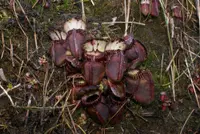
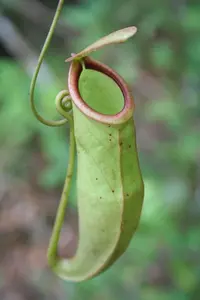
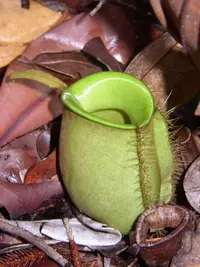
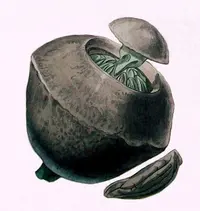
The Australian pitcher plant, Cephalotus follicularis, is a small carnivorous plant that forms low rosettes of compact, ground-hugging leaves and colorful pitfall traps. Its pitchers are often reddish or striped, with a toothed lid and a waxy interior that helps trap insects.
This species is native to nutrient-poor, coastal wetlands in southwestern Australia, where it grows in sandy, peaty soils that stay moist but not flooded. It grows slowly and can be sensitive to root disturbance, which makes it more challenging than many common houseplants.
To care for Australian pitcher plant, growers usually provide bright, indirect light, mild temperatures, and evenly moist, low-mineral soil that mimics its natural habitat conditions.

Care Difficulty
Hard Care

Light Preference
Partial Shade

Water Requirements
Keep Soil Moist

Temperature Preference
Cool Climate

Hardiness Zone
9–10

Soil Texture
Sandy, Peaty, Organic-rich

Soil pH
Strongly acidic (4.5–5.5)

Soil Drainage
Moist but well-drained

Fertilization
Minimal (feed rarely)
Scan your plant to receive care tips personalized for your specific plant
Available on iOS and Android
This carnivorous species prefers bright, gentle light that mimics coastal southern Australian conditions.
This plant prefers evenly moist but never waterlogged conditions to protect its fine roots and pitchers.
This species prefers mild, maritime-style temperatures with a noticeable but not extreme seasonal drop.
This species prefers moderately humid air but adapts to typical indoor ranges if extremes are avoided.
Cephalotus follicularis thrives in open, low-nutrient, peat-based mixes that drain freely yet stay evenly moist.
This species is well suited to container growing when pot depth and moisture control are managed carefully.
This carnivorous species gains most nutrients from prey and benefits from very minimal fertilization.
Cephalotus follicularis needs only light, functional pruning to maintain health and airflow.
This species dislikes disturbance, so repotting should be infrequent and planned carefully.
Cephalotus follicularis propagation is possible but slow and best attempted on well-established plants.
This coastal species prefers cool, frost-free winters and benefits from moderate protection in cold climates.

Plant Health Check
Not sure what's wrong with your plant? Check your plant's health inside the app.
This species produces both flat, non-carnivorous leaves for photosynthesis and specialized pitcher leaves for trapping prey, sometimes at the same time on the same plant.
Its pitchers are passive pitfall traps that rely on a slippery rim and downward-pointing hairs to guide insects into digestive fluid, with no moving parts like snap traps or suction mechanisms.
The plant is naturally restricted to a small coastal region of southwest Western Australia, where it grows in nutrient-poor, sandy peat soils near seasonally wet swamps and seepage areas.

Genetic and morphological studies indicate that this is the only living species in its genus, making it a relict carnivorous plant lineage with no close modern relatives.
Growth is slow. New rosettes and pitchers usually appear gradually over the growing season, with plants taking several years to form a sizable clump. Patience is important when trying to grow Cephalotus follicularis successfully at home.
Keep your plants happy and healthy with plant identification, disease detection, and easy care guidance.