Use wide pots
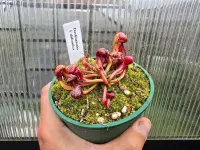
Choose a broad, shallow pot or tray so the rosettes can spread and produce ground-facing pitchers, and top-dress with long-fiber sphagnum to keep the surface evenly moist and stable.

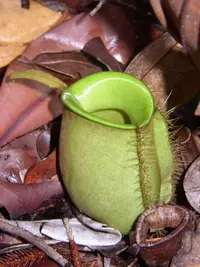
Nepenthes ampullaria is a tropical pitcher plant that forms many small, squat pitchers clustered around the base of the plant. It is a carnivorous species that traps insects in fluid-filled pitchers to supplement nutrients.
This species naturally occurs on the forest floors of Borneo, Sumatra, and nearby regions, often in humid lowland rainforests. It prefers warm, consistently moist conditions and low to moderate light filtered through overhead vegetation.
Compared with some other Nepenthes, it is relatively forgiving if humidity and moisture are kept stable, but it still dislikes drying out or mineral-rich water. Understanding how to care for Nepenthes ampullaria starts with providing soft water, airy, nutrient-poor substrate, and steady warmth.

Care Difficulty
Hard Care

Light Preference
Partial Shade

Water Requirements
Keep Soil Moist

Temperature Preference
Tropical / Frost Sensitive

Hardiness Zone
11–12

Soil Texture
Peaty, Organic-rich, Sandy

Soil pH
Strongly acidic (4.5–5.5)

Soil Drainage
Moist but well-drained

Fertilization
Minimal (feed rarely)
Scan your plant to receive care tips personalized for your specific plant
Available on iOS and Android
This lowland pitcher plant prefers bright, filtered light similar to a lightly shaded tropical forest edge.
Moist, low-mineral conditions are essential for healthy root and pitcher development.
This species is a true lowland tropical plant that grows best in consistently warm, stable temperatures.
This species needs high, stable humidity to form healthy pitchers.
This lowland pitcher plant prefers a loose, airy, nutrient-poor medium rather than conventional potting soil.
This species is well suited to container culture when the pot supports its spreading, ground-hugging growth.
This low-nutrient carnivorous species needs only light, careful feeding when grown in pots.
Pruning is mainly used to manage size and remove old growth on Nepenthes ampullaria.
Container-grown plants benefit from careful, infrequent repotting to refresh the airy, acidic mix.
Home propagation is possible but slow and best suited to patient growers familiar with high-humidity setups.
This lowland tropical species is not frost tolerant and requires warm, stable conditions year-round.

Plant Health Check
Not sure what's wrong with your plant? Check your plant's health inside the app.
This species often relies on fallen leaves collected in its pitchers rather than actively trapping insects, making it unusually detritivorous compared with most other Nepenthes.
Unlike many climbing species in its genus, it commonly forms dense carpets of squat ground pitchers on the forest floor of lowland rainforests.
The wide, upward-facing mouth and robust waxy interior of its pitchers help them retain function even when heavily diluted by frequent tropical rain.

Molecular and morphological studies have shown that this species is part of a distinct evolutionary lineage within lowland Southeast Asian Nepenthes, with its highly specialized detritus-feeding lifestyle considered an example of niche differentiation that reduces competition with nearby, more insectivorous pitcher species.
This species usually performs best in a warm, humid greenhouse or outdoor shadehouse in frost‑free climates. In typical homes, low humidity and temperature swings limit vigor, so indoor success often requires terrarium conditions or a dedicated growing setup.
Keep your plants happy and healthy with plant identification, disease detection, and easy care guidance.