


Support trailing stems
Install a small trellis, hoop, or moss pole in the pot and gently tie the longest vines with soft plant ties to keep stems from kinking or snapping at the base as they lengthen.

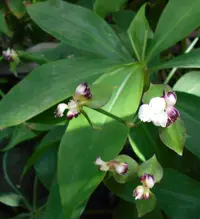
Cohitre blanco, Tradescantia zanonia, is a tropical evergreen perennial grown mainly for its striking foliage. It typically forms arching or trailing stems that suit hanging baskets or shelf displays. Leaves are elongated, often with patterned or slightly glaucous surfaces, giving the plant a distinctive, textural look indoors. In its native range of Central and South America, it grows in warm, humid forests as an understory plant. This background makes it relatively forgiving in typical home conditions, provided it receives bright, indirect light and evenly moist, well-drained soil. These traits mean it can be manageable for many homes once the owner learns how to care for Cohitre Blanco.

Care Difficulty
Moderate Care

Light Preference
Bright Indirect Light

Water Requirements
Moderate Water

Temperature Preference
Tropical / Frost Sensitive

Hardiness Zone
10–12

Soil Texture
Loamy, Sandy, Organic-rich

Soil pH
Acidic (5.5–6.5), Slightly acidic (6.5–7.0)

Soil Drainage
Moist but well-drained

Fertilization
Light (every 4–6 weeks)
Scan your plant to receive care tips personalized for your specific plant
Available on iOS and Android
Tradescantia zanonia prefers bright, indirect light for even, healthy growth.
This species prefers evenly moist but not saturated soil, with brief drying between waterings.
This tropical plant grows best in consistently warm, frost-free conditions.
This species benefits from moderately humid air for best foliage quality.
Use a loose, airy medium that drains quickly yet holds some moisture.
This trailing species is well suited to container growing and hanging pots.
Tradescantia zanonia benefits from light, consistent feeding during active growth for fuller foliage and trailing stems.
Pruning helps Tradescantia zanonia stay compact, dense, and leafy rather than sparse and straggly.
This species adapts well to containers and benefits from periodic repotting to maintain vigorous growth.
Tradescantia zanonia is commonly multiplied by stem cuttings, which root fast in warm, bright conditions.
This species is frost-sensitive and needs mild indoor conditions or a warm greenhouse for winter survival.

Plant Health Check
Not sure what's wrong with your plant? Check your plant's health inside the app.
This species has a characteristic herringbone or chevron pattern on the upper leaf surface, created by the contrast between the darker green veins and the paler interveinal tissue, which helps distinguish it from other Tradescantia species with more uniformly colored leaves.
In its native Neotropical range, this plant often grows as an epiphyte on tree trunks and branches, rooting in accumulated organic debris rather than soil, which explains its tolerance for airy, loose substrates in cultivation.
The stems tend to grow in a slightly zigzag pattern with relatively short internodes, giving the plant a compact, layered appearance that differs from the longer, trailing habit seen in many other Tradescantia relatives.

Botanists have historically moved this species between several genera, including Zebrina and Cyanotis, before molecular and morphological studies supported placing it in Tradescantia, making it a useful example in discussions of how DNA evidence reshapes plant classification.
Brown tips or patches usually result from low humidity, underwatering, or salt buildup from fertilizer. Check soil moisture, flush the pot occasionally with plain water, and increase humidity with a pebble tray or nearby humidifier.
Keep your plants happy and healthy with plant identification, disease detection, and easy care guidance.

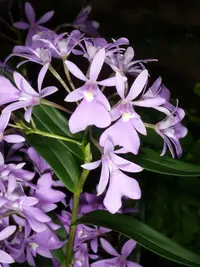
Epidendrum centropetalum
Epidendrum centropetalum
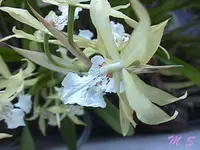
yellowish miltonia
Miltonia flavescens
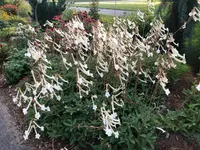
trumpet-flowered sinningia
Sinningia tubiflora
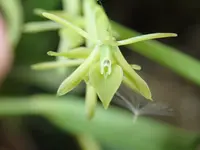
mountain star orchid
Epidendrum ramosum
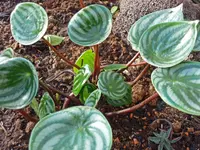
Watermelon Peperomia
Peperomia argyraea
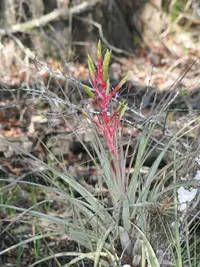
giant airplant
Tillandsia fasciculata
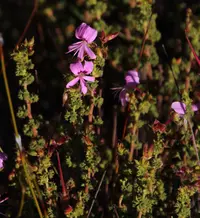
Rose-camphor Storksbill
Pelargonium englerianum
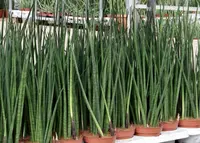
Dracaena bacularis
Dracaena bacularis