Begonia salaziensis Care

Begonia salaziensis

About Begonia salaziensis

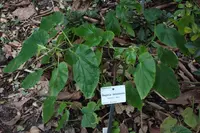
Begonia salaziensis is a tropical begonia species with decorative foliage and a compact, bushy growth habit. It produces small, delicate flowers that add subtle color rather than showy blooms.

This species is native to the Mascarene Islands in the Indian Ocean, where it grows in humid, shaded forest habitats. Its preference for stable warmth and moisture makes it better suited to experienced growers or attentive beginners.

In cultivation it usually prefers bright, filtered light, evenly moist but well-drained substrate, and good air circulation. Understanding how to care for Begonia salaziensis starts with replicating these mild, sheltered forest conditions indoors or in a protected greenhouse.

Main Plant Requirements

Care Difficulty

Moderate Care

Light Preference

Partial Shade

Water Requirements

Moderate Water

Temperature Preference

Tropical / Frost Sensitive

Hardiness Zone

Unknown

Soil Texture

Loamy, Peaty, Organic-rich

Soil pH

Acidic (5.5–6.5)

Soil Drainage

Moist but well-drained

Fertilization

Light (every 4–6 weeks)

Get Personalized Care Plan

Scan your plant to receive care tips personalized for your specific plant

Available on iOS and Android

How to Care for the Begonia salaziensis

This species prefers bright, filtered light that mimics a humid forest understory.

  • Provide 4–6 hours of bright, indirect light daily, such as dappled shade under taller plants or behind sheer curtains if near a window.
  • Allow gentle morning sun but avoid direct midday or afternoon sun, which can scorch leaves and cause pale patches or crispy edges on Begonia salaziensis foliage.
  • In winter, move plants slightly closer to bright openings or remove heavy shading, as low light can lead to weak, stretched growth and fewer flowers.

This plant needs evenly moist but not saturated soil throughout the growing season.

  • Water when the top 2–3 cm of soil feels dry, applying enough to moisten the root zone while allowing excess to drain away quickly.
  • Use a loose, well-drained mix and avoid standing water; yellowing, mushy stems indicate overwatering, while crisp leaf edges and drooping stems suggest underwatering.
  • Reduce watering slightly in cooler months, letting the top 3–4 cm dry, but never allow the root ball to dry out completely for more than a day or two.

This species prefers warm, stable temperatures with no exposure to frost.

  • Aim for 65–80°F (18–27°C) during active growth, as these temperatures support steady foliage and flower development.
  • Protect from cold; growth slows below 60°F (16°C), tissue damage occurs near 45°F (7°C), and freezing temperatures can kill stems and roots.
  • In hot spells above 85°F (29°C), increase shade and airflow, avoiding hot, reflective surfaces that can overheat leaves and dry the pot or soil too quickly.

This species prefers stable, moderately high humidity to maintain healthy foliage.

  • Aim for 60–80% humidity; growth slows and leaf edges crisp in prolonged air below 40%.
  • Watch for curled, brown-edged leaves and stalled new growth as signs of humidity stress.
  • Increase humidity with a pebble tray, grouped plants, or a small humidifier rather than misting leaves directly.

This species needs a light, fast-draining yet moisture-retentive mix that resists compaction.

  • Use a mix of roughly 40% fine bark, 30% peat or coco coir, and 30% perlite to create an airy structure.
  • Maintain slightly acidic conditions around pH 5.5–6.5 to support nutrient uptake and root health.
  • Ensure excess water drains within a few seconds; dense, sticky, or waterlogged substrates promote root rot.
  • Avoid heavy garden soil or pure compost, which compress easily and restrict oxygen around delicate roots of Begonia salaziensis.

This species is well suited to container growing when moisture and stability are carefully managed.

  • Choose a wide, shallow pot so fine surface roots spread evenly without sitting in deep, wet substrate.
  • Select a slightly heavier pot material, such as ceramic, to reduce tipping if stems become lush and top-heavy.
  • Elevate the pot on feet or a stand so drainage holes stay clear and excess water leaves the container quickly.

This species benefits from light, consistent feeding during active growth but reacts poorly to heavy fertilizer applications.

  • Use a balanced liquid fertilizer (around 10-10-10 or 20-20-20) diluted to 1/4–1/2 strength for Begonia salaziensis.
  • Feed every 3–4 weeks in spring and summer when growth is active.
  • Switch to a low-strength application every 6–8 weeks or stop feeding entirely in autumn and winter.
  • Flush the potting mix with plain water every 1–2 months to prevent fertilizer salt buildup.

Pruning is mainly used to keep this begonia compact, healthy, and to remove weak growth.

  • Carry out light pruning in late winter or early spring before strong new growth starts.
  • Remove dead, damaged, or diseased stems back to healthy tissue with clean, sharp scissors or pruning snips.
  • Thin out crowded interior stems to improve air flow and reduce fungal issues.
  • Pinch soft tips during the growing season to encourage bushier growth and more branching.

This plant prefers a slightly snug pot, so repotting is needed only when clear signs of crowding appear.

  • Check for roots circling the pot base, roots emerging from drainage holes, or reduced growth as signals to repot Begonia salaziensis.
  • Plan to move to a container 2–3 cm wider every 2–3 years, ideally in spring when growth is increasing.
  • Gently loosen circling roots and trim only broken or rotten sections to reduce stress.
  • Repot into a fresh, airy mix, water thoroughly, then keep in bright, indirect light and slightly drier soil for 3–5 days.

This species is usually multiplied by stem cuttings, which root reliably under warm, humid conditions.

  • Take 7–10 cm non-flowering stem cuttings in late spring or early summer, just below a node.
  • Remove lower leaves and insert the cutting into a light, sterile mix such as 50% perlite and 50% peat or coco coir.
  • Maintain 70–75°F, high humidity, and bright, indirect light until roots form in 3–5 weeks.
  • For division, separate healthy clumps with at least 2–3 stems and replant immediately, keeping soil slightly moist.

This begonia is not frost hardy and needs protection in regions with cold winters.

  • Move container plants indoors before temperatures drop below 50°F and maintain bright, indirect light.
  • Keep indoor temperatures around 60–70°F and reduce watering so the top 2–3 cm of soil dries between waterings.
  • In mild climates, add a 5–8 cm mulch layer over the root zone to buffer temperature swings and retain moisture.
  • Avoid cold drafts and sudden temperature drops, which can cause leaf drop and root stress.

Care Tips

Shallow, wide pots

Use a shallow, wide container with several drainage holes to accommodate the plant’s fibrous, surface-oriented roots and reduce the risk of waterlogging in the root zone.

Targeted leaf grooming

Inspect and remove yellowing or damaged leaves close to the base with clean scissors to improve airflow around the plant and lower the chance of fungal spotting in dense foliage.

Gentle airflow management

Place the plant where it receives light, indirect airflow from a fan or open interior doorway to keep leaves dry after watering without exposing it to drafts or temperature swings.

Rot prevention at crown

When watering, direct water to the substrate and avoid soaking the crown where stems meet the soil, since consistently wet crowns are a common starting point for rot in this species.

Controlled seasonal resting

If growth slows in winter, keep the plant slightly drier and avoid repotting or heavy feeding, as honoring this mild rest phase improves long-term vigor when caring for Begonia salaziensis.

Common Pests and Diseases

Powdery mildew

This disease causes a white, powder-like film on leaves and stems, often starting on older foliage in dense or humid conditions. Symptoms include yellowing, distortion, and gradual decline of affected leaves.

Solution

Remove the worst-affected leaves, improve air movement around the plant, and avoid overhead watering so foliage dries quickly. For recurring issues, apply a sulfur or potassium bicarbonate-based fungicide labeled for ornamentals, always following directions, and keep humidity moderate without stagnant air as part of ongoing Begonia salaziensis care instructions.

Botrytis blight

This disease produces soft, water-soaked spots that turn brown and are often covered with gray, fuzzy mold, especially on flowers and tender stems. Symptoms include wilting, collapse of affected parts, and rapid spread in cool, humid, low-light conditions.

Solution

Promptly remove and discard all infected leaves, flowers, and debris, then increase airflow and reduce overcrowding around the plant. Keep foliage as dry as possible, and if needed use a fungicide labeled for Botrytis on ornamentals while adjusting watering so the potting mix is moist but not constantly wet.

Mite infestation

These pests are tiny arachnids that feed on leaf sap, leading to fine speckling, dull or bronzed foliage, and possible webbing on the undersides of leaves. Symptoms include slowed growth and leaves that dry from the edges inward under warm, dry conditions.

Solution

Rinse foliage thoroughly with a strong but gentle stream of lukewarm water, focusing on leaf undersides, and repeat weekly until activity declines. For persistent infestations, use insecticidal soap or a horticultural oil spray labeled for mites, and maintain slightly higher humidity and regular inspections to prevent flare-ups.

Mealybugs

These insects appear as white, cottony clusters in leaf axils, on stems, and sometimes on roots, where they suck sap and excrete sticky honeydew. Symptoms include distorted new growth, yellowing leaves, and sometimes sooty mold growing on the honeydew.

Solution

Isolate the plant, then dab visible mealybugs with cotton swabs dipped in isopropyl alcohol and wipe affected areas. Follow up with repeated treatments using insecticidal soap or a light horticultural oil every 7–10 days, and check nearby plants to catch and remove early infestations.

Bacterial leaf spot

This disease creates small, water-soaked, translucent spots on leaves that can enlarge, darken, and sometimes develop a yellow halo, often starting on lower or crowded foliage. Symptoms include premature leaf drop and spreading lesions, especially when leaves stay wet for long periods.

Solution

Remove and discard infected leaves, avoid splashing water on foliage, and water at the base so leaves dry quickly. Improve spacing and airflow, and if the problem is severe or recurrent, discard heavily infected plants and start with clean stock to prevent reintroduction of the bacteria.

Interesting Facts

Mascarene island endemic

This species is naturally restricted to the Mascarenes in the southwest Indian Ocean, with confirmed wild populations on islands such as Réunion and Mauritius, where it grows in humid, shaded habitats.

Moist rock specialist

The plant often colonizes damp, shaded rock faces and vertical banks along forested streams, anchoring itself in thin mossy substrates where many other begonias cannot persist.

Asymmetrical foliage pattern

Like many members of the genus, it shows distinctly asymmetrical leaves, but this species is noted for its relatively narrow, elongated blades adapted to intercept limited understory light in dense island forests.

FAQs about Begonia salaziensis

Brown leaf edges usually come from low humidity, excessive sun, or fertilizer burn. Brown patches can also indicate fungal spots from poor air circulation. Improve humidity, provide filtered light, reduce fertilizer strength, and remove badly damaged leaves.

Grow Healthy Plants with Botan Care

Keep your plants happy and healthy with plant identification, disease detection, and easy care guidance.

Botan plant care app — identify plants on mobile

Explore More Plants