Use trailing supports
Provide low trellises, hoop wires, or the edge of a hanging basket for stems to drape over so the plant can form a fuller, cascading habit instead of sprawling flat on the pot surface.

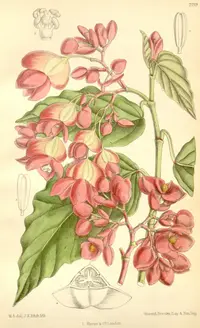
Shrimp begonia, Begonia radicans, is a trailing tropical begonia valued for its arching stems and clusters of hanging, shrimp-colored flowers. It is typically grown as a decorative foliage and flowering houseplant or greenhouse plant. Leaves are usually glossy, medium green, and slightly textured, giving a lush, cascading look in hanging baskets or on shelves. In its native range in Brazil, it grows in warm, humid forest environments where it benefits from shaded, sheltered positions. It is considered moderately easy if its need for consistent moisture, filtered light, and well-drained, airy soil is met. Understanding how to care for shrimp begonia starts with providing stable indoor conditions and avoiding cold drafts.

Care Difficulty
Moderate Care

Light Preference
Bright Indirect Light

Water Requirements
Keep Soil Moist

Temperature Preference
Tropical / Frost Sensitive

Hardiness Zone
10–11

Soil Texture
Loamy, Peaty, Organic-rich

Soil pH
Acidic (5.5–6.5)

Soil Drainage
Moist but well-drained

Fertilization
Light (every 4–6 weeks)
Scan your plant to receive care tips personalized for your specific plant
Available on iOS and Android
Begonia radicans prefers bright, indirect light that mimics dappled forest shade.
Begonia radicans needs evenly moist but never soggy soil to avoid root problems.
This species thrives in warm, stable conditions without temperature extremes.
This species prefers moderately high humidity for compact, healthy growth.
Begonia radicans grows best in a loose, airy, organic-rich medium that drains quickly but does not dry out instantly.
This trailing species is well suited to container growing on shelves, stands, or in hanging baskets.
Begonia radicans benefits from light, consistent feeding during its active growing season for steady foliage and flowering.
Pruning Begonia radicans helps maintain a compact, bushy habit and removes weak growth.
This species prefers slightly snug containers but benefits from periodic repotting to refresh soil and support healthy roots.
Begonia radicans is commonly propagated from stem cuttings for consistent new plants.
This plant is frost sensitive and needs protection in regions with cold winters.

Plant Health Check
Not sure what's wrong with your plant? Check your plant's health inside the app.
In its native Brazilian Atlantic Forest, this species often grows as an epiphyte, creeping along tree trunks and branches rather than rooting in deep soil.
The plant combines features of cane begonias and trailing begonias, with semi-woody, arching stems that can both climb and cascade, which is uncommon within the genus.
Its tubular orange flowers with protruding yellow stamens resemble small shrimp, which is the basis for the common name shrimp begonia.
Lack of blooms usually comes from insufficient light, nutrient depletion, or old, unpruned stems. Provide bright, indirect light, feed lightly during active growth, and trim leggy shoots to stimulate new flowering wood and more buds.
Keep your plants happy and healthy with plant identification, disease detection, and easy care guidance.