Mark Dormant Clumps
Flag planting spots in late summer while foliage is still visible so you do not disturb or accidentally dig up dormant crowns in fall or early spring.

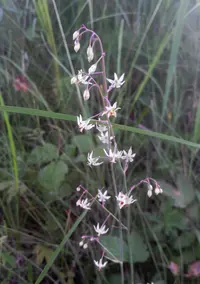
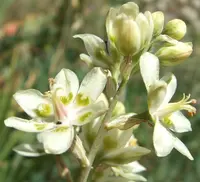
Anticlea sibirica is a hardy, herbaceous perennial from cold regions of northern Europe and Asia, often found in moist meadows, open woodlands, and mountain slopes. It forms upright clumps of narrow, grasslike leaves with slender stems that carry small, starry, often pale yellow or greenish flowers. Growth is relatively slow, and the plant prefers cool conditions and reliable soil moisture, which can make it challenging in hot, dry climates. Gardeners who want to care for Anticlea sibirica should provide a consistently moist, well-drained soil and light ranging from partial shade to gentle sun.

Care Difficulty
Moderate Care

Light Preference
Partial Sun

Water Requirements
Moderate Water

Temperature Preference
Cold Hardy

Hardiness Zone
3–7

Soil Texture
Loamy, Sandy, Organic-rich

Soil pH
Acidic (5.5–6.5), Slightly acidic (6.5–7.0)

Soil Drainage
Moist but well-drained

Fertilization
Minimal (feed rarely)
Scan your plant to receive care tips personalized for your specific plant
Available on iOS and Android
This hardy bulb prefers cool, bright sites with gentle sun exposure in temperate climates.
This species prefers evenly moist, cool soil that never stays waterlogged for long periods.
This cold-tolerant perennial grows best in cool to mild climates with distinct seasons.
This species is hardy and humidity is rarely a concern in outdoor conditions.
Anticlea sibirica prefers cool, moist, sharply drained soil that does not stay waterlogged.
This bulb is not ideal for long-term container growing but can be grown in pots for short-term display.
This woodland perennial from nutrient-poor habitats needs very modest feeding, so focus on soil health rather than heavy fertilizer use.
Pruning needs are minimal and focus mainly on hygiene and seed control rather than shaping the plant.
This bulbous species is better transplanted in-ground or in meadow-style plantings than kept as a long-term container plant.
Multiplication is usually done by seed or by careful division of dormant bulbs for those growing Anticlea sibirica in naturalistic plantings.
This species is quite cold hardy in most temperate climates and generally needs little special winter care once established.

Plant Health Check
Not sure what's wrong with your plant? Check your plant's health inside the app.
This bulbous species is native to cold, open habitats across Siberia and parts of northern Asia, where it grows in dry meadows, steppe slopes, and light woodland edges rather than dense forests.
It typically flowers soon after snowmelt in its native range, using the brief early-season light period before taller vegetation shades the ground.
Like several members of the Melanthiaceae family, it contains toxic steroidal alkaloids that deter grazing animals, so it is considered poisonous if ingested.
All parts of this species are considered toxic if eaten, especially the bulbs. Ingestion may cause nausea, vomiting, diarrhea, and weakness. Keep it away from children, dogs, cats, and grazing animals.
Keep your plants happy and healthy with plant identification, disease detection, and easy care guidance.