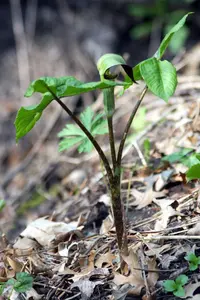
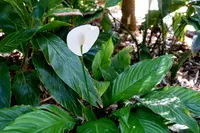
mountain star orchid Care (Epidendrum ramosum)

mountain star orchid

About mountain star orchid

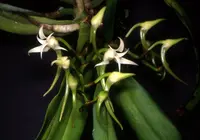
The mountain star orchid, Epidendrum ramosum, is a compact epiphytic orchid that often grows on trees or rocks in cloud forests. It forms branching stems with many small, star-shaped flowers.

In nature it occurs from Mexico through Central America into parts of South America, usually in cool to mild, moist, high-altitude habitats. Its fine roots and preference for good air movement reflect this origin.

This species suits growers who can provide stable conditions and do not overwater. Understanding how to care for mountain star orchid becomes easier once its need for bright filtered light, frequent light moisture, and a very open growing medium is recognized.

Main Plant Requirements

Care Difficulty

Moderate Care

Light Preference

Partial Shade

Water Requirements

Moderate Water

Temperature Preference

Warm Climate

Hardiness Zone

10–12

Soil Texture

Loamy, Rocky, Organic-rich

Soil pH

Acidic (5.5–6.5)

Soil Drainage

Well-drained

Fertilization

Light (every 4–6 weeks)

Get Personalized Care Plan

Scan your plant to receive care tips personalized for your specific plant

Available on iOS and Android

How to Care for the mountain star orchid

This orchid prefers bright, filtered light that mimics high-elevation forest edges.

  • Provide 4–6 hours of bright, indirect light daily, with soft morning sun and protection from harsh midday rays.
  • Grow where it receives dappled shade under light tree cover or a 30–50% shade cloth to avoid leaf scorch.
  • Watch foliage color: healthy leaves are medium green; very dark, floppy leaves indicate too little light, while yellow, leathery patches signal excess sun exposure for mountain star orchid.

This species prefers consistent moisture around the roots but not constant saturation.

  • Water when the top 2–3 cm of the mix feel just dry, allowing fine roots to re-oxygenate between thorough soakings.
  • Use a very free-draining orchid mix so water runs through within seconds, reducing the risk of root rot in Epidendrum ramosum.
  • In warm, active growth, expect more frequent watering; in cooler months, extend the dry interval and watch for wrinkling canes (too dry) or black, mushy roots (too wet).

This orchid does best in cool- to intermediate-warm conditions with no frost exposure.

  • Aim for 60–80°F (16–27°C) most of the year, with a slight drop at night to support steady growth and flowering.
  • Avoid temperatures below 45°F (7°C); brief dips to 40°F (4°C) may be tolerated but repeated cold can damage leaves and roots.
  • In hot spells above 85°F (29°C), increase air movement and humidity, provide shade, and avoid placing the plant near heat-reflecting walls or paving.

This epiphytic species benefits from moderately high, stable humidity.

  • Aim for 50–70% humidity, as lower levels are tolerated but growth is slower and new roots may stall.
  • In very dry air, look for wrinkled pseudobulbs, limp leaves, and buds that dry before opening as signs of humidity stress.
  • Increase humidity with a pebble tray under the pot, grouping plants, or a small humidifier, especially for mountain star orchid near heating or cooling vents.

This orchid prefers a very airy, fast-draining substrate rather than regular garden soil.

  • Use a fine to medium orchid bark mix with added perlite and a small amount of sphagnum moss to retain light moisture around the roots.
  • Keep the structure loose and chunky so water drains in seconds and air can move freely, preventing root rot and suffocation.
  • Aim for slightly acidic to neutral conditions around pH 5.5–6.5, which suits most bark-based mixes used for Epidendrum ramosum.
  • Avoid dense potting soil, clay-heavy mixes, or compacted media that stay wet for hours and promote fungal problems.

This species grows well in containers when given a stable, well-aerated setup.

  • Choose a relatively tall, narrow pot to support upright canes while allowing the root system to anchor deeply without crowding the base.
  • Use a heavier pot material or add top dressing gravel if the plant becomes top-heavy so the container does not tip over.
  • Select pots with side slits or mesh-style walls to improve airflow through the orchid mix and speed moisture loss after watering.

This orchid responds well to light, consistent feeding during active growth, which supports healthy canes and reliable flowering in mountain star orchid.

  • Use a balanced orchid fertilizer (around 20-20-20) at 1⁄4–1⁄2 strength in water-soluble form.
  • Feed every 2–3 weeks in spring and summer, skipping any application if the potting mix is dry.
  • Reduce feeding to once a month at very weak strength in fall and winter.
  • Flush the pot with plain water about once a month to remove excess fertilizer salts.

Pruning for Epidendrum ramosum is mainly hygiene and shaping, aimed at maintaining airflow and encouraging new flowering growth.

  • Best time is after a main flush of blooms, avoiding heavy cutting during active spike formation.
  • Remove dead or yellowed leaves, dried flower spikes, and damaged canes using clean, sharp scissors or pruners.
  • Thin out crowded stems slightly to improve light penetration and reduce fungal issues.
  • Leave healthy green canes, as they store energy and help support future flowering.

Repotting keeps this epiphytic orchid healthy by preventing crowded roots and stale potting mix.

  • Look for roots circling the container, pushing the plant up, or slowing growth as signs it needs repotting.
  • Plan to repot every 2–3 years in late winter to early spring, just before strong new root growth starts.
  • Use a slightly larger pot with fresh, free-draining orchid bark mix, positioning roots gently without compacting the medium.
  • Water lightly after repotting, keep in bright but softer light for 1–2 weeks, and maintain steady humidity to limit root stress.

Propagation of Epidendrum ramosum is usually done vegetatively, as seed culture requires sterile laboratory techniques.

  • Divide mature clumps in spring when new roots start, keeping 3–4 healthy canes per division.
  • Gently tease apart the root mass, trimming only dead roots, and plant divisions in fresh orchid bark mix.
  • Maintain warm temperatures (65–80°F), bright indirect light, and high humidity (50–70%) for establishment.
  • Keikis (small plantlets) on canes can be removed once they have several roots, then potted individually.

This orchid is frost sensitive and needs sheltered conditions in regions with cold winters.

  • Move container plants indoors or into a heated greenhouse before temperatures drop below 50°F.
  • Provide bright indirect light and good air movement while avoiding cold drafts near windows or doors.
  • Keep temperatures around 60–70°F and reduce watering slightly so the potting mix dries a bit between waterings.

Care Tips

Provide mounting options

Attach plants to cork bark, tree-fern slabs, or hardwood branches with sphagnum only around the roots, not over the stem, to mimic natural epiphytic growth and improve aeration.

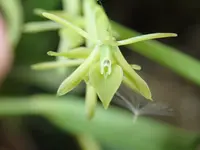
Segmented repotting

When repotting, divide only well-rooted sections with at least 3–4 healthy canes per division, and secure each division firmly so new roots do not wobble and break.

Support tall canes

Use thin bamboo stakes or orchid clips to keep tall, multi-branched canes upright, preventing mechanical damage to new flower spikes and roots.

Cooler night differential

Whenever possible, provide a 10–15°F drop at night by placing the plant near a slightly open window or cooler room, which encourages stronger flowering and more compact growth.

Targeted pest checks

Inspect leaf sheaths, cane joints, and the base of aerial roots every 1–2 weeks for scale or mites, since early removal with cotton swabs and alcohol is far more effective than treating an established infestation when caring for mountain star orchid.

Common Pests and Diseases

Scale insects

This pest attaches to stems and leaf bases, sucking sap and weakening the plant, especially on older canes and at flower bract nodes. Symptoms include sticky honeydew, sooty mold on leaves, and small brown or tan bumps that do not rub off easily.

Solution

Remove heavily infested flower spikes or canes and wipe remaining scale with cotton pads dipped in 70% isopropyl alcohol, focusing on stem joints and sheaths. Improve air movement around the plant, avoid overfertilizing with nitrogen, and repeat alcohol spot treatments weekly until no new insects appear; for severe cases, use a systemic insecticide labeled for orchids following all label directions.

Spider mites

These insects thrive on Epidendrum foliage grown in warm, dry air, feeding on the undersides of leaves. Symptoms include fine speckling, dull or silvery patches, and very fine webbing along leaf edges or sheaths.

Solution

Rinse both leaf surfaces thoroughly with lukewarm water or a mild soap solution and increase humidity to around 50–60% while maintaining good airflow. For persistent infestations, apply a horticultural oil or insecticidal soap labeled for mites, targeting leaf undersides and repeating at 5–7 day intervals until new growth appears clean, which is important for long-term Epidendrum ramosum care.

Orchid aphids

These insects colonize tender growth, especially young inflorescences and flower buds, where they distort new tissue and cause sticky residue. Symptoms include curled or deformed buds, shiny honeydew, and sometimes black sooty mold on leaves below the infestation.

Solution

Pinch off or cut heavily infested spikes, then wash remaining stems and leaves under a gentle stream of water to dislodge aphids. Follow with an application of insecticidal soap or a low-rate horticultural oil to all green tissue, repeating after 5–7 days if any live insects remain, and avoid excess nitrogen fertilization that encourages soft, aphid-prone growth.

Bacterial brown spot

This disease starts as small, water-soaked areas on leaves or sheaths that turn brown to black and may spread rapidly in warm, humid conditions. Symptoms include soft, sunken lesions often with a yellow halo and a wet or slimy appearance if advanced.

Solution

Remove affected leaves or leaf sections with a sterile blade, cutting at least 1–2 cm into healthy tissue, and discard all infected material. Keep foliage dry, improve air circulation, space plants so leaves do not touch, and apply a copper-based bactericide or other bactericide labeled for orchids, making sure not to spray open flowers.

Anthracnose leaf spot

This disease produces small, round to irregular dark spots on leaves that may merge into larger patches, especially on older foliage and in low-airflow growing areas. Symptoms include tan to brown lesions with darker margins and, in severe cases, tip dieback.

Solution

Prune out spotted leaves if heavily damaged and ensure plants receive stronger air movement and are not kept constantly wet, especially in cool conditions. Allow the leaf surface to dry between waterings and consider using a broad-spectrum fungicide labeled for orchids on remaining foliage, rotating products if repeated treatments are needed.

Interesting Facts

Branching inflorescence structure

This species develops a repeatedly branching flowering stem, so new side branches and buds can continue to form while older flowers have already opened, giving the plant a prolonged and somewhat irregular blooming display compared with many orchids that flower once per spike.

Wide altitudinal range

In its native Neotropical habitats, this orchid has been documented from lowland areas up to montane forests, showing notable ecological flexibility to different temperatures and light levels across its range.

Miniature, long-lasting flowers

The small greenish to yellowish flowers are not showy in size but tend to be relatively long-lasting on the plant, which makes it useful in breeding compact, floriferous hybrids in the epidendrum group.

Botan icon

Did you know?

This species is involved in complex pollination interactions with small insects in Neotropical forests, and its fine floral morphology, including the narrow lip and column structure, is adapted to guide these tiny pollinators precisely so that pollen packets are attached and removed efficiently during visits.

FAQs about mountain star orchid

Lack of blooms often comes from insufficient light, too little temperature drop between day and night, or low nutrition. Ensure bright, indirect light, a slight cooler night period, and a balanced orchid fertilizer to support flowering.

Grow Healthy Plants with Botan Care

Keep your plants happy and healthy with plant identification, disease detection, and easy care guidance.

Botan plant care app — identify plants on mobile

Explore More Plants