Optimize air movement
Place a small oscillating fan several feet away from the plant to keep gentle air movement around the leaves and roots, which reduces fungal problems and helps pseudobulbs mature sturdier.

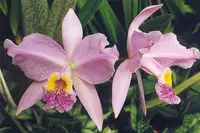
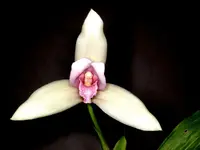
Cattleya lueddemanniana is a medium-sized epiphytic orchid, usually growing on trees and forming clumps of thick pseudobulbs with one or two leathery leaves. It produces large, showy flowers with ruffled lips in shades of lavender, pink, or white, often with a contrasting yellow or purple throat.
This species is native to Venezuela, where it experiences bright light, good air flow, and distinct wet and dry periods. Its preference for high light and careful watering means it suits growers who are ready to learn how to care for Cattleya lueddemanniana, rather than complete beginners.
In cultivation, it prefers bright, filtered light, quick-drying orchid media, and stable, warm conditions with good humidity and ventilation.

Care Difficulty
Moderate Care

Light Preference
Bright Indirect Light

Water Requirements
Moderate Water

Temperature Preference
Tropical / Frost Sensitive

Hardiness Zone
11–12

Soil Texture
Sandy, Organic-rich

Soil pH
Acidic (5.5–6.5)

Soil Drainage
Well-drained

Fertilization
Moderate (every 2–4 weeks)
Scan your plant to receive care tips personalized for your specific plant
Available on iOS and Android
This orchid prefers bright, filtered light that mimics high tree canopies in the wild.
Watering should balance moisture around the roots with plenty of air flow.
This species prefers warm, stable conditions with a slight drop at night.
This orchid prefers moderately high air moisture for stable flowering and leaf health.
This species grows best in a very airy, fast-draining orchid medium rather than regular potting soil.
This orchid is well suited to container growing due to its compact, clumping growth habit.
This orchid responds well to light, consistent feeding during active growth for balanced Cattleya lueddemanniana care.
Pruning needs are minimal and focus on hygiene and maintaining healthy flowering on Cattleya lueddemanniana.
Repotting helps maintain healthy roots and stable growth in Cattleya lueddemanniana grown in containers.
Division is the standard method for propagating Cattleya lueddemanniana in home and hobby settings.
This tropical orchid is not frost tolerant and needs sheltered winter care in most climates.

Plant Health Check
Not sure what's wrong with your plant? Check your plant's health inside the app.
This orchid is naturally restricted to the coastal mountain ranges of northern Venezuela, where it grows as an epiphyte on trees in warm, bright, humid forests at relatively low to mid elevations.
It typically produces its large, fragrant flowers once a year at the end of the dry season into early rains, often in late winter to spring in its native range, reflecting a strong adaptation to local climate cycles.
The flowers show a characteristic broad lip with strong purple to magenta veining and yellow throat markings, a pattern that helps guide pollinators and also makes this species highly valued in orchid breeding.

This species played an important historical role in early Cattleya hybridization in the late 19th and early 20th centuries, contributing its large flower size, strong lip color, and fragrance to many classic hybrid lines that shaped modern orchid cultivation.
Lack of flowering usually comes from insufficient light, too little temperature drop between day and night, or underdeveloped pseudobulbs. Crowded roots needing repotting or excessive nitrogen fertilizer can also shift energy into foliage instead of buds.
Keep your plants happy and healthy with plant identification, disease detection, and easy care guidance.