white wild indigo Care (Baptisia alba)

Also known as: white false indigo
white wild indigo

About white wild indigo

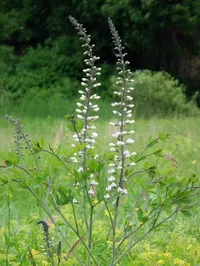
White wild indigo (Baptisia alba) is a long-lived, clump-forming perennial from North American prairies and open woods. It belongs to the pea family and forms deep taproots. Plants develop upright stems with blue-green leaves and tall spikes of white, pea-like flowers, followed by dark, rattling seed pods. The overall effect is architectural and tidy. Baptisia alba is adapted to poor, dry soils and seasonal drought, which makes it low-maintenance once established but slow to settle in its planting spot. It prefers full sun, well-drained soil, and minimal disturbance of its roots. These traits influence how to care for white wild indigo in gardens and restoration plantings.

Main Plant Requirements

Care Difficulty

Easy Care

Light Preference

Full Sun

Water Requirements

Low Water

Temperature Preference

Cold Hardy

Hardiness Zone

3–9

Soil Texture

Sandy, Loamy, Clay

Soil pH

Slightly acidic (6.5–7.0), Neutral (7.0)

Soil Drainage

Well-drained

Fertilization

Minimal (feed rarely)

Get Personalized Care Plan

Scan your plant to receive care tips personalized for your specific plant

Available on iOS and Android

How to Care for the white wild indigo

This sun-loving perennial performs best in open, bright conditions typical of prairie habitats.

  • Provide 6–8 hours of direct sun daily; morning and midday sun support sturdy stems and abundant flowering in white wild indigo.
  • Tolerates light afternoon shade, especially in hotter regions, but flowering and plant density decrease in locations with less than 4–5 hours of sun.
  • Avoid deep shade; plants become leggy, flop easily, and produce fewer blooms, particularly if shaded by trees or buildings during spring and early summer.

This deep-rooted perennial prefers infrequent but thorough watering once established.

  • Allow the top 5–7 cm of soil to dry before watering; in most garden soils, this means waiting until foliage looks relaxed but not wilting.
  • During the first growing season, water slowly and deeply to help roots reach down, especially in sandy or fast-draining soils.
  • Signs of overwatering include yellowing lower leaves and soft stems; persistent wilting in dry, hot periods suggests Baptisia alba needs a deep soak.

This hardy prairie perennial tolerates a wide range of outdoor temperatures once established.

  • Optimal growth occurs in spring and early summer at 65–80°F (18–27°C), when new shoots elongate and flower spikes form.
  • Dormant roots survive winter cold to about -20°F (-29°C) in the ground, provided soil drains well and does not stay waterlogged.
  • Mature plants handle summer heat up to 90–95°F (32–35°C) if soil is not saturated; prolonged extreme heat with drought can cause early leaf yellowing and dormancy.

Humidity is not a significant factor for Baptisia alba, which is adapted to open, dry prairie conditions.

Baptisia alba prefers lean, well-drained soil and tolerates relatively poor, dry sites once established.

  • Use a sandy or sandy-loam mix with moderate organic matter, not a heavy, peat-rich blend.
  • Aim for slightly acidic to neutral pH around 6.0–7.5, which supports nutrient uptake without excess fertility.
  • Improve drainage and aeration by incorporating coarse sand or fine gravel through the top 20–30 cm before planting.
  • Avoid compacted clay, waterlogged spots, or rich manure-based mixes that encourage weak, floppy growth.

This species is generally not well suited to long-term container growing due to its deep taproot and eventual size.

This deep-rooted native legume usually thrives in average garden soil with minimal feeding needs.

  • If growth is weak on very poor soil, apply a light layer of compost around the base in early spring.
  • Alternatively use a balanced slow-release fertilizer (around 10-10-10) at half label rate once in spring.
  • Do not feed again during the season; excess nitrogen can reduce flowering and make stems floppy.
  • Skip fertilizing white wild indigo during winter dormancy.

Baptisia alba needs only light, well-timed pruning to keep plants tidy and healthy.

  • In late fall or very early spring, cut back all dead stems to just above ground level.
  • During the growing season, remove dead, damaged, or storm-broken stems with clean hand pruners.
  • Light thinning of crowded stems after flowering can open the plant and reduce flopping.
  • Avoid heavy midseason cuts, which can spoil the natural vase shape and reduce bloom.

This species forms a deep taproot, so transplanting should be infrequent and done with care.

  • Transplant in early spring or early fall, while weather is cool and soil is moist.
  • Move only when clearly necessary, such as poor site conditions or major redesign of the bed.
  • Dig a wide, deep root ball to capture as much taproot as possible and reduce damage.
  • Water thoroughly after replanting and keep soil evenly moist until new growth resumes.

Propagation of this long-lived perennial is usually done from seed, as division is stressful to the taprooted plant.

  • Collect mature pods in late summer, then sow seeds outdoors in fall for natural cold stratification.
  • For indoor starts, chill seeds moist in the refrigerator for 6–8 weeks before sowing under bright light.
  • Use a well-drained medium and keep it just moist; germination may be slow and uneven.
  • Allow seedlings to develop strong root systems before planting out, disturbing roots as little as possible.

This cold-hardy perennial dies back to the ground and usually needs almost no special winter care in the landscape.

  • After frost, stems can be left standing for winter interest, then cut back in late winter or early spring.
  • In colder regions, a 5–7 cm mulch layer helps stabilize soil temperatures and moisture.
  • Container-grown plants benefit from moving to a sheltered, unheated but frost-free spot or heavy mulching around pots.

Care Tips

Early staking support

Install low, discreet stakes or a peony ring around young plants in early spring to prevent mature stems from flopping under wind or heavy rain later in the season.

Seed pod management

Decide early whether to keep seed pods for winter interest and wildlife or to remove them after they form, since cutting pods promptly helps conserve the plant’s energy and reduces volunteer seedlings.

Minimal disturbance rule

Choose the planting site carefully and avoid dividing or moving established clumps, because the deep taproot resents disturbance and recovery from transplanting is very slow.

Weed-suppressing mulch

Apply a thin, 2–5 cm layer of coarse organic mulch around but not touching the crown to suppress weeds while still allowing the soil surface to warm and dry between rains, which suits this species’ drought tolerance.

Companion planting buffer

Place lower, sun-loving perennials or grasses around the base to hide bare lower stems and provide a wind buffer, which can create a more stable planting when growing white wild indigo in exposed sites.

Common Pests and Diseases

Genista broom moth

This pest feeds on leaves and young stems, sometimes webbing foliage together and causing visible defoliation on stems and branch tips.

Solution

Handpick caterpillars and prune out webbed or heavily infested shoots, destroying all removed material. Encourage natural predators, and if damage is extensive on young plants, use a targeted Bacillus thuringiensis (Bt) product on actively feeding larvae, following label directions carefully.

Fusarium wilt

This disease causes gradual yellowing, wilting, and dieback of stems, often starting on one side of the plant and progressing over time.

Solution

Remove and destroy affected stems at the base and avoid overhead watering to keep foliage dry. Improve soil drainage, rotate planting areas, and avoid injuring roots; severely affected plants are best removed and not replanted with other legumes in the same spot for several years.

Leaf spot

This disease produces small brown to black spots on leaves, sometimes with a yellow halo, which can lead to early leaf drop in wet seasons.

Solution

Remove and discard spotted, fallen leaves to reduce fungal spores, and water at soil level rather than over the foliage. Increase spacing and airflow around plants; in repeatedly wet summers with severe spotting, a labeled ornamental fungicide can be used preventively at the start of new growth.

Nematode damage

These microscopic roundworms attack roots, leading to stunted growth, poor vigor, and reduced flowering despite seemingly adequate care.

Solution

Improve soil structure with organic matter and avoid overworking wet soil, which stresses roots. In heavily infested beds, rotate with non-host or resistant plants, solarize soil during the hottest months where feasible, and focus on keeping plants healthy with proper watering so they can tolerate low to moderate nematode levels.

Interesting Facts

Nitrogen-fixing prairie legume

This species forms nodules on its roots that house Rhizobium bacteria, which convert atmospheric nitrogen into forms usable by plants and help enrich prairie soils over time.

Specialist butterfly host

The foliage serves as a larval food source for several native butterflies, including the wild indigo duskywing (Erynnis baptisiae), tying this plant directly to local insect life cycles.

Explosive seed dispersal

Mature seed pods dry, darken, and eventually split open along their seams, sometimes with an audible pop, flinging seeds a short distance from the parent plant.

Botan icon

Did you know?

Indigenous peoples and early European settlers reportedly used the dark, rattling seed pods of this species as simple rattles or ornamental accents, taking advantage of the durable pod walls and loose seeds that create a distinct sound when shaken.

FAQs about white wild indigo

Lack of flowers is usually due to insufficient sun, plants that are still immature, or recent disturbance of the root system. Avoid frequent moving or dividing, keep it in an open, sunny spot, and be patient with young plants.

Grow Healthy Plants with Botan Care

Keep your plants happy and healthy with plant identification, disease detection, and easy care guidance.

Botan plant care app — identify plants on mobile

Explore More Plants