longflower alumroot Care (Heuchera longiflora)

About longflower alumroot

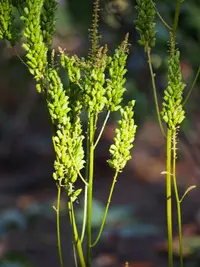
Longflower alumroot, Heuchera longiflora, is a small, clump-forming perennial in the saxifrage family. It is grown mainly for its foliage and airy flower spikes. The plant typically has low mounds of lobed leaves, with tall, slender stems carrying many small, tubular white to pale pink flowers. This gives a light, delicate look above the compact leaf base.

Heuchera longiflora is native to parts of the southern United States, often found on rocky slopes and woodlands. It tends to be fairly resilient when planted in well-drained soil with partial shade and consistent moisture. These traits make it a manageable choice for gardeners learning how to care for longflower alumroot.

Main Plant Requirements

Care Difficulty

Moderate Care

Light Preference

Partial Shade

Water Requirements

Moderate Water

Temperature Preference

Cold Hardy

Hardiness Zone

5–8

Soil Texture

Loamy, Sandy, Organic-rich

Soil pH

Acidic (5.5–6.5), Slightly acidic (6.5–7.0)

Soil Drainage

Moist but well-drained

Fertilization

Light (every 4–6 weeks)

Get Personalized Care Plan

Scan your plant to receive care tips personalized for your specific plant

Available on iOS and Android

How to Care for the longflower alumroot

This woodland perennial prefers bright, gentle light that mimics a lightly shaded forest edge.

  • Provide 3–5 hours of morning sun with light or dappled shade the rest of the day, especially in hotter regions.
  • Tolerates partial to full bright shade, but dense deep shade can reduce flowering and cause loose, open growth in longflower alumroot.
  • In zones with strong summer sun, protect from harsh midday and afternoon exposure to prevent leaf scorch and faded foliage, especially in dry or reflected-heat sites.

This plant prefers evenly moist but not saturated soil, with careful attention during hot weather and establishment.

  • Allow the top 2–4 cm of soil to dry before watering again, then water thoroughly so moisture reaches the root zone without leaving the soil soggy.
  • Improve drainage with organic matter in heavier soils to reduce root rot risk; avoid standing water around the crown of Heuchera longiflora.
  • In summer, check soil more often and watch for wilting or crispy leaf edges; in cool, wet seasons, water less and monitor for yellowing, mushy foliage as a sign of excess moisture.

This species is a cool- to mild-climate perennial with good frost tolerance once established.

  • Active growth is strongest around 55–75°F (13–24°C), with foliage looking best when temperatures stay moderate rather than extremely hot.
  • Mature plants typically survive down to about 0°F (−18°C) with mulch protection; in colder regions, a 5–8 cm mulch layer helps buffer freeze–thaw cycles around the crown.
  • In summer, plants tolerate short periods up to about 85–90°F (29–32°C) if soil stays slightly moist and roots are shaded; prolonged extreme heat with dry soil can stress and scorch leaves.

This species grows well in typical outdoor humidity and usually does not need special humidity management.

Heuchera longiflora prefers loose, moist but well-drained soil that does not stay waterlogged.

  • Use a loamy mix with high organic matter, such as garden loam blended with compost and shredded bark.
  • Ensure sharp drainage by working in mineral grit like coarse sand or fine gravel, especially in heavier native soils.
  • Aim for slightly acidic to neutral pH around 6.0–7.0, avoiding very alkaline or saline sites that restrict nutrient uptake.
  • Improve aeration by avoiding compaction; keep mulch off the crown to prevent rot in dense or poorly draining soils.

This species is suitable for container growing when drainage and moisture balance are managed carefully.

  • Choose a wide, moderately deep pot to allow its shallow, spreading roots to anchor and prevent the plant from rocking in wind.
  • Use a potting mix that combines peat-free compost, bark fines, and perlite so excess water drains quickly after rain or irrigation.
  • Select a heavier container material, such as ceramic or thick-walled clay, to stabilize the foliage display and reduce tipping in exposed positions.

Heuchera longiflora benefits from light feeding in active growth but does not need heavy fertilization.

  • Use a balanced, slow-release fertilizer (such as 10-10-10) or compost mixed into the topsoil in early spring.
  • Feed container plants every 4–6 weeks in spring and summer with a half-strength balanced liquid fertilizer.
  • Avoid fertilizing in late fall and winter when growth slows, especially in cold climates.
  • Flush pots with plain water occasionally to limit salt buildup and reduce root stress.

Pruning Heuchera longiflora focuses on cleanliness and maintaining a compact, flowering clump.

  • Cut back dead or damaged leaves at the base at any time using clean, sharp scissors or hand pruners.
  • In late winter or early spring, remove old, tattered foliage to make room for new growth and fresh color.
  • Trim spent flower stalks down to the crown after blooming to encourage a tidy shape and possible repeat flowering.
  • Thin crowded stems lightly to improve air movement and reduce fungal issues around the crown.

Heuchera longiflora is usually grown in the ground, but container plants or crowded clumps benefit from occasional transplanting.

  • Plan transplanting or repotting for early spring or early fall when temperatures are mild and soil is workable.
  • Check for roots circling the container, tight crowns, or slowed growth as signs the plant needs more space.
  • Divide congested clumps every 3–4 years, replanting firm, healthy sections at the same depth in well-drained soil.
  • Water thoroughly before and after moving plants, keep them shaded for a few days, and maintain even moisture to reduce transplant shock.

Heuchera longiflora is commonly propagated by division, with seed used mainly for larger-scale growing.

  • Divide mature clumps in early spring or early fall, lifting the plant and separating firm crowns with several roots attached.
  • Replant divisions immediately into loose, well-drained soil, spacing them so crowns sit at soil level and do not stay waterlogged.
  • For seeds, sow on the surface of a fine seed mix, keep at 60–70°F, and maintain light moisture for germination.
  • Provide bright, indirect light and good air circulation while new plants root and establish.

Heuchera longiflora is reasonably cold hardy but benefits from basic winter preparation in colder regions.

  • Tolerates light to moderate frost, but repeated freeze–thaw cycles can heave crowns from the soil.
  • Apply a 5–7 cm layer of loose mulch after the ground cools to insulate the root zone, keeping mulch off the crown.
  • In very cold or exposed sites, use evergreen boughs or frost cloth to shield foliage from drying winds.
  • Move containers into a sheltered, unheated but frost-moderated location and water sparingly to prevent complete drying.

Care Tips

Mulch Root Zone

Apply a 3–5 cm layer of fine bark or leaf mold around the crown to keep shallow roots cool, buffer moisture swings, and reduce weed competition without covering the crown itself.

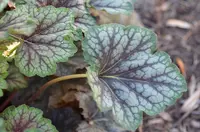
Divide To Rejuvenate

Every 3–4 years, lift and divide clumps in early spring, replanting only the firm, well-rooted sections at the same depth to maintain dense foliage and prevent leggy, woody centers.

Protect Winter Crowns

In cold climates, add a loose mulch of shredded leaves after the ground freezes to stabilize soil temperature and reduce frost heave that can push crowns out of the soil.

Monitor Foliage Pests

Inspect leaves regularly for vine weevils and chewing damage, shake plants over a tray at dusk to dislodge adults, and use targeted biological controls like beneficial nematodes if damage appears.

Site For Summer Stress

When growing longflower alumroot in hotter regions, choose a position with morning sun and bright afternoon shade near stones or larger perennials that provide slight shelter from heat and wind.

Common Pests and Diseases

Vine weevils

This pest feeds on both foliage and roots, with adults notching the leaf edges and larvae destroying the underground crown and roots. Symptoms include scalloped leaf margins, sudden wilting, and plants that lift easily from the soil due to root loss.

Solution

Inspect leaves at night and hand-pick adult beetles, then use entomopathogenic nematodes in late summer or early fall to target larvae in the soil. Maintain slightly drier conditions between waterings, remove heavily damaged plants, and refresh potting mix or top layers of soil where larvae may be present.

Rust

This disease causes orange, brown, or black pustules on the undersides of leaves, often with pale or yellow spots above. Symptoms include premature leaf drop and a general decline in plant vigor, especially in crowded or humid conditions.

Solution

Remove and discard affected leaves promptly and avoid overhead watering to keep foliage dry. Improve spacing and airflow around plants, and if conditions stay moist, apply a labeled copper or sulfur-based fungicide according to longflower alumroot care instructions.

Leaf spots

This disease produces tan to dark brown spots on leaves, sometimes with purple margins and a yellow halo, which can merge into larger dead patches. Symptoms include thinning foliage and an overall untidy appearance, especially after periods of warm, wet weather.

Solution

Cut off and discard spotted leaves to reduce the source of infection and water at the base of plants to keep foliage dry. Improve drainage and air circulation, and in persistent cases use a broad-spectrum ornamental fungicide following the product label.

Crown rot

This disease affects the central crown at soil level, causing it to become soft, brown, and mushy, often leading to rapid collapse of the plant. Symptoms include yellowing leaves, stunting, and crowns that break apart easily when lifted.

Solution

Lift and discard plants with advanced symptoms and avoid replanting heuchera in the same poorly drained spot. For mild cases, remove affected crown tissue, replant in well-drained, raised soil or containers, and reduce watering so the upper soil can dry slightly between waterings.

Aphids

These insects cluster on young stems and leaf undersides, sucking sap and causing distorted growth, sticky honeydew, and sometimes sooty mold on leaves. Symptoms include curled new leaves, reduced flowering, and attraction of ants to the honeydew.

Solution

Spray colonies off with a firm stream of water, then treat remaining insects with insecticidal soap or a neem oil spray, making sure to cover leaf undersides. Encourage natural predators such as lady beetles outdoors and avoid high nitrogen fertilization, which promotes soft, aphid-prone growth.

Interesting Facts

Ozark limestone specialist

This species is narrowly native to the Ozark Plateau of Missouri and Arkansas, where it typically grows on shaded limestone cliffs and rocky ledges rather than in ordinary forest soil.

Distinctive long flower tubes

Its species name longiflora refers to the unusually long, narrow corolla tubes of the small bell-shaped flowers, which are more elongated than in most other alumroots and help guide pollinators toward the nectar.

Summer-blooming alumroot

Unlike several Heuchera species that flower mainly in spring, this plant often blooms later into early summer in its native range, extending nectar availability for small bees and other pollinating insects.

FAQs about longflower alumroot

The flowers produce nectar that attracts small native bees, hoverflies, and some tiny butterflies. It is most valuable as a pollinator plant when grown in groups, providing many slender flower spikes that bloom over an extended period.

Grow Healthy Plants with Botan Care

Keep your plants happy and healthy with plant identification, disease detection, and easy care guidance.

Botan plant care app — identify plants on mobile

Explore More Plants