Deep root encouragement
During the first growing season, water less often but for a longer duration so moisture soaks 15–20 cm deep, which trains the plant to form a deep root system that better tolerates drought and wind exposure.

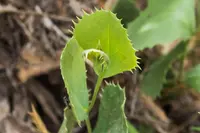
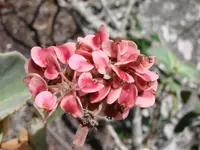
Dwarf desertpeony (Acourtia nana) is a compact perennial from arid regions of the southwestern United States and northern Mexico. It belongs to the aster family and forms low, bushy clumps. Plants typically show narrow leaves and small, tufted flower heads in soft pink to purple tones, giving a fine-textured look suited to rock gardens and dry landscapes. This species is adapted to poor, well-drained soils and seasonal drought, which generally makes it low-maintenance once established. It prefers bright light, low to moderate moisture, and gritty, fast-draining substrates. With an understanding of how to care for dwarf desertpeony, it can be a durable choice for xeric and water-wise plantings.

Care Difficulty
Moderate Care

Light Preference
Full Sun

Water Requirements
Low Water

Temperature Preference
Warm Climate

Hardiness Zone
8–11

Soil Texture
Sandy, Loamy, Rocky

Soil pH
Slightly acidic (6.5–7.0), Neutral (7.0)

Soil Drainage
Well-drained

Fertilization
Minimal (feed rarely)
Scan your plant to receive care tips personalized for your specific plant
Available on iOS and Android
This compact desert perennial thrives in bright, open conditions with strong sun exposure.
This species is drought-tolerant and prefers infrequent, deep watering rather than frequent light applications.
This desert perennial is adapted to warm, dry conditions with good tolerance of heat and light cold.
Humidity is rarely critical for Acourtia nana, which is adapted to very dry desert air.
Soil for Acourtia nana should be very fast-draining and low in organic matter.
This species is suitable for container growing when drainage and root conditions mimic its dry, rocky habitat.
Acourtia nana is adapted to lean, rocky soils and usually needs minimal fertilization in cultivation.
Pruning Acourtia nana is light and mainly focused on maintaining a tidy, compact form.
This species is more often grown in dry beds than as a container plant, so focus on careful transplanting.
Propagation of Acourtia nana is possible but slower than with many common ornamentals.
Mature Acourtia nana plants are generally cold hardy in suitable climates and need little winter attention.

Plant Health Check
Not sure what's wrong with your plant? Check your plant's health inside the app.
Acourtia nana is a small shrub in the aster family that visually resembles a peony when in bloom, which is why it is commonly called dwarf desertpeony, even though it is not related to true peonies at all.
This species is native to arid and semi-arid regions of the southwestern United States and northern Mexico, where it is adapted to rocky slopes and well-drained desert soils that experience intense sun and low rainfall.
The flower heads are composed of many small tubular florets that collectively provide nectar and pollen for native bees, butterflies, and other desert pollinators, supporting local food webs in dry habitats.
Flowering is reduced by too little sun, excess shade from taller plants, or overly rich, moist soil. Heavy nitrogen fertilizer also suppresses buds. Provide bright, dry conditions and avoid overfeeding to support reliable late-spring to summer blooms.
Keep your plants happy and healthy with plant identification, disease detection, and easy care guidance.