


Mounting for vigor
Grow plants on a slab of cork, tree fern, or hardwood with a thin sphagnum pad to mimic epiphytic growth, improving air movement around roots and reducing the risk of rot.

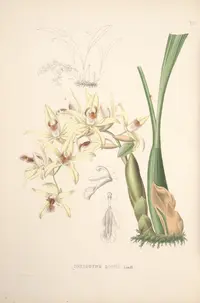
Coelogyne asperata is an epiphytic orchid that typically grows on trees, forming clumps of ribbed pseudobulbs and arching sprays of creamy to yellowish flowers. The blooms are often fragrant and show a distinct lip pattern, giving the plant good ornamental value for collections and shaded displays.
This species comes from humid, lowland to mid-elevation forests in Southeast Asia, where it experiences warm temperatures and consistently moist air. It is considered moderately challenging, as it dislikes drought, stagnant air, and sudden environmental changes.
Those who wish to care for Coelogyne asperata should provide bright, filtered light, regular moisture, and an open, fast-draining orchid medium that allows air to reach the roots.

Care Difficulty
Hard Care

Light Preference
Bright Indirect Light

Water Requirements
Keep Soil Moist

Temperature Preference
Tropical / Frost Sensitive

Hardiness Zone
12–13

Soil Texture
Peaty, Organic-rich, Loamy

Soil pH
Acidic (5.5–6.5)

Soil Drainage
Moist but well-drained

Fertilization
Moderate (every 2–4 weeks)
Scan your plant to receive care tips personalized for your specific plant
Available on iOS and Android
This orchid prefers bright, gentle light that mimics high, humid forest conditions.
This species prefers evenly moist conditions with no prolonged drying or waterlogging.
This orchid thrives in warm, stable conditions with good air movement.
This orchid needs high, stable humidity to grow well indoors or in a greenhouse.
Coelogyne asperata prefers a very loose, airy, organic-based orchid medium rather than standard potting soil.
This species is well suited to container culture when the pot supports its spreading, sympodial growth.
This orchid benefits from light, consistent feeding during active growth but is sensitive to excess salts.
Pruning focuses on hygiene and maintaining space around the plant rather than shaping.
Repotting keeps this sympodial orchid healthy by refreshing its airy substrate and preventing root suffocation.
Division is the standard method for propagating this clumping orchid in home collections.
This tropical orchid is not frost hardy and needs sheltered, warm conditions in winter.

Plant Health Check
Not sure what's wrong with your plant? Check your plant's health inside the app.
This species can produce long, arching inflorescences bearing many waxy, pale yellow to cream flowers that open in succession, extending the flowering period compared with many other Coelogyne species.
The flowers release a sweet, slightly resinous fragrance that is strongest in warm, humid air, which likely helps attract specific insect pollinators in its native lowland forests.
It occurs naturally at relatively low elevations in Borneo and nearby regions, where it often grows as an epiphyte on trees in warm, shaded, very humid rainforest conditions.
Lack of flowers usually comes from insufficient light, too-warm nights, or no slight winter rest. Provide bright filtered light, cooler nights around 60–64°F for a few months, and avoid heavy feeding late in the season.
Keep your plants happy and healthy with plant identification, disease detection, and easy care guidance.

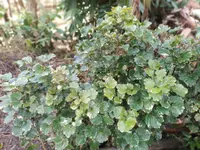
Balfour Aralia
Polyscias balfouriana
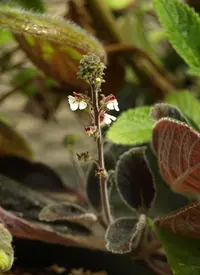
Gloxinia erinoides
Gloxinia erinoides

Rosette-leaved Rampion
Phyteuma globulariifolium
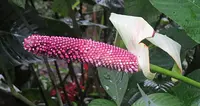
Anthurium nymphaeifolium
Anthurium nymphaeifolium

Large Hedgehog-Flower
Coleus livingstonei
Madagascar Ocotillo
Alluaudia procera

Elephant's Ear
Alocasia 'Calidora'
Lenten rose
Helleborus orientalis