Cool root mulch
Apply a 3–5 cm layer of leaf mold or fine bark around the clump each spring to keep roots cool, conserve moisture, and mimic the humus-rich forest floor this alpine species prefers.

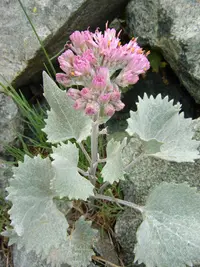
Adenostyles leucophylla is a hardy, herbaceous perennial from mountain regions of southern Europe, especially the Alps and nearby ranges. It typically forms loose clumps with tall, upright stems and broad, pale green to greyish leaves. In summer it produces clusters of soft pink to lilac flower heads that attract insects and give a light, airy look. This species naturally grows in cool, moist, high-altitude habitats such as meadows, stream banks, and open woodland edges. It is not a common garden plant, but it can adapt in cooler climates if given consistent moisture and humus-rich soil. Gardeners who care for Adenostyles leucophylla should focus on stable moisture and protection from hot, dry conditions.

Care Difficulty
Moderate Care

Light Preference
Partial Shade

Water Requirements
Keep Soil Moist

Temperature Preference
Cool Climate

Hardiness Zone
5–8

Soil Texture
Loamy, Silty, Organic-rich

Soil pH
Acidic (5.5–6.5), Slightly acidic (6.5–7.0)

Soil Drainage
Moist but well-drained

Fertilization
Minimal (feed rarely)
Scan your plant to receive care tips personalized for your specific plant
Available on iOS and Android
This mountain perennial prefers cool, bright sites with protection from strong midday sun.
This species thrives in consistently moist, cool soil without prolonged drying or waterlogging.
This alpine plant prefers cool summers and cold winters, tolerating substantial frost once established.
This alpine species prefers consistently moist air but adapts to typical outdoor humidity in temperate regions.
Adenostyles leucophylla thrives in deep, cool, moist but free-draining soil rich in organic matter.
This species can be grown in large outdoor containers if cool, moist root conditions are maintained.
This alpine perennial usually needs little feeding if grown in deep, humus-rich soil.
This plant needs only light pruning to keep clumps healthy and tidy.
Adenostyles leucophylla is best treated as a hardy outdoor perennial, usually transplanted rather than grown long-term in containers.
Propagation is usually done on established garden clumps rather than in indoor setups.
This cold-hardy mountain perennial generally needs minimal winter care in most temperate gardens.

Plant Health Check
Not sure what's wrong with your plant? Check your plant's health inside the app.
This species is naturally restricted to high-elevation limestone scree and rocky slopes in the Alps, often growing in unstable, shifting debris where many other broadleaf herbs cannot persist.
Its leaves are densely covered on the underside with felt-like white hairs, giving a silvery appearance that helps reduce water loss and protect tissues from strong alpine sunlight and cold winds.
The species is considered an Alpine endemic, naturally occurring only in certain mountain regions of central and eastern Europe rather than being widespread across the continent.

The flower heads of this species follow the typical Asteraceae structure, but are composed mainly of tubular disc florets with reduced or absent showy ray florets, which reflects a pollination strategy adapted to high-mountain insect communities rather than visual attraction for long-distance pollinators.
This alpine perennial usually blooms in mid to late summer. It produces loose clusters of soft pink to lilac flower heads that attract insects. Flowering is strongest on well-established clumps in cool, consistently moist conditions.
Keep your plants happy and healthy with plant identification, disease detection, and easy care guidance.