Mountain bluet Care (Centaurea montana)

Mountain bluet

About Mountain bluet

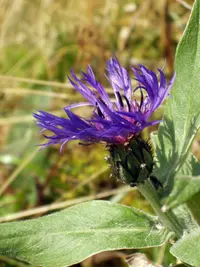
Mountain bluet (Centaurea montana) is a hardy, herbaceous perennial grown mainly for its vivid blue, fringed flowers and soft, gray-green foliage. It forms loose clumps with upright stems and a slightly informal, meadow-like look.

This species is native to mountainous regions of central and southern Europe, where it grows in open, sunny clearings and rocky slopes. In gardens it adapts well to borders, cottage-style plantings, and naturalized areas.

The plant is generally easy to grow, provided it receives good light, well-drained soil, and moderate moisture. Gardeners who care for Mountain bluet often appreciate its long flowering period and ability to attract bees and butterflies.

Main Plant Requirements

Care Difficulty

Easy Care

Light Preference

Full Sun

Water Requirements

Moderate Water

Temperature Preference

Cold Hardy

Hardiness Zone

3–8

Soil Texture

Sandy, Loamy, Rocky

Soil pH

Acidic (5.5–6.5), Slightly acidic (6.5–7.0)

Soil Drainage

Well-drained

Fertilization

Minimal (feed rarely)

Get Personalized Care Plan

Scan your plant to receive care tips personalized for your specific plant

Available on iOS and Android

How to Care for the Mountain bluet

This perennial prefers bright outdoor conditions with several hours of direct sun for best flowering.

  • Provide 4–6 hours of direct sun daily, ideally morning to early afternoon, with light shade during the hottest mid-afternoon in warm climates.
  • Allow partial shade in hotter regions; Mountain bluet can still bloom with only 3–4 hours of direct sun but may produce fewer or looser flowers.
  • Watch for stress signs: scorched, crispy leaf edges indicate too much intense sun, while weak, floppy stems and sparse blooms signal insufficient light, especially in late spring.

Centaurea montana prefers moderately moist, well-drained soil and does not tolerate prolonged saturation.

  • Water when the top 3–5 cm of soil feels dry, focusing on deep watering that moistens the root zone rather than frequent, shallow splashes.
  • Reduce watering in cool or rainy periods and increase slightly during hot, dry spells, always checking soil moisture by touch instead of following a fixed schedule.
  • Ensure free-draining soil; yellowing, limp foliage and a sour smell suggest overwatering, while drooping, dry leaves and shrinking buds point to underwatering.

This hardy perennial tolerates a wide temperature range but flowers best in cool to mild conditions.

  • Optimal growth occurs around 60–75°F (16–24°C), with strong flowering in cool springs and early summers before sustained high heat.
  • The plant typically survives down to about -20°F (-29°C) in the ground, so normal winter frosts and snow in temperate climates are not a problem.
  • In hot summers above 85°F (29°C), flowering may slow and foliage can look tired; provide mulch to cool roots and expect better performance in cooler seasons.

This species handles typical outdoor humidity and rarely needs special humidity management.

This perennial prefers well-structured, free-draining soil to prevent root problems.

  • Use a light loam or sandy loam with moderate organic matter rather than heavy, compacted soil.
  • Aim for slightly acidic to neutral pH, around 6.0–7.5, which suits Centaurea montana well.
  • Improve drainage and aeration by blending in coarse sand or fine grit plus a small amount of compost.
  • Avoid waterlogged spots, clay pans, or areas where snowmelt and rain stand for more than a day.

This species can grow successfully in containers outdoors if drainage and root space are managed carefully.

  • Choose a pot at least 25–30 cm deep to accommodate its taproot and prevent stunted growth.
  • Use a heavier or wider container if exposed to wind, as the leafy clumps can become top-heavy in bloom.
  • Add a layer of coarse grit or pottery shards above the drainage holes to reduce substrate clogging over time.

Centaurea montana is a low‑maintenance perennial that benefits from modest feeding in poor soils.

  • Use a balanced, slow‑release fertilizer (such as 10‑10‑10) or a light topdressing of compost in early spring.
  • Feed once in spring and, if growth is weak, once more in midsummer during the active growing season.
  • Apply fertilizer at half the label strength to avoid lush, floppy growth and salt buildup.
  • Avoid feeding in late fall and winter, when Mountain bluet is dormant or semi‑dormant.

Pruning Centaurea montana supports compact growth and prolongs flowering.

  • Shear back spent flower stems in late spring or early summer to encourage a second flush of blooms.
  • Remove dead, damaged, or weak stems at the base using clean hand pruners to improve air flow.
  • Trim back floppy or excessively tall growth to maintain a tidy, rounded clump.
  • Cut the entire plant down to a low mound in late fall or very early spring to renew foliage.

This perennial is usually grown in garden beds, so focus on dividing and transplanting established clumps.

  • Plan to lift and divide clumps every 3–4 years in early spring or early fall, when temperatures are mild.
  • Transplant when growth declines, the center of the clump dies out, or stems flop and crowd neighboring plants.
  • Dig up the clump, gently tease apart or cut sections with healthy roots, and replant at the same depth in loosened soil.
  • Water thoroughly after planting and keep soil evenly moist for 1–2 weeks to limit transplant shock and support re‑rooting.

Centaurea montana is commonly propagated by division or seeds for maintaining or expanding a planting.

  • Divide mature clumps in early spring or early fall, replanting vigorous outer sections into prepared soil.
  • Sow seeds outdoors in fall or very early spring; they need light, well‑drained soil and consistent moisture to germinate.
  • For controlled sowing, start seeds in trays at 60–70°F, barely covering them and providing bright light.
  • Label divisions or seed trays and space young plants so air can circulate, which reduces fungal problems.

This hardy perennial tolerates typical winters in most temperate regions and usually needs minimal winter care.

  • Centaurea montana withstands frost and freezing in the ground in USDA zones roughly 3–8.
  • After top growth dies back, cut stems near soil level to reduce disease carryover.
  • Apply a light 5–8 cm mulch layer in colder areas to buffer freeze–thaw cycles around the crown.
  • Move container-grown plants into a sheltered, unheated spot to prevent rootball freezing and cracking pots.

Care Tips

Self-seeding control

Deadhead spent flowers as soon as petals fade but before seeds mature to prevent aggressive self-seeding and keep clumps tidy and long-lived.

Clump renewal

Every 3–4 years, lift and divide congested crowns in early spring or early fall, replanting only the healthy outer sections to maintain strong flowering and reduce center dieback when growing Mountain bluet.

Lean support edging

In windy or exposed sites, place a low, open support ring or discreet twiggy branches around the clump in spring so stems grow through and remain upright without looking staked.

Targeted weed suppression

Apply a 3–5 cm mulch layer around but not over the crowns to suppress weeds and keep soil moisture more even, leaving a small bare ring at the base to reduce crown rot risk.

Powdery mildew management

If foliage shows white powdery patches, promptly remove the worst-affected leaves, improve air flow by thinning crowded stems, and avoid overhead watering to reduce future outbreaks.

Common Pests and Diseases

Powdery mildew

This disease often appears in crowded or shady plantings during warm, dry weather with high humidity. Symptoms include white, powdery patches on leaves, especially on older foliage.

Solution

Remove and discard the most affected leaves, then thin surrounding plants to improve air circulation and reduce leaf wetness duration. Water at soil level in the morning, avoid overhead watering, and if needed apply a sulfur or potassium bicarbonate fungicide labeled for ornamental perennials, following label directions carefully.

Leaf spot

This disease causes small brown or purplish spots on leaves that may enlarge and merge, leading to premature yellowing and drop. Symptoms include more damage in dense clumps or during cool, wet periods.

Solution

Cut off and discard affected leaves to reduce the source of infection, and clear away spent foliage in fall to remove overwintering spores. Improve spacing and airflow, water at the base, and in persistent cases use a copper-based or chlorothalonil fungicide labeled for ornamental perennials, applying only as directed.

Aphids

These insects cluster on young shoots and flower stems, sucking sap and causing distorted growth and sticky honeydew on foliage. This pest is more common during soft spring growth and in sheltered sites.

Solution

Spray colonies off with a strong stream of water, focusing on shoot tips and undersides of leaves, and repeat every few days as needed. Encourage or introduce beneficial insects such as lady beetles, and if populations remain high, use an insecticidal soap or neem oil product applied thoroughly to all infested surfaces.

Thrips

These insects feed by rasping and sucking on flower buds and petals, causing streaked, silvery, or deformed blooms and sometimes speckled foliage. This pest is more prevalent in hot, dry conditions and in gardens with many composite flowers.

Solution

Remove and discard badly damaged flower heads to reduce breeding sites, and avoid planting too densely around the clump. Use blue or yellow sticky traps near the plants for monitoring and partial control, and apply insecticidal soap or a spinosad-based product to buds and foliage if damage continues, following label instructions.

Rust

This disease produces orange to brown pustules or spots on the undersides of leaves, sometimes with yellowing on the upper surface. Symptoms include reduced vigor and early leaf drop in humid conditions or when foliage stays wet for long periods.

Solution

Promptly remove and destroy affected leaves and any severely infected stems, and keep the area around the plant free of fallen debris to limit reinfection. Improve sunlight and airflow by dividing and thinning dense clumps of Centaurea montana, and in severe, recurring cases apply a rust-specific fungicide labeled for ornamentals, starting early in the season according to the product directions.

Interesting Facts

Mountain meadow specialist

This species is naturally found in montane meadows and open woodland clearings in central and eastern Europe, where it is adapted to cool summers, high light, and seasonally moist but well-drained soils.

Distinctive fringed florets

Its flower heads have deeply fringed, strap-shaped outer florets surrounding a tight cluster of tubular inner florets, a structure that makes the blooms highly visible and accessible to a range of pollinators, especially bees.

Naturalized garden escape

Originally native to European mountain regions, it has escaped cultivation in several countries and now persists as a naturalized garden escape, particularly along roadsides and disturbed grasslands where conditions resemble its original habitat.

Botan icon

Did you know?

In parts of its native and naturalized range, this species has been used as a bioindicator plant because its presence often signals relatively low-intensity land use and semi-natural grassland that has not been heavily fertilized or intensively cultivated.

FAQs about Mountain bluet

This species spreads moderately by short rhizomes and self-seeding. It can form clumps and small colonies over time but is usually easy to control by deadheading spent flowers and digging out unwanted shoots in early spring.

Grow Healthy Plants with Botan Care

Keep your plants happy and healthy with plant identification, disease detection, and easy care guidance.

Botan plant care app — identify plants on mobile

Explore More Plants