Mountain Deathcamas Care (Anticlea elegans)

Mountain Deathcamas

About Mountain Deathcamas

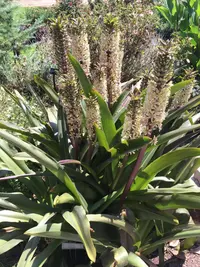
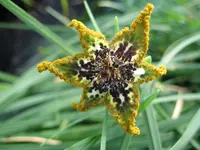
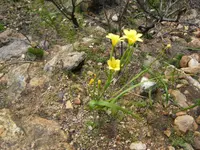
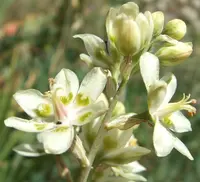
Mountain deathcamas, Anticlea elegans, is a small bulb-forming perennial known for its starry white flowers held on upright spikes above narrow grass-like leaves. It typically grows in open meadows, sagebrush slopes, and montane habitats across parts of North America, especially in cooler regions with well-drained soils.

The plant has an elegant appearance but is highly poisonous, which makes it unsuitable for gardens with children or pets. It can be challenging to care for Mountain Deathcamas, as it dislikes disturbance, prefers consistent moisture without waterlogging, and responds poorly to heavy or compacted soils.

In cultivation it generally prefers full sun to light shade and cool, moist springs followed by drier conditions in summer, similar to its native mountain and prairie environments.

Main Plant Requirements

Care Difficulty

Hard Care

Light Preference

Partial Sun

Water Requirements

Regular Water

Temperature Preference

Cold Hardy

Hardiness Zone

3–7

Soil Texture

Sandy, Loamy, Rocky

Soil pH

Acidic (5.5–6.5), Slightly acidic (6.5–7.0)

Soil Drainage

Moist but well-drained

Fertilization

Minimal (feed rarely)

Get Personalized Care Plan

Scan your plant to receive care tips personalized for your specific plant

Available on iOS and Android

How to Care for the Mountain Deathcamas

This perennial prefers bright, cool conditions that mimic open meadows and forest edges.

  • Provide 4–6 hours of direct morning sun with light afternoon shade; full, harsh afternoon sun in hot summers can scorch foliage and shorten flowering.
  • In cooler climates, Mountain Deathcamas tolerates near full sun if soil stays evenly moist; in warmer zones, use dappled or filtered light under open-canopy trees.
  • Monitor stems and leaves: weak, elongated growth indicates too much shade, while bleached or crispy tips suggest excess sun exposure, especially from late spring to midsummer.

This bulb-forming species needs moist yet well-drained soil, especially during active growth.

  • Use a sharply drained, sandy or loamy soil so water does not pool around the bulbs, which are highly sensitive to prolonged saturation and rot.
  • During spring growth and flowering, water when the top 3–5 cm of soil feel dry, aiming for consistently moist but never soggy conditions in the root zone.
  • Reduce watering as foliage yellows and dies back in late summer; Anticlea elegans prefers drier soil in dormancy, with only occasional moisture in naturally dry periods.

This species is naturally adapted to cool to moderate climates with cold winters.

  • Active growth is strongest at 50–70°F (10–21°C), with flowering favored by cool spring conditions followed by mild early summer temperatures.
  • Established plants tolerate winter lows near 0°F (−18°C) under insulating snow or mulch, but repeated freeze–thaw cycles in saturated soil can damage bulbs.
  • In hotter regions, provide afternoon shade and reliable soil moisture when temperatures exceed 85°F (29°C), as prolonged heat and drought can shorten the growing season and stress foliage.

Humidity is not a major factor for Anticlea elegans, which naturally handles fairly dry air.

  • Target 30–50% humidity, similar to most outdoor conditions in temperate regions.
  • Plant tolerates dry air but may show browning leaf tips under prolonged hot, very dry wind conditions.
  • Increase local humidity only during extreme heat by grouping pots together or placing a shallow water tray nearby without letting roots sit in water.

Anticlea elegans prefers sharply drained, slightly acidic mineral soil that mimics open meadow or rocky slope conditions.

  • Use a sandy or gravelly loam with 30–50% coarse sand or grit to prevent waterlogging around the bulbs.
  • Aim for pH 5.5–6.5; mix a small amount of acidic compost or leaf mold if native soil is more alkaline.
  • Improve aeration by blending in perlite or fine gravel, especially in heavier garden loam or compacted sites.
  • Avoid heavy clay, standing water, or rich, wet organic beds, which quickly lead to bulb and root rot.

This species can be grown in containers, mainly to control drainage and soil texture for sensitive bulbs.

  • Choose a deep pot at least 25–30 cm tall so the bulbs sit well above the drainage layer with room for root spread.
  • Use a heavy, stable container or add top gravel to prevent tall flowering stems from tipping the pot in wind.
  • Line the bottom with a thin layer of coarse gravel above the drainage holes to keep the sandy mix from washing out while maintaining fast outflow.

Anticlea elegans, or Mountain Deathcamas, is a hardy native that needs only minimal feeding in most garden soils.

  • Use a light top-dressing of compost or well-rotted leaf mold in early spring for nutrient support.
  • In poor or sandy soils, apply a balanced, slow-release fertilizer (around 10-10-10) at 1/2 strength once in spring.
  • Avoid summer and fall feeding to prevent soft growth that may not overwinter well.
  • Do not fertilize during dormancy; keep soil barely moist, not enriched.

Anticlea elegans requires only light pruning to maintain health and appearance.

  • Best timing is late fall or very early spring, once foliage has naturally yellowed and died back.
  • Remove dead, diseased, or storm-damaged leaves and spent flower stalks at the base with clean hand pruners.
  • Limit cutting to dead material; pruning green growth does not improve flowering and can weaken the bulb.
  • Dispose of removed material to reduce disease carryover around the planting area.

This bulbous species is usually grown in the ground, so care focuses on thoughtful transplanting rather than frequent repotting.

  • Transplant only when clumps become crowded or flowering declines, typically every 4–6 years.
  • Schedule moves for late summer to early fall, after foliage has completely died back and bulbs are dormant.
  • Lift bulbs gently with a fork, keeping as much surrounding soil as possible to limit root stress.
  • Replant at the same depth in well-drained soil, water lightly once, then allow the area to dry between rains.

Anticlea elegans is typically propagated by seed and, less often, by cautious bulb division.

  • Collect ripe seeds in late summer and sow fresh in trays outdoors for natural cold stratification over winter.
  • Use a gritty, well-drained seed mix and keep evenly moist; germination may be slow and staggered.
  • Divide bulbs only when clumps are dense, lifting dormant bulbs and separating offsets by hand.
  • Replant divisions promptly at original depth and spacing, then water lightly to settle the soil.

This species is cold hardy in much of its native range and usually needs only modest winter care outdoors.

  • Tolerates freezing in well-drained soil; avoid waterlogged sites that promote bulb rot in winter.
  • Apply a light mulch layer (2–5 cm) of leaf mold or bark after soil cools to buffer temperature swings.
  • For container-grown plants, move pots into a cold, sheltered area such as an unheated garage or cold frame.

Care Tips

Mark Dormant Sites

Flag or label clump locations in late summer before foliage dies back so you avoid disturbing the bulbs when digging or weeding the bed in autumn or early spring.

Control Companion Species

Grow it with low, non-aggressive neighbors and periodically thin surrounding perennials so taller or spreading species do not shade out its narrow foliage and flower stalks.

Support Flower Spikes

In windy or exposed sites, insert slender, discreet stakes when stems are 10–15 cm tall and loosely tie them, which reduces lodging and damage to the developing inflorescences.

Use Grit Mulch

Apply a thin (1–2 cm) layer of sharp grit or fine gravel around the crowns to reduce soil splash, keep the neck of the bulb slightly drier, and discourage rot around the growing points.

Plan Safe Access

Because the plant is highly toxic, place it away from play areas and create a clear access path so any work related to caring for Mountain Deathcamas can be done without brushing against foliage or flowers.

Common Pests and Diseases

Bulb nematodes

These microscopic roundworms invade bulbs and roots, causing stunting, yellowed foliage, and distorted or failing shoots, especially in damp, heavy soils.

Solution

Discard severely affected plants, as nematodes persist in bulb tissue. For remaining clumps, lift and destroy suspect bulbs, avoid replanting Anticlea in the same spot for several years, improve drainage, and source only clean, nematode-free bulbs or divisions from reputable suppliers.

Leaf spot fungi

This disease causes small to medium brown or purple lesions on leaves that can merge into larger dead patches, often appearing after prolonged wet or humid weather.

Solution

Remove and destroy affected leaves to reduce spore spread, water at soil level rather than overhead, and space plants to improve air movement; in persistent cases, a targeted ornamental bulb-safe fungicide labeled for leaf spots can be used preventively at the start of wet periods.

Basal bulb rot

This disease affects the base of the bulb, leading to soft, discolored tissue, poor emergence in spring, and sudden collapse of shoots in the growing season.

Solution

Carefully dig up and discard any soft or foul-smelling bulbs, then improve site drainage with raised beds or sandy, well-drained soil and avoid overwatering; plant only firm, healthy bulbs and rotate planting areas to reduce buildup of soil-borne pathogens.

Slugs and snails

These pests chew irregular holes in young leaves and can destroy emerging shoots, especially in cool, moist habitats where this species naturally grows.

Solution

Hand-pick slugs and snails during damp evenings, use barriers such as copper tape or coarse gravel, and place iron phosphate slug baits around but not directly on the plants; reducing dense mulch and groundcover near clumps also lowers hiding spots and feeding pressure.

Interesting Facts

Highly toxic alkaloids

This species contains potent steroidal alkaloids such as zygacine and related compounds that disrupt normal nerve and heart function, making all parts of the plant dangerous to humans and livestock if ingested.

Superficial lily resemblance

Although often mistaken for a true lily because of its star-shaped white flowers arranged in racemes, this species is not a member of the Liliaceae but belongs to Melanthiaceae, a separate monocot family with several poisonous genera.

Specialized mountain habitat

The plant commonly grows in moist subalpine and montane meadows, seeps, and open coniferous forest edges across parts of North America, often in sites with lingering snowmelt and cool summer temperatures.

Botan icon

Did you know?

Livestock poisoning cases from this species have historically been significant enough in some western North American rangelands that herders learned to move sheep and cattle before the plant leafed out or flowered, using its phenology as a seasonal warning signal rather than relying only on visual identification in mixed meadows.

FAQs about Mountain Deathcamas

All parts of this species are highly toxic to humans, pets, and livestock if eaten. Even small amounts can cause severe poisoning. It should never be foraged or grazed and is unsuitable for family or pet-friendly landscapes.

Grow Healthy Plants with Botan Care

Keep your plants happy and healthy with plant identification, disease detection, and easy care guidance.

Botan plant care app — identify plants on mobile

Explore More Plants