Staggered Succession Planting
Plant tubers in small batches 1–2 weeks apart during the planting window so flower production is spread over a longer period rather than peaking all at once.

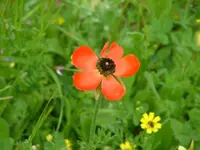
The Persian buttercup, Ranunculus asiaticus, is a cool-season flowering tuber grown for its many-layered, rose-like blooms. It is usually treated as a seasonal bedding or cut-flower plant rather than a long-term houseplant.
Plants form compact clumps of divided green leaves and upright stems topped with bright flowers in colors from white and yellow to pink, red, and deep orange. This species originates from the eastern Mediterranean region, where it grows in mild, dry-summer climates.
It is considered moderately demanding, as it dislikes heat, excessive moisture, and poor drainage. Gardeners who learn how to care for Persian buttercup will find it rewards careful attention with a heavy flush of spring flowers.

Care Difficulty
Moderate Care

Light Preference
Full Sun

Water Requirements
Moderate Water

Temperature Preference
Cool Climate

Hardiness Zone
8–10

Soil Texture
Sandy, Loamy, Organic-rich

Soil pH
Acidic (5.5–6.5), Slightly acidic (6.5–7.0)

Soil Drainage
Moist but well-drained

Fertilization
Moderate (every 2–4 weeks)
Scan your plant to receive care tips personalized for your specific plant
Available on iOS and Android
Ranunculus asiaticus needs abundant light to form strong stems and full blooms.
Watering Ranunculus asiaticus correctly focuses on moist, fast-draining soil without waterlogging.
Temperature control is critical for strong growth and long-lasting flowers.
This species prefers moderate, fairly dry air and usually does not need special humidity control.
Ranunculus asiaticus grows best in loose, sharply drained, airy soil that never stays soggy.
This species is well suited to container growing outdoors in cool seasons.
Ranunculus asiaticus benefits from steady but moderate nutrition during active growth for strong stems and abundant flowers.
Pruning Ranunculus asiaticus focuses on deadheading and sanitation rather than shaping woody growth.
This species is usually grown from corms and transplanted seasonally rather than kept long term in the same container.
Ranunculus asiaticus is most commonly propagated by division of corms, with seed used mainly by specialist growers.
Ranunculus asiaticus has low frost tolerance and usually needs some level of winter protection in cold regions.

Plant Health Check
Not sure what's wrong with your plant? Check your plant's health inside the app.
The double-flowered forms are composed of numerous tightly packed petals arranged in spirals, creating a nearly spherical bloom that has been used in horticultural textbooks as a model for studying floral symmetry and developmental patterning in ornamental plants.
In its native eastern Mediterranean range, this species grows during the cool, moist winter, then survives the hot dry summer as a dormant tuberous root, an adaptation to the region’s pronounced seasonal drought.
Cultivated forms span a wide color range including white, yellow, orange, pink, red, and bicolor combinations, but they naturally lack true blue pigments, which is why breeders have never produced a stable blue-flowered line despite intensive selection in growing Persian buttercup programs.

In early modern Europe, especially during the 16th–18th centuries, highly selected forms of this species became luxury garden plants associated with nobility, and elaborate collections were grown and documented in the same way that tulips and hyacinths were during the height of ornamental bulb fashion.
Lack of flowers usually comes from insufficient winter chill, planting the tubers too shallow, or excess warmth and shade. Crowded or old tubers, depleted soil, or heavy nitrogen fertilization can also reduce bud formation and flowering performance.
Keep your plants happy and healthy with plant identification, disease detection, and easy care guidance.