Stake Flower Stems
Install thin, unobtrusive stakes and soft ties early in the season to support the tall, slender flowering stems and prevent wind damage or flopping in rain.

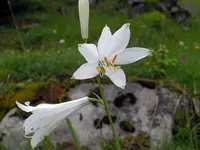
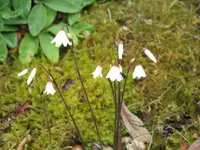
St Bruno's lily, Paradisea liliastrum, is a clump-forming perennial grown mainly for its elegant white, trumpet-shaped flowers. It sends up slim, upright stems from a low base of narrow, grassy leaves.
In its native European mountain habitats, it grows in alpine meadows and open woodland edges, where conditions are cool, bright, and well drained. The plant is not fast-growing but is long-lived once established.
It suits cooler gardens with mild summers and does best in fertile, moist but well-drained soil. Understanding how to care for St Bruno's Lily starts with providing steady moisture and good light without extreme heat.

Care Difficulty
Moderate Care

Light Preference
Full Sun

Water Requirements
Moderate Water

Temperature Preference
Cold Hardy

Hardiness Zone
4–8

Soil Texture
Sandy, Loamy, Organic-rich

Soil pH
Slightly acidic (6.5–7.0), Neutral (7.0)

Soil Drainage
Well-drained

Fertilization
Minimal (feed rarely)
Scan your plant to receive care tips personalized for your specific plant
Available on iOS and Android
Paradisea liliastrum prefers cool, bright positions with gentle sun exposure in the growing season.
Paradisea liliastrum prefers evenly moist but never waterlogged soil, especially during active growth and flowering.
This plant favors cool to mild conditions and copes well with typical outdoor temperate climates.
This species grows best in relatively dry to moderately humid air and usually does not need special humidity control.
Paradisea liliastrum prefers freely draining, moderately fertile soil that stays moist but never saturated.
This species can be grown in containers if the pot is deep and drainage is managed carefully.
This perennial benefits from light, measured feeding to support flowering without forcing lush, weak growth.
Pruning needs are minimal and focus on cleaning up spent growth to keep Paradisea liliastrum tidy and flowering well.
This clump-forming perennial is usually grown in the ground and prefers infrequent disturbance.
New plants are typically raised by seed or by careful division of established clumps.
This hardy perennial tolerates typical temperate winters but benefits from simple soil-level protection in colder regions.

Plant Health Check
Not sure what's wrong with your plant? Check your plant's health inside the app.
This species is naturally found in high-altitude meadows and open woodlands of the European Alps and Pyrenees, often growing in well-drained, calcareous mountain soils. Its presence is associated with traditionally managed, species-rich grasslands that are not heavily fertilized.
The plant produces loose spikes of pure white, star-shaped flowers with a light, sweet fragrance in late spring to early summer. Each flower opens widely on a slender stem, giving the inflorescence a delicate, airy look rather than a dense cluster.
It has a long history in European monastery and cottage gardens, where it was grown mainly for its refined appearance rather than for any strong scent or medicinal use. The common name St Bruno's lily refers to Saint Bruno of Cologne, founder of the Carthusian Order, with which the plant became traditionally associated.

Although often called a lily, this plant does not belong to the true lily genus Lilium but to the genus Paradisea, a small and rather uncommon group within the asparagus family (Asparagaceae), making it a relatively rare sight even in specialized ornamental collections.
Lack of flowers often comes from immature clumps, planting too deep, or insufficient winter chill. Overly rich nitrogen feeding or deep shade also reduces flowering. Stable conditions over several seasons usually restore normal bloom.
Keep your plants happy and healthy with plant identification, disease detection, and easy care guidance.