Staggered Bulb Planting
Plant bulbs in small groups at slightly different depths (about 5–8 cm range) and timings to create a longer, more natural-looking bloom period and reduce the impact if one planting fails.

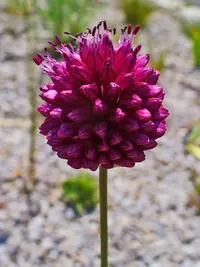
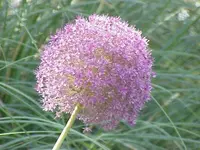
Drumstick allium (Allium sphaerocephalon) is a small, bulb-forming perennial from the onion genus, grown mainly for its dense, oval flower heads. Each slender stem carries a tight, egg-shaped cluster of tiny purple florets that sits well above narrow, grass-like leaves.
This species is native to parts of Europe and western Asia, where it grows in open, sunny, often rocky places. It adapts well to garden borders, gravel plantings, and naturalistic meadows, and established bulbs are quite tolerant of drought and poor soils.
These traits make it relatively easy to grow for most gardeners once planted in well-drained soil, and understanding how to care for Drumstick allium mainly involves providing sun and avoiding waterlogged conditions.

Care Difficulty
Easy Care

Light Preference
Full Sun

Water Requirements
Low Water

Temperature Preference
Cold Hardy

Hardiness Zone
4–8

Soil Texture
Sandy, Loamy, Rocky

Soil pH
Acidic (5.5–6.5), Slightly acidic (6.5–7.0)

Soil Drainage
Well-drained

Fertilization
Minimal (feed rarely)
Scan your plant to receive care tips personalized for your specific plant
Available on iOS and Android
Allium sphaerocephalon develops strongest stems and flowering when grown in full sun outdoors.
Allium sphaerocephalon prefers infrequent, deep watering in well-drained soil to protect the bulbs from rot.
This bulb-forming perennial tolerates a wide temperature range but performs best with cool winters and mild to warm summers.
Humidity is not a critical factor for Allium sphaerocephalon grown outdoors.
Allium sphaerocephalon grows best in lean, well-structured mineral soil that never stays waterlogged.
This species is suitable for container growing when the potting setup prioritizes fast drainage and bulb stability.
This bulb needs only modest feeding, especially in reasonably fertile garden soil when caring for Drumstick allium.
Pruning needs for Allium sphaerocephalon are minimal and focus on cleanliness rather than shaping.
This ornamental allium is usually grown in the ground, with transplanting done mainly to adjust spacing or rejuvenate crowded clumps.
New Allium sphaerocephalon plants are most commonly produced from bulbs and offsets rather than from cuttings.
This bulb is generally cold hardy in the ground and usually needs little special winter care in temperate climates.

Plant Health Check
Not sure what's wrong with your plant? Check your plant's health inside the app.
The drumstick-shaped flower heads open greenish at the base, then gradually turn deep purple from the top down, creating a two-tone phase that makes individual inflorescences look like they are changing color over time.
This species flowers relatively late for an ornamental allium, often in early to mid-summer, providing nectar and pollen for bees, hoverflies, and other insects when many spring bulbs are already finished.
Allium sphaerocephalon is naturally found in dry, rocky, and open habitats across parts of Europe and western Asia, which explains its strong tolerance for poor, stony soils and summer drought in gardens.

In parts of its native range, this species often appears in large, scattered colonies on dry slopes and grasslands, where the dense stands of spherical flower heads create a distinctive visual marker in the landscape that can be used by botanists to spot suitable calcareous or rocky soils from a distance.
Lack of flowers often comes from insufficient sun, bulbs planted too shallow or too deep, or overcrowding. Very rich, high-nitrogen fertilizer can also reduce blooms by pushing leafy growth instead of flower development.
Keep your plants happy and healthy with plant identification, disease detection, and easy care guidance.