Control Unwanted Spread
Lift and remove seedling clumps in late winter while the soil is moist, using a hand fork to tease out as much of the root system as possible so the plant does not overrun nearby perennials.

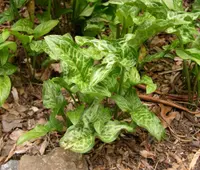
Italian arum (Arum italicum) is a hardy, tuber-forming perennial grown mainly for its bold, arrow-shaped leaves and striking seasonal display. The foliage often shows pale veins that stand out against glossy green, giving strong contrast in shaded beds.
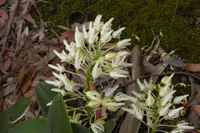
In spring it produces pale, hooded flowers, followed by bright orange-red berries that persist into summer. It naturally occurs in woodland and scrub habitats across parts of southern and western Europe.
This plant spreads by tubers and self-seeding, so it can become persistent once established. It suits cool to mild climates, prefers moist but well-drained soil, and tolerates shade. Gardeners who care for Italian arum often value its winter and early spring interest in otherwise bare areas.

Care Difficulty
Moderate Care

Light Preference
Partial Shade

Water Requirements
Moderate Water

Temperature Preference
Cold Hardy

Hardiness Zone
5–9

Soil Texture
Loamy, Clay, Organic-rich

Soil pH
Acidic (5.5–6.5), Slightly acidic (6.5–7.0)

Soil Drainage
Moist but well-drained

Fertilization
Minimal (feed rarely)
Scan your plant to receive care tips personalized for your specific plant
Available on iOS and Android
This woodland perennial thrives in cool, bright shade with limited direct sun exposure.
This plant prefers consistently moist but not saturated soil, especially during its active growth period.
This hardy perennial grows best in cool to mild climates with distinct seasons.
This species grows well in typical home and outdoor humidity and rarely needs special humidity management.
Arum italicum prefers moist, well-structured soil that stays aerated yet never waterlogged.
This species is well suited to container growing outdoors on patios, balconies, or shaded entries.
This woodland perennial benefits from modest feeding in nutrient-poor soils but often copes well without it in rich beds.
Pruning needs for Arum italicum are minimal and focus on cleanliness rather than shaping.
This tuberous perennial is usually grown in the ground and only moved when clumps become crowded or poorly placed.
Division is the most reliable method for increasing Arum italicum plants in home gardens.
This hardy species needs little special winter care in most temperate climates once established.

Plant Health Check
Not sure what's wrong with your plant? Check your plant's health inside the app.
This species produces arrow-shaped leaves with pale marbled veins that emerge in autumn and stay green through winter, then disappear in early summer, an unusual seasonal pattern among temperate perennials.
The flower structure, called a spadix, can slightly warm itself during bloom, helping to volatilize scent compounds that attract small flies and beetles for pollination.
After flowering, it forms dense spikes of bright orange-red berries that are visually striking but contain toxic compounds and should not be eaten by humans or pets.

Arum italicum has naturalized widely beyond its native Mediterranean range and is considered invasive in some regions, such as parts of the Pacific Northwest and northeastern United States, where it spreads aggressively from both seed and persistent tubers.
This species spreads by both seed and tubers. In mild, moist climates it can naturalize and form dense patches. Remove seed heads before ripening and dig out tubers carefully to control unwanted spread.
Keep your plants happy and healthy with plant identification, disease detection, and easy care guidance.



-200x112.webp)