Post-bloom handling
After flowering, deadhead spent blooms but keep all foliage until it yellows naturally, as this allows the corms to store energy and flower more strongly the following season.

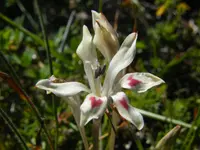
Strandveld trumpet bobbejaantjie, Babiana tubiflora, is a small cormous flowering plant from the winter-rainfall coastal regions of South Africa. It grows from underground corms and produces narrow leaves with elegant tubular white to pale cream flowers. These flowers often have a delicate scent and are carried on slender, upright stems, giving the plant a fine, airy look in pots or rock gardens. In its natural habitat it experiences cool, moist winters and hot, dry summers, which strongly shapes its growth cycle. Once this seasonal rhythm is understood, it is straightforward to care for Strandveld Trumpet Bobbejaantjie in mild, low-frost climates or protected containers.

Care Difficulty
Moderate Care

Light Preference
Full Sun

Water Requirements
Moderate Water

Temperature Preference
Warm Climate

Hardiness Zone
9–11

Soil Texture
Sandy, Loamy, Organic-rich

Soil pH
Acidic (5.5–6.5), Slightly acidic (6.5–7.0)

Soil Drainage
Well-drained

Fertilization
Minimal (feed rarely)
Scan your plant to receive care tips personalized for your specific plant
Available on iOS and Android
This cormous plant needs bright, direct sun to flower well in its winter–spring growing season.
This winter-growing bulb prefers moderate, carefully timed watering around its active season.
This species grows in cool to mild winters and prefers a distinct, dry summer rest.
This species from dry coastal habitats manages well in typical indoor humidity.
Babiana tubiflora prefers lean, fast-draining, sandy soil that dries quickly after watering.
This compact cormous species is well suited to container growing outdoors in bright, frost-free conditions.
Babiana tubiflora benefits from light feeding but is sensitive to excess nutrients.
Pruning needs for Babiana tubiflora are minimal and focus on cleanliness rather than shaping.
This bulbous species is usually grown in the ground or shallow pots and dislikes frequent disturbance.
Expansion of Babiana tubiflora is commonly done by corm division, with seed used mainly for larger-scale growing.
Cold tolerance is limited, so winter care depends strongly on climate.

Plant Health Check
Not sure what's wrong with your plant? Check your plant's health inside the app.
In its native South African strandveld habitats, this species is primarily pollinated by long-tongued noctuid moths that can reach deep into its narrow tubular flowers, an example of close floral adaptation to a specific pollinator group.
This plant naturally occurs on coastal limestone and sandy soils, often in low shrubland close to the sea, where its underground corm helps it survive dry summers and shifting, nutrient-poor substrates.
The white, tubular flowers are strongly scented, especially at night, which enhances attraction of moth pollinators that rely heavily on fragrance cues in low light.

The species name tubiflora refers to its noticeably elongated, tube-shaped flower form, which is unusually long compared with many other Babiana species and closely matches the tongue length of its moth pollinators, illustrating a classic textbook case of floral–pollinator coevolution.
This species usually flowers in late winter to spring, depending on climate. Blooming typically lasts several weeks, with individual spikes opening progressively. Consistent cool, bright, dryish winter conditions help extend the overall flowering display.
Keep your plants happy and healthy with plant identification, disease detection, and easy care guidance.