Blue Star Care (Amsonia 'Blue Ice')

Blue Star

About Blue Star

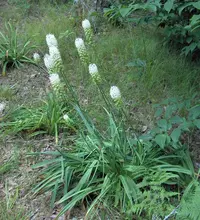
Amsonia 'Blue Ice', commonly called blue star, is a compact herbaceous perennial grown mainly for its spring flowers and neat clumping habit. It forms low, bushy mounds of narrow green leaves topped with clusters of star-shaped, deep blue blooms.

This selection is derived from species native to North America, where similar plants grow in open woods and along stream banks. It is valued in gardens for its good cold hardiness, strong overall health, and low maintenance needs.

Plants prefer sun to light shade and evenly moist, well-drained soil, which makes it relatively straightforward to care for Blue Star in many temperate gardens.

Main Plant Requirements

Care Difficulty

Easy Care

Light Preference

Full Sun

Water Requirements

Moderate Water

Temperature Preference

Cold Hardy

Hardiness Zone

4–9

Soil Texture

Sandy, Loamy, Clay

Soil pH

Acidic (5.5–6.5), Slightly acidic (6.5–7.0)

Soil Drainage

Moist but well-drained

Fertilization

Minimal (feed rarely)

Get Personalized Care Plan

Scan your plant to receive care tips personalized for your specific plant

Available on iOS and Android

How to Care for the Blue Star

This perennial prefers consistent sun for strong growth and flowering.

  • Provide 6–8 hours of direct sun daily; morning sun with light afternoon shade is ideal in hotter regions.
  • Plant in a spot with full sun in spring and fall, shifting to light shade or filtered light during intense summer afternoons to reduce leaf scorch.
  • Blue Star tolerates light to partial shade (3–4 hours sun), but stems may stretch and flowering decline if light drops below this level.

This plant prefers evenly moist, well-drained soil rather than frequent, shallow watering.

  • In the first growing season, water when the top 3–5 cm of soil is dry, ensuring a deep soak that reaches the root zone.
  • Once established, reduce frequency; in average rainfall areas, supplemental watering is mainly needed during dry spells when foliage begins to slightly wilt or curl.
  • Use soil that drains freely to prevent waterlogging; yellowing lower leaves, soft stems, or sour smell indicate overwatering in Amsonia 'Blue Ice'.

This hardy perennial tolerates a wide temperature range across seasons.

  • Active growth is strongest in spring and early summer at 60–75°F (16–24°C), supporting dense foliage and good flowering.
  • Established plants tolerate winter cold down to about -20°F (-29°C) in the ground, dying back to the crown and re-sprouting in spring.
  • During hot summers, it handles 85–95°F (29–35°C) if soil moisture is consistent; prolonged heat with drought can cause leaf browning and earlier dormancy.

This hardy perennial tolerates a wide humidity range and usually does not need special humidity control outdoors.

Amsonia 'Blue Ice' prefers evenly moist, well‑structured soil that drains freely yet holds some moisture.

  • Use a loamy mix with moderate organic matter, such as native soil improved with 20–30% compost.
  • Ensure drainage is rapid enough that water does not pool for more than a few hours after rain or watering.
  • Aim for slightly acidic to neutral pH, around 6.0–7.0, which supports nutrient availability and root health.
  • On heavy clay sites, improve aeration by incorporating coarse sand or fine gravel into the top 20–30 cm.

This species can be grown in containers if the pot supports its deep, spreading root system.

  • Choose a container at least 30–35 cm deep so roots can extend downward without circling tightly.
  • Use a heavier material like ceramic or concrete in windy sites to keep the leafy clump from tipping over.
  • Elevate the pot on feet or bricks so drainage holes stay clear and runoff does not reabsorb into the root zone.

This perennial needs modest feeding, as Amsonia 'Blue Ice' is adapted to lean, well-drained soils.

  • Use a balanced slow-release fertilizer (around 10-10-10) or a light top-dressing of compost in early spring.
  • Feed only once each growing season for in-ground plants; container-grown plants may benefit from a second light dose in midsummer.
  • Apply at half the label rate to avoid lush, floppy growth and salt buildup in the soil.
  • Stop feeding by late summer and do not fertilize during fall and winter dormancy.

Pruning is simple and mainly helps maintain shape and plant health in Amsonia 'Blue Ice'.

  • Cut back dead or damaged stems in late winter or very early spring using clean hand pruners.
  • Shear or trim the whole clump by about one-third after flowering to keep a compact, rounded shape.
  • Thin out badly crowded or crossing stems at the base to improve air flow and reduce disease risk.
  • Remove any browned foliage at season’s end to keep the planting tidy and limit overwintering pests.

This plant is usually grown in garden beds, so focus on careful transplanting rather than frequent repotting.

  • Transplant in early spring or early fall when growth is slow and temperatures are mild.
  • Look for signs such as poor vigor, stunted growth, or roots circling a container if Amsonia 'Blue Ice' is pot-grown.
  • Move plants only every several years, as established clumps dislike disturbance and may sulk after moving.
  • Dig a wide root ball, replant at the same depth, water thoroughly, and shade briefly to reduce transplant shock.

Propagation of this perennial is possible by division, cuttings, or seeds, but division is the most practical for home gardeners.

  • Divide established clumps in early spring just as new shoots emerge, lifting with a spade and splitting into sections with strong roots.
  • Replant divisions promptly at the same depth in well-drained soil and water consistently until established.
  • Take semi-ripe stem cuttings in early summer, root them in a free-draining mix, and maintain high humidity and bright, indirect light.
  • Sow seeds in containers outdoors in fall to allow natural cold stratification, then transplant seedlings when large enough to handle.

This cold-hardy perennial needs minimal winter attention in most temperate climates.

  • Tolerates typical garden frost and freezes when planted in the ground with good drainage.
  • Allow stems to die back naturally, then cut them to ground level in late fall or late winter for tidiness.
  • Apply a 5–8 cm layer of mulch after the ground cools to buffer freeze–thaw cycles around the roots.
  • For container-grown plants, move pots to a sheltered, unheated area to reduce root freezing and excess winter wet.

Care Tips

Spring clump division

Every 3–4 years in early spring, lift and divide crowded clumps into fist-sized sections with healthy roots to maintain vigor and create uniform plantings when growing Blue Star.

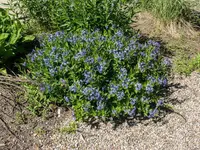
Strategic mass planting

Plant in groups of 3–7, spacing clumps 30–45 cm apart, to create a dense canopy that shades the soil surface and suppresses weeds without the need for constant cultivation.

Edge protection plan

Place sturdy edging or a low border plant around the front of beds to protect stems from foot traffic and mower damage, which can distort the plant’s naturally compact mound.

Autumn color enhancement

Avoid high-nitrogen feeding and allow soil to dry slightly between late-summer rains so foliage hardens properly, which supports better golden fall color and stronger stems into winter.

Salt and splash management

Keep plantings offset from salted sidewalks and gravel drives and use mulch strips to reduce soil splash, which helps prevent leaf spotting and root stress in exposed sites.

Common Pests and Diseases

Rust

This disease causes small orange to brown pustules on leaves, sometimes leading to early yellowing and drop. Symptoms include scattered spots that can merge under prolonged humid, crowded conditions.

Solution

Remove and discard affected leaves, then thin or divide clumps to improve airflow and reduce leaf wetness duration. Avoid overhead watering, water early in the day, and if rust recurs, use a sulfur or copper-based fungicide labeled for ornamental perennials, following label rates carefully.

Leaf spot

This disease produces tan to dark-brown spots on foliage that may have purple or darker margins, often appearing after long wet periods. Symptoms include cosmetic damage and occasional premature leaf drop rather than plant death.

Solution

Cut off and discard spotted leaves to limit spread and clean up all fallen foliage in autumn. Improve drainage and spacing around plants, and during extended wet weather consider applying a preventative broad-spectrum fungicide approved for ornamental beds if the problem has been severe in previous seasons.

Spider mites

This pest causes fine speckling or bronzing on leaves, sometimes with delicate webbing on stems, especially during hot, dry weather. These insects suck plant juices and can make clumps look dull and stressed.

Solution

Spray foliage thoroughly with a strong stream of water every few days to knock mites off the plant, focusing on leaf undersides. If populations persist, apply insecticidal soap or a horticultural oil labeled for mites in cool morning or evening conditions, repeating as directed and keeping plants evenly watered to reduce stress.

Aphids

This pest clusters on young shoots and stems, sucking sap and leaving sticky honeydew that can attract sooty mold. These insects may cause mild leaf curling or distorted new growth but rarely kill established clumps.

Solution

Wash colonies off with a firm stream of water and pinch back heavily infested shoot tips. For ongoing issues, use insecticidal soap or a light horticultural oil, ensuring full coverage of stems and leaf undersides, and avoid overfertilizing, which encourages soft, aphid-prone growth.

Interesting Facts

Compact hybrid origin

This plant is a selected hybrid form of Amsonia tabernaemontana that was introduced for its shorter, denser habit and more saturated blue flowers compared with typical North American bluestars.

Long spring bloom

It produces star-shaped, deep blue flowers over an unusually long spring flowering period for the genus, often holding color well after many other spring perennials have faded.

Refined foliage display

The narrow, willow-like leaves stay clean and attractive through summer, then turn a notable golden-yellow in autumn, giving the plant a distinct three-season ornamental role in temperate gardens.

Botan icon

Did you know?

Unlike many compact ornamental perennials that lose their form after a few years, this selection maintains a stable, mounding shape with minimal flopping even in richer soils, so it is widely used as a low-maintenance edging and front-of-border plant in designed prairie-style plantings.

FAQs about Blue Star

Poor flowering usually comes from too much shade, excess nitrogen fertilizer, or very dry soil during bud formation. Ensure full sun, moderate fertility, and consistent moisture in spring for reliable blooms when growing Blue Star.

Grow Healthy Plants with Botan Care

Keep your plants happy and healthy with plant identification, disease detection, and easy care guidance.

Botan plant care app — identify plants on mobile

Explore More Plants