


Provide sturdy support
Install a robust trellis, fence, or wires before the plant reaches 30–40 cm, then loosely tie new stems with soft ties to guide vines and prevent wind damage or stem kinking.

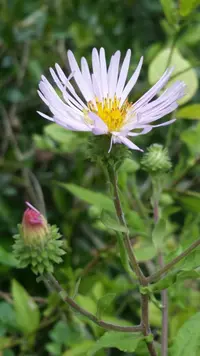
Climbing aster, Ampelaster carolinianus, is a deciduous, twining vine-like perennial from the southeastern United States, especially coastal wetlands and stream edges. It naturally scrambles over shrubs, fences, and supports, forming an airy, arching mass of stems.
The plant bears narrow, willow-like leaves and a heavy display of small, daisy-style lavender to pink flowers with yellow centers, usually in late summer and fall. It attracts butterflies and other pollinators, yet stays relatively low-maintenance in suitable conditions.
This species tolerates periodic wet soils and brief dry spells once established, which makes it adaptable in gardens. Understanding how to care for climbing aster starts with providing sun, moisture-retentive but well-drained soil, and room to climb or sprawl.

Care Difficulty
Easy Care

Light Preference
Full Sun

Water Requirements
Moderate Water

Temperature Preference
Cold Hardy

Hardiness Zone
5–9

Soil Texture
Sandy, Loamy, Organic-rich

Soil pH
Acidic (5.5–6.5), Slightly acidic (6.5–7.0)

Soil Drainage
Moist but well-drained

Fertilization
Minimal (feed rarely)
Scan your plant to receive care tips personalized for your specific plant
Available on iOS and Android
This vine thrives with ample sun while tolerating some light shade in warm regions.
This species prefers steady moisture in well-drained soil rather than constant wetness.
This hardy perennial handles a wide temperature range once established.
This species tolerates a wide humidity range and rarely needs special moisture control outdoors.
Ampelaster carolinianus prefers moderately fertile, well-drained soil that does not stay saturated.
This species can grow in containers if the pot is large, stable, and drains efficiently.
Nutrient needs for climbing aster are modest, especially in reasonably fertile garden soil.
Thoughtful pruning keeps Ampelaster carolinianus flowering well and within bounds on its support.
This species is more often transplanted in the ground than grown long-term in containers.
Ampelaster carolinianus can be multiplied by seed, division, or softwood cuttings under suitable conditions.
This perennial is generally cold hardy in much of its range and needs only modest winter care in the ground.

Plant Health Check
Not sure what's wrong with your plant? Check your plant's health inside the app.
This viney aster flowers very late in the year, often from late summer into late fall, providing one of the last substantial nectar and pollen sources for bees, butterflies, and other pollinators in its native range.
Instead of tendrils or adhesive pads, the plant climbs by weaving and leaning its long, flexible stems through shrubs, fences, or other supports, forming dense, scrambling thickets over time.
In the wild it is closely associated with moist to wet habitats such as tidal marsh edges, ditches, and swamp margins along the southeastern and mid-Atlantic US coast, reflecting an adaptation to periodically saturated soils.

Genetic studies and modern taxonomy moved this species out of the large, traditional aster group into the separate genus Ampelaster, highlighting its distinct evolutionary lineage among North American asters.
Sparse or absent flowering usually comes from too much shade, excessive nitrogen fertilizer, or heavy pruning just before buds form. Ensure strong light, avoid high-nitrogen feeds, and prune right after flowering to support future bud development.
Keep your plants happy and healthy with plant identification, disease detection, and easy care guidance.

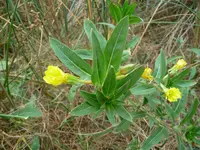
Oakes' evening primrose
Oenothera oakesiana
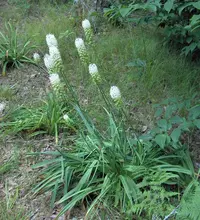
flypoison
Amianthium muscitoxicum
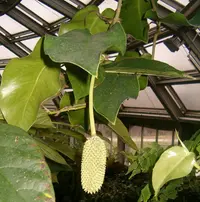
Monstera tuberculata
Monstera tuberculata
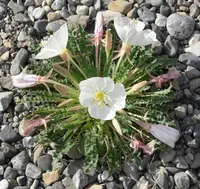
fragrant evening primrose
Oenothera cespitosa
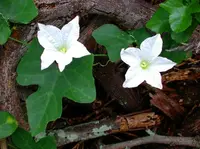
ivy gourd
Coccinia grandis
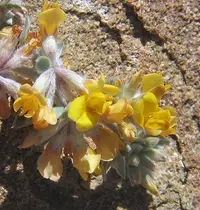
silver bird's-foot trefoil
Acmispon argophyllus
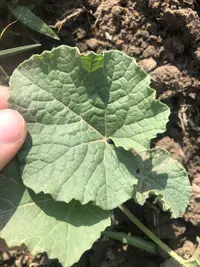
ulcardo melon
Cucumis melo var. agrestis
Cantaloupe
Cucumis melo var. flexuosus