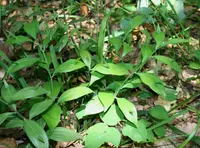
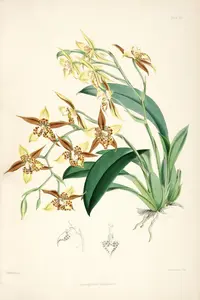
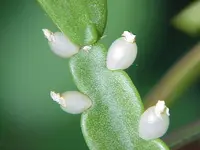
Monstera tuberculata Care

Monstera tuberculata

About Monstera tuberculata

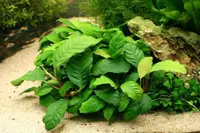
Monstera tuberculata is a vining aroid grown mainly for its narrow, textured leaves and unusual, often perforated or lobed leaf shape. It typically climbs or trails, attaching to supports with aerial roots.

This species occurs naturally from southern Mexico through Central America, where it grows in warm, humid forests under tree canopies. In cultivation it is considered moderately challenging, mainly due to its need for stable warmth, higher humidity, and support to climb.

Those conditions influence how to care for Monstera tuberculata, as it responds best to bright, filtered light, lightly moist but well-drained soil, and protection from cold drafts or very dry air.

Main Plant Requirements

Care Difficulty

Moderate Care

Light Preference

Bright Indirect Light

Water Requirements

Moderate Water

Temperature Preference

Tropical / Frost Sensitive

Hardiness Zone

11–12

Soil Texture

Loamy, Organic-rich

Soil pH

Acidic (5.5–6.5), Slightly acidic (6.5–7.0)

Soil Drainage

Moist but well-drained

Fertilization

Light (every 4–6 weeks)

Get Personalized Care Plan

Scan your plant to receive care tips personalized for your specific plant

Available on iOS and Android

How to Care for the Monstera tuberculata

This species prefers bright, indirect light that mimics dappled forest shade.

  • Provide 6–8 hours of bright, filtered light per day, such as near an east or north-facing window or under light tree canopy outdoors.
  • Tolerates partial shade, but growth and leaf size decline if light stays low; if stems stretch or leaves shrink, move Monstera tuberculata to a slightly brighter spot.
  • Avoid harsh midday or afternoon sun; 1–3 hours of gentle morning sun is fine, but strong sun can cause yellow patches and dry, brown leaf edges.

Watering should keep the root zone lightly moist but never saturated.

  • Before watering, let the top 2–5 cm of soil dry; check with a finger rather than following a strict schedule, as frequency changes with pot size, soil mix, and light level.
  • Increase watering slightly in spring–summer when growth is active, then reduce in fall–winter so the soil has more time to dry between waterings.
  • Watch for early signs of stress: drooping, papery leaves and very dry soil suggest underwatering, while yellowing lower leaves, a musty smell, or soggy mix indicate poor drainage and overwatering.

Stable, warm conditions support steady growth and reduce stress.

  • Ideal growth occurs around 70–85°F (21–29°C); short peaks to 90°F (32°C) are tolerated if humidity is moderate and soil does not dry out completely.
  • Protect the plant from cold; growth slows below 65°F (18°C), damage can appear near 50°F (10°C), and even brief exposure to frost can kill leaves and young stems.
  • In cooler seasons, keep it away from cold drafts, uninsulated windows, and doors; in hot spells, provide shade and airflow to prevent heat stress and leaf scorch.

This species benefits from elevated humidity but copes briefly with typical indoor levels.

  • Aim for 50–70% humidity to support healthy foliage and steady growth for Monstera tuberculata.
  • Expect leaf edges to brown, curl, or develop small crispy patches when air stays below 40% for long periods.
  • Increase humidity with a nearby humidifier, grouping plants, or a pebble tray, rather than misting leaves heavily.

This aroid prefers a loose, airy mix that drains rapidly yet retains some moisture around the roots.

  • Use a chunky mix such as 40% peat or coco coir, 30% fine bark, 20% perlite, and 10% compost for Monstera tuberculata.
  • Aim for slightly acidic to neutral pH around 6.0–7.0 to support nutrient availability without causing root stress.
  • Include coarse materials like orchid bark and perlite to create large air pockets and prevent compaction around the root system.
  • Avoid heavy, clay-based, or waterlogged substrates that stay wet for longer than 3–4 days, which encourage root rot.

This species adapts well to container growing when the pot supports both drainage and climbing habit.

  • Choose a container wide enough to anchor a moss pole or trellis so the vine remains stable as it climbs.
  • Select a tall pot that allows a deeper, vertical root run, which helps support long, vining stems without tipping.
  • Use a heavier material such as ceramic or terracotta outdoors to reduce the risk of wind tipping the pot as the plant gains height.

Nutrient support helps Monstera tuberculata maintain steady foliage growth in containers.

  • Use a balanced liquid fertilizer (for example 10-10-10 or 20-20-20) diluted to 1/2 strength for routine feeding.
  • Apply every 4–6 weeks during the warm growing season when light and watering are consistent.
  • Withhold or reduce feeding to 1 light application in midwinter if growth slows noticeably.
  • In large pots, supplement with a thin layer of high-quality compost each spring instead of frequent liquid feedings.

Thoughtful pruning keeps Monstera tuberculata manageable and encourages healthier, better-shaped vines.

  • Plan main pruning in spring or early summer when the plant resumes active growth.
  • Remove yellowing, damaged, or diseased leaves first, cutting back to healthy tissue with clean, sharp shears.
  • Thin out crowded or very long vines to improve light penetration and control overall size and direction.
  • Disinfect blades between plants to limit disease spread and avoid removing more than 20–25% of foliage at once.

Container-grown Monstera tuberculata benefits from periodic repotting to prevent root binding and decline.

  • Check for roots circling the pot, pushing through drainage holes, or persistent wilting as signs it needs more space.
  • Plan repotting in spring, every 2–3 years for young plants, shifting to a pot 2–5 cm wider with good drainage.
  • Handle the root ball gently, loosening only the outer circling roots and trimming rotten sections with sterilized tools.
  • Water thoroughly after repotting, then keep in bright, indirect light and slightly reduced watering until new growth resumes.

New Monstera tuberculata plants are most reliably produced from stem cuttings taken in the growing season.

  • Take 1–2 node stem cuttings in late spring or summer, each with at least 1 healthy leaf and a visible node or aerial root.
  • Root in water or a sterile, moist mix of perlite and peat or coco coir, keeping temperatures around 70–80°F.
  • Maintain high humidity (60–80%) and bright, indirect light to support fast callus formation and root growth.
  • Pot rooted cuttings into a well-draining aroid mix and keep evenly moist for the first few weeks while roots establish.

This tropical species is frost sensitive and needs protection in climates with cold winters.

  • Keep outdoor container plants indoors once temperatures approach 50°F, placing them in bright, indirect light.
  • Maintain indoor temperatures around 60–75°F and avoid cold drafts from windows or exterior doors.
  • Reduce watering in winter, allowing the top 2–3 cm of the mix to dry before rewatering to prevent root rot.
  • In mild climates where plants grow in the ground, provide a thick mulch layer over the root zone to buffer temperature swings.

Care Tips

Provide climbing support

Install a narrow moss pole, wood plank, or plastic trellis close to the stem so the shingling shoots can adhere and climb, which encourages tighter leaf spacing and better leaf shape.

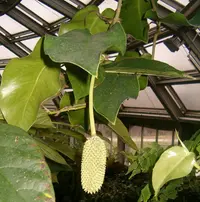
Encourage shingling habit

Mount the plant on a flat, slightly rough vertical surface and gently pin or tie young vines against it so new leaves press flat as they grow and maintain the natural shingling growth form.

Targeted root pruning

When repotting a pot-bound plant, trim back only circling or dead roots with sanitized scissors to reduce stress while still refreshing the root system for stronger new growth.

Inspect leaf undersides

Check the undersides of leaves and along nodes every 1–2 weeks for early signs of thrips, spider mites, or scale, and treat immediately with a suitable product if any pests are seen, since flat leaves hide infestations easily.

Seasonal light adjustment

Rotate and, if needed, move the plant closer to a bright window in winter and slightly back in summer to keep growth even and prevent one-sided stretching when growing Monstera tuberculata.

Common Pests and Diseases

Spider mites

This pest thrives on the thin, textured leaves and stems, especially in warm, dry indoor air, causing stippling and fine webbing on foliage. Symptoms include faded, rough-looking leaves that may yellow and drop early.

Solution

Rinse foliage thoroughly with a strong but gentle stream of lukewarm water, including leaf undersides, then repeat every few days for 1–2 weeks. If populations persist, apply insecticidal soap or a neem oil spray labeled for houseplants, increase humidity to 50–60%, and improve air movement without creating drafts to support stable Monstera tuberculata care instructions.

Thrips

These insects scrape and suck sap from tender leaves and new growth, which can distort the narrow leaf blades and cause silvery streaks or dark specks of frass. Symptoms include misshapen young leaves and reduced vigor in trailing or shingling stems.

Solution

Isolate the plant, prune and discard heavily damaged leaves, and gently wash all foliage. Follow with several applications of insecticidal soap or a systemic insecticide specifically labeled for thrips at 7–10 day intervals, and reduce plant stress by keeping light bright but indirect and watering consistently.

Bacterial leaf spot

This disease tends to appear when foliage remains wet and air circulation is poor, leading to small water-soaked spots that turn brown with yellow halos. Symptoms include irregular lesions along leaf edges and between veins on the narrow leaf blades.

Solution

Remove and discard affected leaves, sterilizing pruning tools between cuts with 70% alcohol, and avoid splashing water on foliage. Improve airflow around the plant, space vines away from walls when shingling, and water early in the day at the soil level so leaves dry quickly.

Anthracnose

This disease affects leaves and sometimes petioles, producing tan to dark-brown dead patches that may follow the veins along the long, textured leaves. Symptoms include expanding necrotic areas, especially on older foliage in humid, low-light conditions.

Solution

Cut off and dispose of infected leaves, cleaning tools with alcohol to prevent spread, and reduce overhead misting or prolonged leaf wetness. Provide brighter indirect light, increase spacing between plants, and if the problem continues, use a copper- or chlorothalonil-based fungicide labeled for ornamental foliage plants, following the product directions carefully.

Scale insects

This pest attaches along stems and leaf midribs, where the climbing or trailing growth habit provides sheltered spots under leaves and between nodes. Symptoms include sticky honeydew, sooty mold growth, and small brown or tan bumps that do not brush off easily.

Solution

Manually remove visible scale with a cotton swab dipped in 70% isopropyl alcohol, then wash stems and leaves with mild soapy water and rinse. Inspect weekly and repeat spot treatments, and for larger infestations use a horticultural oil or systemic insecticide labeled for scale while maintaining stable temperatures of 65–80°F and avoiding plant stress.

Interesting Facts

Shingling growth form

In its juvenile phase, this species grows as a shingling climber, pressing small, flat leaves tightly against tree trunks or other vertical surfaces rather than letting them hang freely.

Tuberculate leaf surface

The species name refers to the fine, wart-like (tuberculate) texture that can be seen on parts of the leaf surface, a feature that helps distinguish it from other Monstera species.

Highly variable leaves

Leaf shape and size change markedly as the plant matures, and some forms can develop narrow, elongated leaves that look quite different from the typical heart-shaped leaves associated with better-known Monstera species.

Botan icon

Did you know?

This aroid is native to lowland tropical forests in Central America, where it often inhabits deeply shaded understory habitats and relies on its shingling habit to steadily climb toward higher light on host trees.

FAQs about Monstera tuberculata

This species is a vining aroid that naturally climbs using aerial roots. It prefers to attach to rough vertical surfaces like moss poles, boards, or tree bark rather than spreading as groundcover for long distances.

Grow Healthy Plants with Botan Care

Keep your plants happy and healthy with plant identification, disease detection, and easy care guidance.

Botan plant care app — identify plants on mobile

Explore More Plants