Sea Onion Care (Bowiea volubilis)

Also known as: Sea Onion
Sea Onion

About Sea Onion

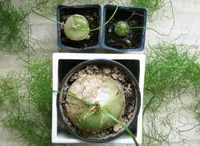
Sea onion, Bowiea volubilis, is a bulb-forming succulent vine from arid regions of South Africa. It stores water in a layered, onion-like bulb that sits partly above the soil. Slender, leafless green stems twine and branch, giving a delicate, lace-like look when in active growth.

In habitat it experiences dry winters and summer rain, which shapes its growth as a deciduous, drought-tolerant plant. Indoors it is usually grown as a curiosity plant that stays compact and adapts well to containers. It prefers bright light, very free-draining soil, and careful watering, which makes it relatively easy to care for Sea Onion if overwatering is avoided.

Main Plant Requirements

Care Difficulty

Easy Care

Light Preference

Bright Indirect Light

Water Requirements

Low Water

Temperature Preference

Tropical / Frost Sensitive

Hardiness Zone

10–11

Soil Texture

Sandy, Loamy, Organic-rich

Soil pH

Slightly acidic (6.5–7.0), Neutral (7.0)

Soil Drainage

Well-drained

Fertilization

Minimal (feed rarely)

Get Personalized Care Plan

Scan your plant to receive care tips personalized for your specific plant

Available on iOS and Android

How to Care for the Sea Onion

This climbing bulb prefers bright, indirect light that mimics open woodland edges or lightly shaded rock outcrops.

  • Provide 4–6 hours of bright, filtered light daily; morning sun with afternoon shade suits Sea Onion well, especially in hot climates.
  • Allow light dappled shade outdoors; avoid harsh midsummer afternoon sun that can scorch the green, photosynthetic stems and bleach the bulb.
  • If stems become pale and elongated, the site is too dim; move to a brighter position, especially in winter when day length shortens.

This species stores water in its bulb and needs careful, sparing watering to prevent rot.

  • During active growth, water only when the top 3–5 cm of soil are dry, then soak lightly so excess drains away quickly.
  • Use fast-draining, gritty soil; persistent wetness around the bulb or a swampy smell indicates overwatering and risk of rot in Bowiea volubilis.
  • In summer dormancy, reduce watering to very occasional sips just to prevent complete soil desiccation; wrinkling bulbs suggest mild underwatering.

This bulb thrives in mild, frost-free conditions that mimic its native subtropical climate.

  • Aim for 65–80°F (18–27°C) during active growth for best shoot development and reliable seasonal cycles.
  • Protect from cold; growth slows below 55°F (13°C) and prolonged drops under 40°F (4°C) can damage the bulb and roots.
  • It tolerates brief heat up to 90–95°F (32–35°C) if shaded and not waterlogged; in very hot spells, give more shade and ensure good airflow.

This bulb tolerates typical indoor humidity and rarely needs special moisture in the air.

  • Aim for 30–50% humidity, similar to most heated homes, without deliberate humidification.
  • Dry indoor air is usually acceptable; focus more on correct watering and drainage than on raising humidity.
  • If stems shrivel while the bulb is firm and soil is not overly dry, suspect humidity stress and move the Sea Onion away from direct hot air vents.

This species needs very sharply drained, airy soil that mimics a rocky, semi-arid habitat.

  • Use a gritty mix such as 50% cactus/succulent mix with 25% perlite and 25% coarse sand for Bowiea volubilis.
  • Keep soil structure loose and open; avoid compressing the mix so roots and bulb scales receive plenty of oxygen.
  • Target slightly acidic to neutral pH, roughly 6.0–7.0, which most commercial cactus mixes already provide.
  • Avoid heavy, peat-dense or water-retentive soils that stay wet for more than 2–3 days, which promotes bulb and root rot.

This climbing bulb is very suitable for container growing.

  • Select a pot only 2–4 cm wider than the bulb so the mix dries evenly and does not stay soggy around inactive roots.
  • Choose a heavy clay or ceramic pot if the vine is trained on a support, to prevent the container from tipping as growth extends upward.
  • Ensure the pot has wide, unobstructed drainage holes and elevate it slightly so excess water drains away rapidly from the base.

Bowiea volubilis is a light feeder that benefits from modest nutrition during active growth.

  • Use a balanced liquid fertilizer (such as 10-10-10) at 1/4–1/2 strength for Sea Onion during spring and summer.
  • Apply every 4–6 weeks while vines are actively growing, skipping any feeding if the bulb looks stressed or soft.
  • Stop fertilizing once foliage yellows and the plant enters dormancy, usually in late summer or fall.
  • Avoid organic compost-heavy mixes in pots, which can stay too wet; choose a lean, fast-draining medium instead.

Bowiea volubilis needs only light pruning to keep its twining stems manageable and healthy.

  • Best time for pruning is late winter to early spring, just before or as new growth starts.
  • Remove dead, dried, or damaged vines with clean, sharp scissors or small pruning shears.
  • Thin out crowded or tangled stems to improve air flow and maintain a compact, tidy framework.
  • Avoid cutting green, vigorous shoots too hard, as this reduces photosynthesis and can slow bulb growth.

This bulb prefers to be slightly crowded, so repotting Bowiea volubilis is infrequent but sometimes necessary.

  • Look for roots circling the pot, bulblets pushing against the container, or very slow growth as signs it needs more space.
  • Repot every 3–4 years in late winter or early spring, just before new shoots appear.
  • Choose a pot only 2–3 cm wider, with excellent drainage, and use a gritty succulent mix to limit moisture around the bulb.
  • Handle the bulb gently, keep roots intact, water lightly after repotting, and keep in bright shade for 7–10 days to reduce stress.

Bowiea volubilis is commonly propagated from bulb division and sometimes from seed under controlled conditions.

  • Divide offsets from the main bulb in late winter or early spring, when the plant is just leaving dormancy.
  • Use a sterile, gritty mix and plant bulblets with the top half exposed to reduce rot risk.
  • Keep medium barely moist and provide bright, indirect light and warm temperatures around 70–75°F for best rooting.
  • For seed, sow fresh on the surface of a well-draining mix, maintain even slight moisture, and avoid temperature swings.

This species is not frost hardy and needs thoughtful winter care in most temperate climates.

  • Grow in containers in regions below 30°F and move indoors before temperatures drop near freezing.
  • Place indoors in bright, indirect light and keep the bulb dry to slightly dry while dormant.
  • Avoid cold drafts and sudden temperature shifts; aim for a stable 55–65°F environment.
  • In mild frost-free climates, keep pots under cover to shield bulbs from prolonged rain and cold, wet soil.

Care Tips

Provide climbing support

Install a narrow trellis, mesh, or vertical string right above the bulb so the vines can climb and stay untangled, which improves light exposure and reduces rot where stems otherwise pile up on the soil.

Mark dormancy clearly

When foliage yellows and dies back, label the pot and set a calendar reminder so the dry, bare bulb is not mistaken for an empty pot and discarded during the dormant period.

Use a heavy pot

Plant in a low, heavy container (ceramic or clay) so the top-heavy tangle of vines cannot tip the pot, especially when placed on shelves or narrow windowsills.

Rotate with restraint

Turn the pot 90° every 2–3 weeks during active growth to keep the vine mass even, but avoid weekly rotation, which can cause the long, brittle stems to kink or snap.

Protect fragile stems

When repotting or moving the plant, gently gather the vines into loose loops and secure them with soft plant ties, which protects the delicate growth tips that are easily broken when caring for Sea Onion.

Common Pests and Diseases

Mealybugs

This pest often hides in the crevices of the bulb and along the twining stems, sucking sap and causing yellowing, weakened growth, and sticky honeydew. Symptoms include white, cotton-like clusters near the soil line, at stem nodes, and sometimes on the outer bulb scales.

Solution

Isolate the plant, then dab visible mealybugs with cotton swabs dipped in 70% isopropyl alcohol and gently wipe affected areas, including around the bulb. Improve light and air movement, and repeat alcohol or insecticidal soap treatments every 7–10 days until no new insects or cottony deposits appear.

Scale insects

These insects appear as small, hard, brown or tan bumps on the wiry stems and around the base of the bulb, leading to stunted growth and sticky residues. This pest can be overlooked because it blends with the stems and outer bulb layers.

Solution

Scrape or wipe off individual scales with a cotton swab or soft toothbrush, then treat the stems and bulb neck with insecticidal soap or a light horticultural oil, applied according to label directions. Repeat treatments at 10–14 day intervals and keep the plant slightly drier but not shriveled during recovery as part of overall Bowiea volubilis plant care.

Bulb soft rot

This disease causes the bulb to turn soft, water-soaked, and foul-smelling, often starting at the base where moisture accumulates. Symptoms include collapsed stems, discolored bulb scales, and rapid decline, typically after chronic overwatering or poorly drained soil.

Solution

Remove the plant from its pot, cut away all soft, discolored tissue with a sterile knife, and dust the remaining firm bulb sections with a dry sulfur or fungicidal powder. Repot into fresh, very well-draining mix in a pot with large drainage holes, water lightly once, then allow the medium to dry almost completely between waterings to prevent recurrence.

Fungal stem blight

This disease affects the green twining stems, causing dark, sunken lesions that may spread and cause sections to dry, shrivel, and die back. Symptoms include patchy browning or blackening of stems, often after prolonged humidity or poor air circulation.

Solution

Prune out all affected stem sections back to healthy tissue with sterilized scissors and discard the debris, then provide stronger light, better air movement, and drier conditions around the foliage. If the problem persists, apply a broad-spectrum fungicide labeled for ornamental houseplants, making sure the stems dry quickly after each treatment.

Spider mites

These insects thrive in warm, dry indoor air and can cause pale speckling, dull color, and fine webbing on the thin stems. This pest can weaken growth and make the stems look dusty or faded over time.

Solution

Rinse the plant under a gentle stream of lukewarm water, focusing on the stems and support structure, then allow it to dry in bright, indirect light. Follow with repeated applications of insecticidal soap or a light miticidal oil every 5–7 days, and slightly increase ambient humidity while still keeping the potting mix on the dry side.

Interesting Facts

Photosynthetic climbing stems

The green, twining stems perform most of the photosynthesis, while the bulb remains mostly underground or shaded and functions mainly as a water and nutrient reservoir.

Summer-dormant bulb cycle

In its native southern African habitat, the plant often goes dormant and sheds its stems in the hot, dry summer and resumes growth with cooler, wetter conditions, an adaptation to a strongly seasonal climate.

Self-fertile but insect-pollinated

The small, greenish flowers can self-pollinate, yet in nature they are typically visited by small insects that assist with cross-pollination between plants.

Botan icon

Did you know?

In parts of southern Africa, wild populations of this species have declined locally due to overharvesting of bulbs and habitat disturbance, so in several regions it is now monitored or regulated as a protected or conservation-sensitive plant.

FAQs about Sea Onion

This species often needs several years of maturity before flowering and only blooms when well-rested in a cool, dry dormant period. Excess watering or warmth in dormancy, or insufficient light, commonly prevents bud formation and flowering.

Grow Healthy Plants with Botan Care

Keep your plants happy and healthy with plant identification, disease detection, and easy care guidance.

Botan plant care app — identify plants on mobile

Explore More Plants