Marked dormancy rest
After the foliage yellows and dies back, keep the pot completely dry and move it to a cool, airy spot (45–55°F) for at least 8–10 weeks to ensure strong flowering the next season.

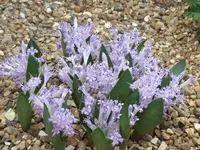
Dotted viooltjie (Lachenalia punctata) is a small, bulb-forming flowering plant from winter-rainfall regions of South Africa. It belongs to the asparagus family and is grown mainly as an ornamental. The plant forms low rosettes of succulent, often speckled leaves and sends up short spikes of tubular, spotted flowers in late winter or early spring. It is usually grown in pots or containers and kept indoors or under cover in colder climates. Growth is seasonal, with a clear rest period when the bulb is dormant. Its compact size and predictable cycle make it moderately easy for patient growers who learn how to care for Dotted Viooltjie.

Care Difficulty
Moderate Care

Light Preference
Partial Sun

Water Requirements
Moderate Water

Temperature Preference
Warm Climate

Hardiness Zone
9–11

Soil Texture
Sandy, Loamy, Organic-rich

Soil pH
Acidic (5.5–6.5), Slightly acidic (6.5–7.0)

Soil Drainage
Well-drained

Fertilization
Light (every 4–6 weeks)
Scan your plant to receive care tips personalized for your specific plant
Available on iOS and Android
This small bulb prefers bright, gentle light that mimics cool, open winter conditions.
This bulb needs moderate moisture in active growth and much drier conditions when dormant.
This species grows best in cool to mild conditions typical of Mediterranean-type winters.
This bulb tolerates typical indoor humidity, so moisture in the soil matters more than air humidity.
This bulb prefers a sharply drained, sandy-mineral substrate that dries fast after watering.
This species is well suited to container growing, especially for seasonal display and protection from excess rain.
This bulb benefits from modest feeding during active growth but does not need heavy fertilization for good flowering.
Pruning needs for Lachenalia punctata are minimal and focus on post-flowering clean-up rather than shaping.
This species is usually grown as a bulb in shallow containers and only needs infrequent repotting or lifting.
This bulb is commonly propagated by offsets and sometimes from seed, allowing slow expansion of a clump.
This species prefers mild, frost-free winters and benefits from basic protection in colder regions.

Plant Health Check
Not sure what's wrong with your plant? Check your plant's health inside the app.
This species is a small, deciduous bulb from winter-rainfall regions of South Africa, producing loose spikes of white to cream flowers heavily dotted with purple or maroon spots in late winter to early spring.
In the wild it grows on rocky sandstone or granite slopes in the Western Cape, often in shallow, well-drained soils that experience cool, wet winters and hot, dry summers.
The tubular, speckled flowers are adapted to insect pollinators, attracting them with contrasting spots, nectar, and a mild scent during its short flowering season.
Flowering usually occurs in late winter to early spring, depending on climate and planting time. The flower spikes generally last 2–4 weeks. Cooler temperatures and good light help extend the display without stressing the bulbs.
Keep your plants happy and healthy with plant identification, disease detection, and easy care guidance.