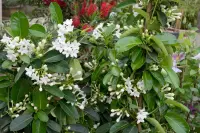
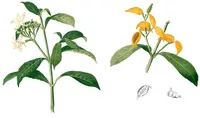
poisonbulb Care (Crinum asiaticum)

Also known as: Tree Crinum
poisonbulb

About poisonbulb

Poisonbulb, Crinum asiaticum, is a large evergreen bulbous plant grown for its long strap-like leaves and clusters of white, spider-like flowers. It often forms dense clumps and can become a bold focal point in gardens or large containers.

This species is native to tropical coastal areas of Asia and the Pacific, where it thrives in warm, humid conditions. In cultivation, it prefers bright light, evenly moist but well-drained soil, and space for its big bulbs and foliage.

Its toughness, size, and slow growth make it better suited to patient growers with enough room. Understanding how to care for poisonbulb helps prevent issues with rot, leaf burn, or weak flowering.

Main Plant Requirements

Care Difficulty

Moderate Care

Light Preference

Full Sun

Water Requirements

Regular Water

Temperature Preference

Tropical / Frost Sensitive

Hardiness Zone

9–12

Soil Texture

Sandy, Loamy, Organic-rich

Soil pH

Acidic (5.5–6.5), Slightly acidic (6.5–7.0)

Soil Drainage

Moist but well-drained

Fertilization

Light (every 4–6 weeks)

Get Personalized Care Plan

Scan your plant to receive care tips personalized for your specific plant

Available on iOS and Android

How to Care for the poisonbulb

This species prefers bright, warm conditions with protection from extreme midday sun.

  • Provide 4–6 hours of direct morning sun, then light afternoon shade or bright filtered light, especially in hot climates.
  • Tolerates partial shade (2–4 hours of direct light) but flowering and leaf strength decrease if light stays low for many weeks.
  • In summer, monitor leaves for scorch or bleaching in harsh afternoon sun; in winter, trim overhanging shade so poisonbulb still receives strong light.

This bulb prefers steadily moist but not waterlogged soil.

  • Allow the top 3–5 cm of soil to dry slightly, then water deeply so moisture reaches the full root zone, especially in active growth.
  • In hot seasons, expect faster drying and watch for soft, folding leaves as a sign to water; in cooler months, let the surface dry more between waterings.
  • Ensure soil drains freely; persistent wetness, yellowing leaves, and a sour smell around the bulb indicate overwatering in Crinum asiaticum.

This tropical species grows best in consistently warm conditions without frost exposure.

  • Aim for 70–90°F (21–32°C) for strong growth and flowering; growth slows noticeably below 65°F (18°C).
  • Protect from temperatures under 40°F (4°C); bulbs and foliage are damaged by frost and may be killed by hard freezes.
  • Tolerates short heat waves up to about 100°F (38°C) if soil moisture is maintained; mulch roots to buffer temperature swings across seasons.

Crinum asiaticum prefers moderately humid air but adapts to many home conditions if watering is consistent.

  • Aim for 40–60% humidity, avoiding very dry heated rooms where leaf tips brown more easily.
  • Dry indoor air can cause marginal leaf browning and slower growth, though the plant usually survives.
  • Increase humidity by grouping plants, placing the pot on a pebble tray with water below the pot base, or running a nearby humidifier.

Crinum asiaticum grows best in deep, moisture-retentive yet well-drained soil that allows the large bulb to breathe.

  • Use a loamy mix with high organic content, such as 2 parts compost or leaf mold, 1 part garden loam, and 1 part coarse sand or perlite.
  • Ensure drainage is free-flowing so the bulb base never sits in stagnant water, which encourages rot.
  • Keep pH slightly acidic to neutral, around 6.0–7.0, avoiding strongly alkaline or saline substrates.
  • Improve aeration by incorporating coarse particles (pine bark, grit, or perlite) and breaking up any compacted native soil before planting.

This species can be grown in large containers if the pot is sized and weighted for its substantial bulb and foliage.

  • Select a deep, heavy pot that resists tipping when the tall leaves catch wind or are brushed against.
  • Allow generous lateral space so the bulb and thick roots can expand without circling tightly and stressing the plant.
  • Use a mix that drains freely yet holds moisture, and raise the pot on feet or bricks so drainage holes never sit in standing water.

Crinum asiaticum responds well to moderate, consistent feeding during the warm growing season.

  • Use a balanced, slow-release fertilizer (around 10-10-10) or well‑rotted compost mixed into the topsoil in spring.
  • Feed outdoor clumps every 6–8 weeks in active growth; container plants may need slightly more frequent light feeding.
  • Apply liquid fertilizer at 1/2 strength on moist soil to reduce root burn and salt buildup.
  • Reduce feeding to once in late fall or stop entirely in winter dormancy, especially for indoor poisonbulb.

Pruning Crinum asiaticum focuses on hygiene and space management rather than shaping.

  • Trim spent flower stalks at the base after blooming to direct energy back to the bulb.
  • Remove yellowing, dead, or damaged leaves at any time using clean, sharp pruners or scissors.
  • Thin out crowded outer leaves or offsets in late winter to early spring to improve airflow and reduce disease risk.
  • Avoid heavy cutting into green, healthy foliage, as this can slow growth and reduce future flowering.

Transplanting and occasional repotting help maintain healthy growth in large, long-lived bulbs.

  • Look for roots circling the pot, slow growth, or bulbs pressing against the container or soil surface as signs to move Crinum asiaticum.
  • Plan transplanting for late winter to early spring, about every 4–6 years, when growth is just starting.
  • Dig widely around garden clumps, keeping as much root and basal plate intact as possible to limit shock.
  • Replant bulbs at the same depth in well-drained soil, water deeply once, then keep evenly moist while new roots establish.

Propagation of Crinum asiaticum is most reliable through division of offsets rather than seeds.

  • Divide mature clumps in late winter or early spring when bulbs are dormant or just emerging.
  • Gently separate side bulbs (offsets) from the mother bulb, keeping attached roots intact.
  • Plant offsets with the neck just above soil level in bright light, using well-drained, organic-rich soil.
  • Maintain consistent moisture and warm temperatures (70–80°F) to support new root growth and leaf emergence.

Winter care needs depend strongly on climate, as this is a tropical to subtropical bulb.

  • In USDA zones 9–11, plants usually overwinter in the ground with minimal attention.
  • In cooler zones, mulch the root zone with 5–10 cm of straw or leaves to insulate bulbs from frost.
  • Move container plants indoors before temperatures drop below 40°F, placing them in bright, cool conditions.
  • Reduce watering in winter so soil stays just barely moist, preventing bulb rot in low light and cooler temperatures.

Care Tips

Manage Heavy Foliage

Remove only the oldest, yellowing leaves at the base with a clean, sharp knife so the bulb can redirect energy into new foliage and flowering rather than supporting declining tissue.

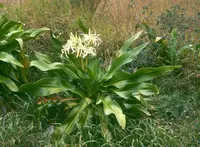
Stabilize Large Clumps

In windy or exposed sites, mound soil 5–8 cm higher around the bulb plate and use 2–3 discreet stakes with soft ties to support heavy leaves and flower stalks without cutting into the tissue.

Safe Pup Division

When offsets reach about one-third the size of the mother bulb, lift the clump during warm weather, cut pups away with a disinfected tool, dust cut surfaces with a fungicidal powder if available, and replant them at the same depth for reliable establishment.

Salt And Spray Tolerance

In coastal or poolside plantings, gently hose foliage with fresh water every few weeks to remove salt and chemical residues that can burn leaf tips and reduce photosynthesis when growing poisonbulb.

Slug And Snail Control

Protect thick strap leaves by placing iron phosphate bait or beer traps around the planting zone at the start of wet seasons, and remove hiding spots like dense groundcover or debris near the bulb base.

Common Pests and Diseases

Crinum lily borer

This pest is a caterpillar that tunnels into the bulb and leaf bases, causing yellowing, collapse of leaves, and rotting tissue with frass inside galleries.

Solution

Inspect bulbs and leaf bases regularly, cut out and destroy any affected bulb tissue, and remove visible caterpillars by hand; discard heavily infested bulbs. Reduce sheltering debris around the plant, and if needed use a targeted Bacillus thuringiensis (Bt) caterpillar treatment on foliage where eggs and young larvae are present.

Narcissus bulb fly

This pest is a large fly whose larvae bore into bulbs, turning the interior soft, brown, and hollow so new leaves emerge weak or fail to appear.

Solution

Lift suspect bulbs, cut them open, and destroy any larvae along with severely damaged bulbs. In regions where this fly is common, plant bulbs a bit deeper, keep soil surface firm and free of cracks, and discard any stunted or collapsing plants promptly to prevent further spread.

Aphids

These insects feed on tender leaf and flower tissues, causing distortion, sticky honeydew, and sometimes sooty mold on the strappy leaves and flower stalks.

Solution

Rinse colonies off with a firm stream of water, then use insecticidal soap or a light horticultural oil, ensuring full coverage of leaf undersides and flower stalks. Encourage or protect natural predators such as lady beetles, and avoid high-nitrogen fertilizer that promotes very soft, aphid-prone growth.

Spider mites

These insects are tiny sap feeders that thrive in hot, dry conditions, causing fine stippling, dull foliage, and webbing between the long leaves.

Solution

Increase humidity around plants, hose down foliage thoroughly, and remove heavily damaged leaves. For persistent infestations, apply insecticidal soap or a refined horticultural oil, repeating at 5–7 day intervals to target newly hatched mites while maintaining good air movement around the clump.

Leaf spot

This disease is usually fungal, producing brown to purplish spots and blotches on the broad leaves, sometimes with yellow halos and premature leaf dieback.

Solution

Remove and discard affected leaves, keep irrigation at the soil level to avoid wetting foliage, and improve spacing and airflow to dry leaves faster. In humid climates or recurring outbreaks, a labeled copper or chlorothalonil fungicide can be used preventively on new foliage according to Crinum asiaticum care instructions on the product label.

Interesting Facts

Night-scented flower strategy

The large white flowers open mainly at night and release a strong fragrance that attracts nocturnal moths, which are thought to be the primary pollinators in its coastal habitats.

Salt-tolerant coastal bulb

This species naturally grows along tropical seashores and mangroves, where its robust bulb and fleshy leaves tolerate wind, salt spray, and sandy, nutrient-poor soils better than many other bulbous plants.

Year-round leaf production

Unlike many temperate bulb species that die back seasonally, this tropical bulb keeps its strap-shaped leaves for most of the year in warm climates, functioning more like an evergreen perennial than a typical bulb.

Botan icon

Did you know?

In parts of tropical Asia, the plant is traditionally planted around temples, coastal compounds, and public spaces as an ornamental barrier, because its dense, arching foliage and tall flower stalks form a long-lived structural border in humid maritime climates.

FAQs about poisonbulb

Lack of flowering usually comes from insufficient light, nutrient-poor or very compacted soil, or bulbs planted too deeply. Overcrowded clumps also bloom less; lifting and dividing every few years often restores flowering.

Grow Healthy Plants with Botan Care

Keep your plants happy and healthy with plant identification, disease detection, and easy care guidance.

Botan plant care app — identify plants on mobile

Explore More Plants